

You’ve found a character apartment in the heart of Wellington — high ceilings, polished timber floors, a view of the harbour. Then your solicitor mentions the building has an earthquake-prone building notice on its title. Suddenly, that dream property feels a lot more complicated.
If you’re buying in Wellington, understanding earthquake-prone buildings isn’t optional. It’s one of the most important factors affecting your purchase price, your insurance options, and your long-term safety.
Here’s what you need to know before you sign anything.
Under the Building (Earthquake-prone Buildings) Amendment Act 2016, a building is classified as earthquake-prone if its structure would reach its ultimate capacity in a moderate earthquake — specifically, if it achieves less than 34% of the New Building Standard (NBS).
Think of %NBS as a scorecard. A brand-new building designed to current code sits at 100% NBS. A building rated at 34% NBS has roughly one-third of the strength expected of a new build. Anything below that 34% threshold is legally earthquake-prone.
The system works on three tiers. Below 34% NBS: earthquake-prone, must be strengthened or demolished within set timeframes. Between 34% and 67% NBS: “earthquake risk” — not legally earthquake-prone, but below the level most engineers consider ideal. Above 67% NBS: generally considered acceptable seismic performance.
The legislation divides New Zealand into three seismic risk areas with different deadlines. Wellington sits in a high-seismic risk zone.
For priority buildings (unreinforced masonry on busy streets, emergency services buildings), owners face shorter windows. For other earthquake-prone buildings in high-seismic zones, owners have 7.5 years from the EPB notice to provide an engineering assessment and 15 years to complete strengthening work.
If you’re buying partway through that clock, the remaining timeframe becomes very relevant to your purchase decision.
Every region in New Zealand faces some level of earthquake risk. But Wellington’s geology puts it in a uniquely challenging position.
The city sits directly on the Wellington Fault, one of the most active fault lines in the country. It runs right through the urban area — from the Hutt Valley, through the central city, and out into the Cook Strait — and is capable of producing a magnitude 7.5+ earthquake. Geological evidence suggests it ruptures roughly every 500 to 1,000 years, with the last major rupture around 1855.
Wellington also sits close to the Hikurangi subduction zone off the east coast of the North Island — New Zealand’s largest fault source, capable of producing earthquakes of magnitude 8 or greater.
Here’s something many buyers don’t realise. Large areas of Wellington’s central city, waterfront, and reclaimed harbour land sit on soft sediments that amplify seismic shaking. A building in the CBD can experience significantly more intense shaking than an identical building on bedrock in Karori or Kelburn.
This amplification effect is one reason Wellington has a higher concentration of earthquake-prone buildings than other New Zealand cities.
Before making an offer on any Wellington property, check the national earthquake-prone building register at epbr.building.govt.nz. It’s publicly accessible — search by address, street name, or suburb. The register shows whether a building has been identified as earthquake-prone, its NBS rating, the EPB notice date, priority classification, and the deadline for strengthening or demolition.
A Land Information Memorandum (LIM) from Wellington City Council provides additional context on hazards. Your solicitor should request one as standard due diligence.
You’ll often come across an Individual Structural (IS) rating expressed as a percentage of NBS. This comes from a Detailed Seismic Assessment (DSA) and gives a much more specific picture than the simple “earthquake-prone or not” classification. A building at 15% NBS tells a very different story from one at 30% NBS, even though both are technically earthquake-prone.
A low %NBS rating affects more than just safety. Insurance companies look closely at seismic ratings — some will decline cover altogether for buildings below certain thresholds, while others offer cover with significant earthquake exclusions or higher premiums. Some Wellington apartment owners have reported premium increases of several hundred per cent.
Banks also pay attention. Getting a mortgage on an earthquake-prone building can be difficult, and some lenders won’t finance properties below a certain %NBS. Many commercial tenants and insurers prefer buildings rated at 67% NBS or higher, which directly affects the pool of potential buyers if you ever want to sell.
In September 2025, the Government announced the most significant overhaul of the earthquake-prone building system since its introduction. The Building (Earthquake-prone Building System Reform) Amendment Bill proposes replacing the current %NBS threshold with a risk-based system that focuses on building type and location rather than a single percentage score.
The practical impact is substantial. Around 2,900 buildings — roughly 55% of those currently on the EPB register — are expected to be removed entirely. Of the remainder, only about 80 buildings nationwide will require a full retrofit. Another 1,440 will need targeted remediation, and 840 will only need façade-securing work. The Government estimates the reforms will save building owners more than $8.2 billion in remediation and demolition costs.
Under the new framework, buildings remaining in the system fall into clearer categories. Unreinforced masonry buildings with unsecured façades facing public areas will be automatically classified as earthquake-prone. Concrete buildings of three or more storeys will require targeted retrofit. The definition of “priority buildings” is also being narrowed — hospitals, schools, and emergency services buildings will lose their priority status, giving government agencies more time to plan seismic upgrades.
Wellington’s high seismic zone classification means stricter requirements will remain compared to lower-risk regions. Auckland, Northland, and the Chatham Islands are being removed from the EPB system entirely, but that won’t apply here.
For buyers, the reforms create a transitional period. A building currently classified as earthquake-prone may be removed from the register once the new legislation takes effect. But the Bill hasn’t been enacted yet, and implementation isn’t expected until mid-2027. Treat the current rules as your baseline and any future changes as a potential bonus rather than a certainty.
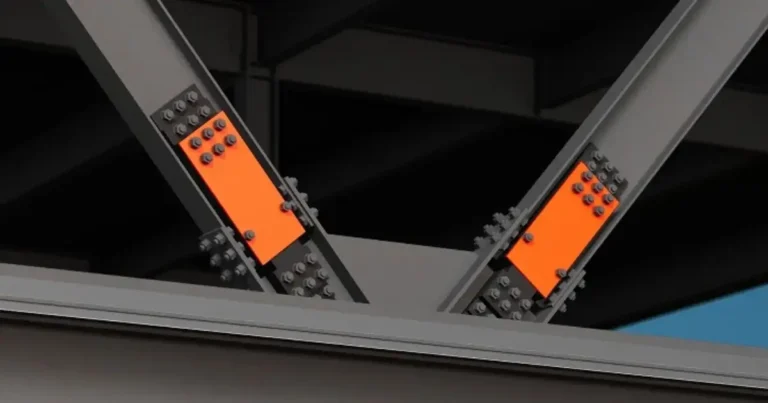
Many Wellington buildings have already undergone earthquake strengthening. As a buyer, you need to know whether that work was done properly and documented correctly.
The key documents to look for include an engineering assessment from a chartered professional engineer, building consent records from the council, a Code Compliance Certificate (CCC) confirming that the work was completed in accordance with the consented plans, and producer statements from the engineers and contractors involved. A building strengthened to 67% NBS or above with all the right paperwork is in a very different position from one where the owner says “we did some strengthening” but can’t produce documentation.
This is an important distinction. Our team conducts a thorough visual assessment of the structure, foundations, and overall condition. If we identify concerns — such as visible cracking in concrete, foundation movement, deterioration of structural timber, or evidence of substandard workmanship — we’ll flag them clearly in your report.
However, we don’t verify engineering design or assess whether strengthening work meets specific seismic standards. That’s the role of a chartered structural engineer. We can identify visible issues that warrant specialist engineering advice and recommend it when appropriate.
With Managing Director Morgan Kircher’s two decades of hands-on experience in the building industry shaping our inspection approach, our team knows what to look for — and when to tell you that further specialist investigation is needed.
Wellington’s dramatic topography is part of its charm, but it poses real challenges for foundation construction. Understanding what’s beneath a property is critical, especially when seismic risk is factored in.
Many hillside homes in Karori, Kelburn, Mt Victoria, and Wadestown are built on timber or concrete piles driven into sloping ground. During an earthquake, these piles are subjected to lateral forces that can cause movement, tilting, or failure — particularly if they weren’t designed to modern seismic standards.
In suburbs like Island Bay, coastal erosion and clay soils add further complexity. Our inspectors regularly see homes where decades of subtle ground movement have already affected floor levels and wall alignment.
Retaining walls are everywhere in Wellington. They hold up driveways, support building platforms, and keep hillsides from encroaching on properties. But a retaining wall that’s been quietly doing its job for 40 years can become a serious liability in an earthquake.
During inspections, we look at condition, evidence of movement or lean, drainage provisions, and whether the wall appears adequate for the load it’s carrying. If we have concerns, we’ll recommend a geotechnical assessment — because understanding what the ground is doing is just as important as understanding what the building is doing.
With a collective 150 years of building and inspection experience across our team, we’ve assessed thousands of Wellington properties and understand how the city’s unique terrain interacts with different foundation systems.
The November 2016 Kaikōura earthquake was a watershed moment for Wellington. While the epicentre was in the South Island, it caused significant damage to Wellington’s building stock, particularly in the CBD. Several major buildings were red-stickered, including Statistics House on The Terrace and 61 Molesworth Street. The disruption went on for months.
Before Kaikōura, many buyers treated seismic risk as abstract. Afterwards, it became very real. The earthquake accelerated Wellington City Council’s approach to managing earthquake-prone buildings, and the council estimated that 63% of affected buildings were likely to miss their remediation deadlines because owners simply couldn’t afford the work — a reality that helped drive the 2025 reforms.
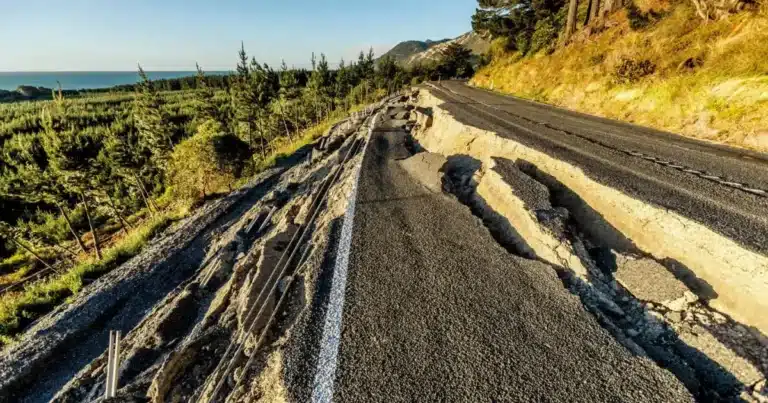
Post-Kaikōura, we’ve seen a significant shift. Buyers now want to know the %NBS rating before they set foot in a property. They ask about foundation type, soil conditions, and strengthening history. The conversation has moved from “should I worry about earthquakes?” to “what specifically should I be looking for?” — and that’s a healthy development.
Earthquake strengthening is not cheap, and costs vary enormously depending on building type, current %NBS rating, and target strengthening level.
For small to medium commercial buildings in Wellington, strengthening to above 34% NBS might cost $200,000 to $500,000 or more. For multi-unit residential buildings, the figures run into the millions. Survey data from the Inner City Wellington residents’ association found individual apartment bills averaging around $240,000, excluding GST, with some exceeding $800,000.
For standalone residential properties needing foundation work, costs might range from $50,000 to $200,000. Strengthening projects typically take three to four years from initial engagement to completion.
There’s no getting around it — an earthquake-prone classification depresses property values. How much varies. Some properties sell at 10–20% below comparable non-EPB equivalents, but apartments with very low NBS ratings and no strengthening plan can see discounts as steep as 50%.
This is where a professional building inspection becomes particularly valuable. A detailed report documenting structural concerns, foundation issues, or maintenance problems gives buyers concrete information for negotiations. Sellers find it much harder to dismiss a written report from experienced inspectors than buyers’ gut feelings.
Financial assistance options are limited and evolving. The Residential Earthquake-prone Building Financial Assistance Scheme — which offered low-interest loans of up to $250,000 through Kāinga Ora — was discontinued in 2024 as part of the Government’s EPB system review. Whether a replacement will emerge under the new legislation remains to be seen.
Wellington City Council offers rate remissions to owners who are actively carrying out strengthening work. For heritage-listed buildings, additional funding may be available through heritage preservation programmes.
If you’re buying into a body corporate facing strengthening costs, ask about funding. Has the body corporate established a sinking fund? Have owners agreed on cost-sharing? What happens if individual owners can’t meet their share?
Wellington’s CBD has a high concentration of EPB-rated buildings, particularly older commercial buildings converted into apartments. If you’re looking at a central city apartment, checking the EPB register should be your first step before attending the open home.
Many have been assessed and either strengthened or scheduled for work. Ask the body corporate for the DSA, the strengthening plan, the timeline, and the funding mechanism.
Wellington’s beloved character villas — the timber-framed beauties of Thorndon, Mt Victoria, and Aro Valley — generally perform reasonably well in earthquakes. Timber-frame construction is lightweight and flexible, giving it natural seismic resilience.
But the foundations beneath these villas are often the weak point. Original piles may have deteriorated over a century of service, subfloor ventilation may be inadequate, and the steep sites many occupy add slope stability into the equation. A villa might look magnificent above ground while its foundations tell a different story underneath.
These popular suburbs offer spectacular views but also pose challenges due to hillside construction. Homes perched on slopes rely heavily on piled foundations and retaining walls, and earthquake performance is directly tied to how well these elements have been designed and maintained.
Ground conditions vary significantly even within a single suburb. A property on stable greywacke rock behaves very differently during an earthquake compared to one on fill or clay.
Upper Hutt and Lower Hutt are often lumped in with Wellington, but their building stock and risk profiles are quite different. The valley floor is relatively flat, meaning fewer hillside foundation challenges, but parts of the Hutt Valley sit on alluvial soils prone to liquefaction during significant earthquakes.
The building stock tends to be newer on average, with more post-war and modern construction and fewer pre-1940s buildings. However, the 1988–2004 building era brought its own challenges, including untreated timber framing and monolithic cladding systems that have caused widespread weathertightness issues.
If you’re purchasing in Wellington, approach earthquake-prone building considerations methodically. Search the EPB register, request the %NBS rating, and, if the building has been strengthened, request all documentation, including engineering assessments, building consents, and the CCC.
Talk to your insurance broker early. Confirm the property can be insured and understand any earthquake-related exclusions or premium implications. Check with your lender about restrictions on financing earthquake-prone buildings. Keep the 2025 reforms on your radar, but don’t make purchasing decisions based on legislation that hasn’t been enacted yet.
And commission a thorough building inspection. While our inspectors won’t provide an engineering seismic assessment, we will identify visible structural concerns, foundation issues, and maintenance problems that could affect the building’s overall performance — and we’ll tell you when specialist engineering advice is warranted.
Wellington is a stunning city with extraordinary character and a vibrant property market. Understanding seismic risk doesn’t mean avoiding Wellington — it means buying with your eyes open and with proper due diligence.
______________________________________________________________________________________________________________

Alert Building Inspections provides professional building reports throughout New Zealand, delivered within 24-48 hours. Ready to protect your property investment? Call 0800 4 ALERT (425 378).
Book an inspection | View our services | Read more property advice

Copyright © 2016- Alert Building Inspections
Olivia Chen says:
I’m wondering whether the timeline for remediation actually matters more than the building’s current rating, since someone buying now might face years of disruption anyway—how are people factoring that into their decisions?