
You’ve been scrolling through Christchurch listings and spotted a property that’s got everything you want — the right number of bedrooms, a decent section, and a price that seems almost too good compared to similar homes a few streets over. Then you notice it: TC3 land.
If those three characters make you hesitate, you’re not alone. TC3 has become one of the most misunderstood labels in the Christchurch property market. But understanding what it actually means — and what it means for foundations, insurance, and future value — can help you make a confident, well-informed decision.
After the devastating Canterbury earthquakes of 2010 and 2011, all residential flat land across greater Christchurch was classified into technical categories based on how the ground was expected to perform in future seismic events. The three categories — TC1, TC2, and TC3 — describe the likelihood and potential severity of liquefaction damage.
TC1 land has minimal liquefaction risk and can use standard foundations. TC2 land carries a moderate risk and typically requires enhanced foundations, such as waffle slabs or ribraft systems. TC3 land sits at the top of the scale — moderate to significant liquefaction damage is possible in future large earthquakes.
But here’s the crucial point that often gets lost in the conversation: TC3 doesn’t mean the land is unbuildable or even particularly dangerous. It means any foundation work needs to be specifically designed for that site, based on a detailed geotechnical investigation. Think of it as the land needing a tailored suit rather than something off the rack.
TC3 areas are concentrated in parts of Christchurch that experienced the most significant liquefaction during the earthquake sequence. Eastern suburbs along the Avon River corridor — areas like Avondale, Dallington, Bexley, and parts of Aranui — carry a substantial TC3 classification. Some pockets extend into areas around Brooklands and Southshore near the coast.
Parts of Kaiapoi and surrounding townships in the wider Canterbury region also fall within TC3 boundaries. If you’re looking at land in these areas, checking the Christchurch Council’s technical categories map should be your first step.
It’s worth noting that TC3 isn’t uniform. Two properties on the same street can have quite different ground conditions beneath them. That’s exactly why site-specific geotechnical investigation is so important — the TC3 label tells you further investigation is needed, but the geotech report tells you what you’re actually dealing with.
When building or rebuilding on TC3 land, the foundation solution will be determined by a chartered professional engineer’s recommendation following a review of the geotechnical investigation. There’s no one-size-fits-all answer, but most TC3 foundations fall into three broad categories.
Deep piling is one of the most common foundation solutions for TC3 land, particularly where thick layers of liquefiable soil lie near the surface. The concept is straightforward: piles are driven or bored down through the soft, vulnerable soil until they reach a stable bearing layer — typically a solid gravel layer sitting anywhere from 5 to 20 metres below the surface.
In many parts of eastern Christchurch, you’d hope to hit that stable gravel layer at around 12 to 15 metres. The deeper the piles need to go, the higher the cost. Deep-piled foundations provide excellent support because the house is essentially anchored to solid ground beneath the liquefiable zone, so even if the surface soil liquefies in a future earthquake, the dwelling stays supported.
The downside? Cost. Deep piling is the most expensive TC3 foundation option, and the price rises significantly with depth. For properties near the Avon River where soft soils run deep, this can become a substantial investment.
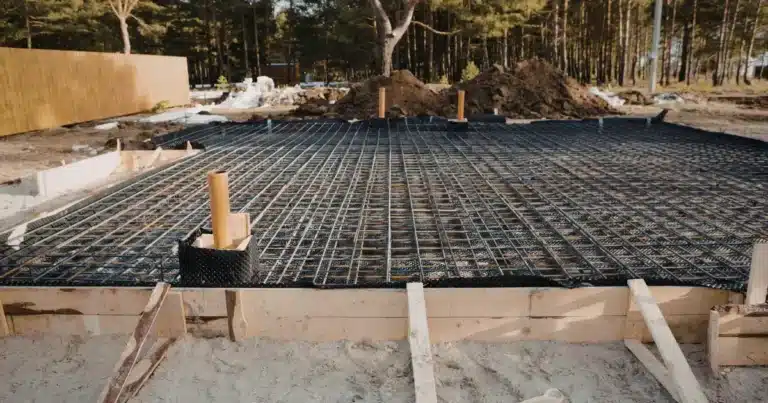
Rather than going deep, this approach works on improving the ground itself. The idea is to strengthen the soil beneath the building footprint to create a more stable platform. This is typically done by compacting the land to increase density (using methods such as vibro-replacement or dynamic compaction) or by stabilising the soil with cement.
Once the ground has been suitably improved and has a more effective crust, standard TC2-type foundations — such as enhanced concrete slabs — can then be used on top. This can be a cost-effective middle ground, particularly where the liquefiable layers aren’t excessively deep.
Ground improvement does require careful engineering oversight during construction. The compaction process needs to be monitored and tested at each stage to confirm it’s achieving the required density. It’s not a corner-cutting exercise.
The third approach doesn’t try to bypass or improve the liquefiable soil. Instead, it designs a foundation system that can accommodate ground movement and be re-levelled afterwards. These are sometimes called “relevellable” or “jackable” foundations.
The most common version is a Type 2 surface structure — a concrete underslab topped with a timber superstructure. Jacking points are built into the foundation, allowing the house to be re-levelled relatively easily after a seismic event. Proprietary systems like Ribraft TC3 and Armadillo foundations incorporate these jacking mechanisms.
A gravel raft is often constructed first — typically 800mm to a metre deep — using layers of compacted aggregate and geotextile fabric. This creates a stable platform that helps distribute loads and reduces differential settlement. The house foundation is then built on top.
This approach accepts that the ground might move, but ensures the house can be brought back to level without major structural work. For many Christchurch homeowners, it’s a practical and resilient solution.
This is the question everyone asks, and the honest answer is: it depends enormously on the site. Foundation costs on TC3 land can range from around $30,000 to well over $100,000, above what you’d pay for a standard TC1 foundation. Some industry sources put the typical premium at upwards of $60,000 or more.
The variables that drive cost include depth to the bearing layer (for piled foundations), the extent of ground improvement required, the size and weight of the dwelling, and the specific engineering solution specified by the chartered professional engineer. A lightweight single-storey home on a site with a relatively shallow gravel layer will cost significantly less than a two-storey brick-and-tile dwelling where piles need to reach 15 metres or more.
Before buying a section or an existing property on TC3 land, it is essential to obtain a geotechnical report. Without it, you’re making one of the biggest financial decisions of your life based on guesswork. The geotech report typically costs a few thousand dollars, but it’s a fraction of what an inadequate foundation could cost you down the track.
If you’re looking at an existing property rather than building new, the considerations shift. The key questions become: what foundation does the house currently sit on, what condition is it in, and how did it perform during the earthquakes?
Pre-earthquake homes on TC3 land often have older foundation systems that weren’t designed with liquefaction in mind. Some of these properties came through the earthquakes remarkably well — a thick surface crust can prevent visible liquefaction damage even when subsurface layers have liquefied. Others sustained significant foundation damage that may or may not have been adequately repaired.
For post-earthquake builds and rebuilds on TC3 land, the foundations should have been engineered specifically for the site conditions. These newer foundations are generally designed to perform well in future seismic events. However, it’s worth checking that the foundation type matches the geotechnical report’s recommendation and that construction was completed as designed.
Led by Managing Director Morgan Kircher — who has more than 20 years in the building industry — the Alert Building Inspections team has assessed countless Canterbury properties across every technical category since the earthquakes. That hands-on experience across TC1, TC2, and TC3 sites means we understand the nuances that don’t always show up in paperwork.
A building inspection on TC3 land covers everything a standard inspection does, but with additional focus on foundation performance and ground conditions. Here’s what an experienced inspector will be assessing.
The inspector will identify what type of foundation the property sits on and assess its current condition. For older homes, this means checking timber piles for decay, movement, or inadequate bearing. For newer engineered foundations, it means looking for signs that the system is performing as intended.
Visible indicators such as uneven floors, cracks in walls or concrete, and doors or windows that don’t close properly can all point to foundation concerns. On TC3 land, these signs carry extra significance because they may indicate ongoing ground settlement or previously unresolved earthquake damage.
Many TC3 properties have had earthquake repair work completed through EQC or private insurers. An experienced inspector will look for evidence of these repairs and assess their quality. Were the repairs cosmetic or structural? Do they appear to have addressed the underlying issues, or just the visible symptoms?
Backed by a combined 150 years of hands-on building and inspection experience, our team has developed a sharp eye for identifying where repair work may not have gone far enough — particularly on properties where ground conditions demanded more comprehensive solutions.
Water is the enemy of any foundation, but it’s especially critical on TC3 land. Liquefaction risk increases when groundwater levels are high, and poor drainage around a property can further elevate it.
Inspectors will assess the site drainage, looking at how surface water is managed around the dwelling, whether there’s adequate fall away from the foundations, and whether any drainage systems are functioning properly. In some TC3 areas, ground settlement after the earthquakes altered natural drainage patterns, creating new water management challenges.
A floor-level survey can reveal a lot about what’s happening beneath a TC3 property. A consistent slope might indicate overall ground tilt, while localised dips or humps can suggest differential settlement — where some parts of the foundation have moved more than others.
For properties with relevellable foundations, checking whether the jacking system is accessible and functional is important. If the house has already been re-levelled, understanding how much movement occurred and when gives useful context about ongoing ground behaviour.
Foundation movement doesn’t just affect floors and walls — it can compromise the weathertightness of the entire building envelope. When a house moves, gaps can open up around window and door frames, flashings can be displaced, and cladding joints can separate.
Canterbury’s nor’west winds and the region’s dry/wet seasonal cycles already stress cladding systems. Add foundation movement into the mix, and you’ve got a recipe for moisture ingress if the building envelope isn’t properly maintained.

One of the biggest concerns buyers have about TC3 land is whether they’ll be able to get insurance and finance. The good news is that the situation has improved significantly since the early post-earthquake years.
Most major insurers now provide cover for properties on TC3 land, particularly for newer builds with properly engineered foundations. However, policies and premiums can vary between providers, and some may have specific conditions or exclusions. It’s essential to confirm your insurance position before going unconditional on a purchase — not after.
Similarly, banks generally lend on TC3 properties, but they may require additional documentation such as geotechnical reports, engineering assessments, or specific insurance confirmation. Talk to your lender early in the process so you know exactly what they’ll need.
A practical tip: make your sale and purchase agreement conditional on obtaining satisfactory insurance and finance. This gives you an exit if either proves problematic for the specific property you’re looking at.
If there’s one piece of advice that applies to every TC3 purchase, it’s this: get a geotechnical report. For existing properties, the vendor should ideally provide one. For vacant sections, you’ll almost certainly need to commission one before the council will process building consent.
A geotech report for a TC3 site involves deep soil testing — typically cone penetration testing (CPT) — to understand the soil profile beneath the property. It identifies the depth and thickness of liquefiable layers, the depth to stable bearing ground, groundwater levels, and the potential for lateral spreading.
From this data, the geotechnical engineer determines which foundation types are appropriate for the site and provides design parameters for the structural engineer. Without this information, nobody — not your builder, not your inspector, not your bank — can accurately assess the property’s true cost and risk.
Geotechnical investigations for TC3 sites typically cost between $3,000 and $8,000, depending on the depth of testing required and the site’s complexity. It might feel like a significant outlay before you’ve even bought the property, but it’s a fraction of what an inadequate foundation could cost you down the track.
There’s no getting around the fact that TC3 classification has historically affected property values in Christchurch. Land prices in TC3 areas are generally lower than comparable TC1 or TC2 locations, which is partly why you might find that surprisingly affordable listing in the first place.
However, the market perception of TC3 has shifted considerably over the past decade. For well-built newer homes with properly engineered foundations, the TC3 label carries far less stigma than it once did. Lenders and insurers have become more comfortable with these properties, and buyers are increasingly educated about what TC3 actually means.
The flip side of lower land values is opportunity. If the foundation engineering is sound and the property is well-maintained, a TC3 location can offer genuine value compared to paying a premium for TC1 land a few suburbs over. The key is going in with your eyes open and your due diligence done.
While TC3 land can be a smart purchase, there are warning signs that should make you pause and investigate further.
A vendor who can’t or won’t provide a geotechnical report is a concern. So is a property where earthquake repairs were completed, but documentation is missing or incomplete. If the property has been through the EQC process, you should be able to access repair scopes and invoices. Request them and review them carefully.
Evidence of lateral spreading — where the ground has moved horizontally, not just settled vertically — is particularly significant. Lateral spreading can affect foundations, services, and retaining structures, making remediation expensive and complex. If you spot cracking in driveways, retaining walls, or the ground surface that suggests horizontal movement, flag it for further investigation.
Properties where the foundation type doesn’t seem to match the ground conditions are another red flag. If a house on known TC3 land has a basic concrete slab foundation with no apparent engineering enhancements, that foundation may not have been designed for the site’s actual risk profile. Our inspections may uncover issues like this that warrant further assessment by a structural or geotechnical engineer.
Buying on TC3 land in Christchurch isn’t inherently risky — but buying without doing your homework absolutely is. The difference between a smart TC3 purchase and a costly mistake comes down to information.
Get the geotechnical report. Confirm your insurance and lending position. Commission a thorough building inspection from someone who understands Canterbury’s unique post-earthquake landscape. Review all EQC and insurance documentation. And if any of these investigations raise concerns, bring in the relevant specialists before you commit.
The problems arise when buyers skip a step, assume something is fine, or feel pressured to move quickly. Christchurch’s TC3 areas are home to thousands of families living in well-built, properly engineered homes. With the right due diligence, yours could be one of them.
______________________________________________________________________________________________________________

Alert Building Inspections provides professional building reports throughout New Zealand, delivered within 24-48 hours. Ready to protect your property investment? Call 0800 4 ALERT (425 378).
Book an inspection | View our services | Read more property advice

Copyright © 2016- Alert Building Inspections
Andrew King says:
The financing side is where most people stumble. Banks get nervous about TC3 because the valuation gets messy—they’d rather lend on land with clear comparable sales. Seen more than a few deals stall because the buyer assumed standard LVR would apply. Worth getting pre-approval sorted before you make an offer, not after.