
Building Inspection North Shore
BUILDING REPORT NORTH SHORE
Residential & Commercial Building Reports
Alert Building Inspections provides building inspections right across the North Shore, from Devonport and Birkenhead through Takapuna, Glenfield and Albany to Orewa and the Hibiscus Coast. Every inspection is carried out by a trade-qualified inspector who thoroughly assesses the property and explains what they find in plain language—written or verbal, whichever suits you. Coastal homes and properties from the 1990s and early 2000s leaky building era get particular attention, because those are the two things that most often affect North Shore houses. We usually confirm bookings within the hour and deliver full reports within 24-48 hours.
CUSTOMER REVIEWS
North Shore's Unique Building Challenges
North Shore isn't one housing market, and an inspection here has to start with that. Within a few kilometres, you move from the Victorian and Edwardian villas and bungalows of Devonport, Northcote and Birkenhead to the 1950s and 1960s state housing that fills Glenfield, Birkdale, Beach Haven and Bayview; and from the 1980s and 1990s plaster-clad infill on rear and cross-lease sites to the large master-planned subdivisions at Albany, Oteha, Pinehill and Long Bay. Takapuna and Milford carry most of the apartment and unit stock, while Greenhithe and the northern hills carry larger homes on sloping ground. Each fails in its own way, and none can be judged against the same checklist.
Two coastlines, the era a house was built in, and the ground beneath it make up the rest, and on the North Shore all three carry more weight than they do on most of the isthmus. The eastern beaches — Takapuna, Milford, Castor Bay, Mairangi Bay, Browns Bay, Torbay — face salt-laden onshore air off the Hauraki Gulf, while the harbour side from Devonport around to Beach Haven takes the prevailing south-westerly driving rain. Either way, roofing, flashings, fixings and aluminium joinery corrode faster than they do inland, and the corrosion is usually behind the cladding where a viewing will never find it.
The 1990s and early 2000s then left the North Shore with one of the densest concentrations of monolithic-clad housing in Auckland — the years when framing was frequently untreated, cladding was often fixed without a drainage cavity, and two-storey homes were built with junctions that were difficult to detail and easy to get wrong. Beneath it all, the hill suburbs and the Albany to Long Bay ridge sit on soft, slide-prone ground, which is why retaining walls, cut-and-fill platforms and stormwater discharge come up so often in North Shore reports. Those three things — the coastline it faces, the era it was built, and the ground it sits on — decide what actually matters on a given North Shore property.
TESTING
Report
BUILDERS REPORT NORTH SHORE
Fast Turnaround 24-48 hours
A builders report from Alert tells you what a viewing never will. Our inspectors are trade-qualified and still on the tools, and on the North Shore that matters — salt air, plaster cladding, and sloping sections can hide problems behind the surface. We assess every accessible area of the property for structural integrity, weathertightness, and maintenance, in accordance with NZS 4306:2005.
The report is written in plain English, with every finding graded by severity, photographed, and paired with a specific recommendation — a document you can put in front of your lawyer, your lender or the vendor. All major banks and lending institutions accept our reports.
Call 0800 4 ALERT or book online for a firm quote based on your property address.
+
+
HOUSE INSPECTION NORTH SHORE
"House inspection" and "building inspection" mean the same thing: a trade-qualified inspector working through the property in a set order — grounds and exterior, roof, roof space, interior, then the subfloor. That order matters on the North Shore because housing types change within a few streets.
A Devonport or Northcote villa has native framing and a suspended timber floor, so the subfloor holds the useful information. A 1960s house in Glenfield, Birkdale or Sunnynook went up as the coastal land ran out and the inland farms were subdivided, and many sit on a concrete slab, which moves the questions to the slab, roof and services. A 1980s to 2000s plaster-clad house in Albany, Oteha, or Pinehill is different again — its defect is rarely visible and must be found through moisture testing.
The ground is the other half. Much of the North Shore's coastal housing sits on East Coast Bays Formation cliff lines, and geotechnical studies of these slopes record houses built within only a few metres of the edge. Slope strength falls as groundwater rises, so slips and cliff recession often follow well after the rain has stopped — a Beach Haven section failed from a residential backyard down to the shore in July 2022, after a month of heavy rain. The North Shore also carries more than its share of cross-lease titles.

BUILDING INSPECTOR NORTH SHORE
24-48 Hour Report Delivery Guaranteed
Looking for a building inspector on the North Shore? Our trade-qualified inspectors are practising builders, carry professional indemnity insurance, and work to NZS 4306:2005 on every inspection.
North Shore inspections turn up a recognisable set of problems — salt corrosion in roofing, flashings, fixings and aluminium joinery on coastal homes; moisture in 1990s and 2000s plaster-clad houses; cracking in slabs, ring beams and driveways; timber retaining walls past their working life in the hill suburbs; uninsulated walls and original wiring and plumbing in the 1960s stock; and asbestos in the eaves, ceilings and pipe lagging of pre-1980s homes.
Two things shape a report here more than anything else. The first is the coastline: much of the housing along the East Coast Bays sits close to East Coast Bays Formation cliff lines, and Auckland Council's land instability rules reach into building, earthworks and drainage near those slopes. The second is title — the Devonport-Takapuna, Kaipātiki and Hibiscus and Bays areas each have more than 8,000 cross-lease properties, so shared driveways, shared structures and cross-lease obligations come up in almost every attached-home inspection.
Pre Sale Building Inspection North Shore
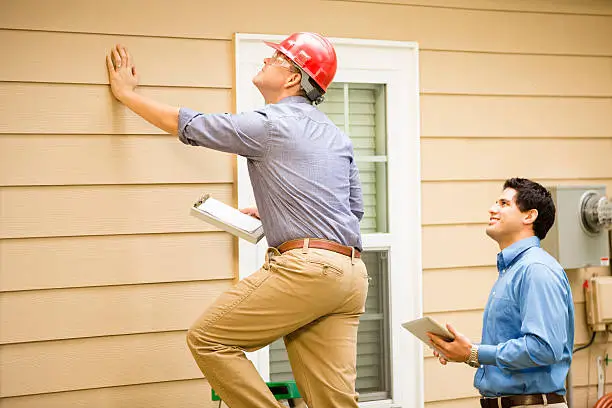
Purchasing a home is a major investment. Our in depth inspection helps you understand the property's condition before making a decision. We provide a thorough assessment, examining everything for potential issues such as moisture or pests, to give you confidence in your purchase.
Pre-Purchase Building Inspection North Shore
Our inspection are designed to protect your investment. Conducted by experienced and qualified inspectors, we identify hidden defects, safety concerns, and maintenance issues. You’ll receive a detailed, easy-to-read report that empowers you to make informed choices.
Your Inspection Completed Within 24-48 hours
Need results fast? Our fast turnaround provides a thorough property review with detailed findings delivered on the same day. Perfect for time-sensitive situations, this service ensures you can move forward with confidence without delays or unnecessary waiting periods.
Our Working Process
Book
Confirm
Inspect
Report

Builders Report
Purchasing a property is one of life's biggest investments – getting a professional builder's report is essential for making the right decision. Alert Building Inspections is New Zealand's trusted building inspection network, with decades of experience in pre-purchase inspections.

Building Report
Our trade-qualified building inspectors conduct thorough inspections covering structural integrity, weathertightness, and potential maintenance issues. We deliver reports within 24-48 hours, including photographs, detailed findings, and specific recommendations.

House Inspection
When investing in real estate, likely your biggest ever commitment, a house inspection is essential. We deliver comprehensive reports from inspectors with extensive local knowledge throughout New Zealand. Select your location to get started!

Building Inspector
Need a Building Inspector? Our trade-qualified team delivers comprehensive reports within 24-48 hours. We specialise in rapid building inspections without compromising quality across all our New Zealand locations.
North Shore Building Types by Era
North Shore's housing is older than most of Auckland's, and the reason is the harbour. Devonport was settled before much of the isthmus, and for its first century the Shore was a string of maritime villages and beach settlements reachable only by ferry. The southern peninsula and the harbour edge filled up from the 1860s; the bays followed as holiday settlements into the 1920s; and the inland suburbs stayed farmland until the harbour bridge made them commutable in 1959. That gives the North Shore two distinct housing stories, not one.
That history is still legible, and it is unusually precise here. Because so much of the Shore was subdivided in a small number of waves, the era a piece of land was cut up very largely decides what is standing on it. Knowing when a house was built tells you which parts of it are likely to fail — and on the Shore, the answer differs depending on whether you are on the harbour side, out in the bays, or up on the ridge.
1840s to 1880s — Flagstaff, Ferries and the First Villas
European settlement on the Shore began at Devonport. A flagstaff was raised on Takarunga in 1840, and the town took its name from it; farming and shipbuilding followed, and the ferry link to Auckland made the peninsula a place people could live and work. In the 1880s the surrounding farmland was subdivided and built on in earnest, and those subdivisions produced the villas that still define Devonport and the older harbour suburbs today.
They were built of kauri from stock plans supplied by the timber companies, and they were built to be seen from the street — main rooms facing the frontage, a passage running front to back, and the kitchen and service rooms pushed into a lean-to at the rear. That layout is the thing to know when buying one. Kauri is durable and resists borer, so framing is rarely the problem; failures usually sit at the pile heads and bearers underneath, in rear additions and lean-tos often built later and without consent, and in original joinery and lead-based paint.
1880s to 1910s — Sugar, the Dockyard and the Boroughs
The event that shaped Birkenhead was the Chelsea Sugar Works, which bought 160 acres at Duck Creek in 1883 and opened in September 1884. It brought families and money to what had been a scattered settlement, and it built its own village of thirty-five workers' cottages with a school, church and store.
Those cottages were damp, and by 1905 they had been condemned and removed; several were relocated up the hill into Birkenhead, where they still stand. The company built four brick duplexes for its tradesmen in 1909, and between 1910 and 1926 workers' housing loans financed more than 130 homes around the suburb.
Two other things shaped the Shore in these decades. The Calliope Dock opened at Devonport in 1888 as the largest drydock in the Southern Hemisphere, which is why Devonport became and remains a naval suburb. And the boroughs arrived: Birkenhead in 1888, Northcote in 1908, Takapuna in 1913. When you look at this era, the takeaway is that much of it was built quickly and cheaply for workers — and that a relocated building can hide a great deal, because a moved house has a history that no longer matches its section.
1910s to 1940s — Beach Resorts and the Bungalow Years
Takapuna and Milford were dairy farms that became resorts, and the bays beyond them were holiday settlements reached by ferry and tram. This produced the Shore's bungalow belt — Takapuna, Milford, Belmont, Bayswater, Hauraki, Forrest Hill — alongside a scatter of transitional villas, English cottage-style houses, and a little Spanish Mission and Moderne among the 1930s build.
Each carries a signature. The bungalows generally sit on suspended timber floors, so the subfloor holds the useful information, and many have been re-piled at least once. The Moderne and Spanish Mission houses from the 1930s brought flat or low-pitched roofs, parapets and concealed gutters, which is a weathertightness question in a way a pitched roof never was. And the old beach settlements are the trap: a bach extended into a permanent home over several decades tends to carry unconsented alterations, lightweight construction, and junctions never designed to keep the weather out year-round.
1940s to 1970s — The Bridge, and State Housing Inland
The harbour bridge opened in 1959 and changed the Shore more than anything before or since. The coastal land was already taken, so development turned inland: Glenfield, Sunnynook, Birkdale, Bayview and Beach Haven were built through the 1960s on land that had been small mixed farms, and an industrial park grew around Wairau Road to employ the new residents. The East Coast Bays became a borough in 1954 while still largely rural, and housing covered it within twenty years.
This is the largest single block of housing on the North Shore, and because it was built to a narrow range of designs, it is also the most predictable to inspect. Expect concrete slabs rather than subfloors; brick and tile or early pressed-metal roofs; original wiring and plumbing; no wall insulation and minimal ceiling insulation; and asbestos in the eaves and soffit linings of anything built before the 1980s. Recurring findings include slab cracking and roof fixings at the end of their life. Aluminium joinery starts to appear from the 1970s.
1970s to 1990s — Infill, Cross-Leases and the First Plaster
From the 1970s, the Shore thickened rather than spread. Rear sections were subdivided, cross-leases were created in volume, and small blocks of flats and terrace units went up behind existing houses through Birkenhead, Northcote, Glenfield and Sunnynook. The cross-lease numbers are worth stating, because they shape what you actually own: the Devonport-Takapuna, Kaipātiki and Hibiscus and Bays areas each hold more than eight thousand cross-lease titles.
Two consequences follow. The first is shared fabric — driveways, retaining walls, roofs and sometimes services held in common, with the lease deciding who pays and the practical answer often being nobody until it fails. The second is retaining: a timber wall has a working life commonly put at fifteen to twenty-five years, and the walls built to create these rear sections in the 1970s and 1980s are now past it, frequently with no drainage behind them and no record of consent. North Shore City itself was formed in 1989 by amalgamating the five boroughs, and up in Albany the strawberry gardens and dairy farms were being redeveloped into lifestyle blocks and terraced housing.
1990s to Today — Leaky Buildings, Albany to Long Bay, and Densification
The North Shore carries one of the densest concentrations of leaky building-era housing in Auckland, and the years matter because the defects stem from the period rather than from neglect. The crisis ran roughly from 1992 to 2004.
Until 1992, most framing was boron-treated; from 1998 to April 2004, houses were commonly built with untreated kiln-dried radiata; and treatment was restored for higher-risk framing from April 2004, with the Building Act 2004 taking effect from 31 March 2005. Over the same years, plaster-over-monolithic cladding became common, and the drainage cavity was required only after a design-risk assessment rather than in every case.
On the Shore, the signature is the two-storey plaster-clad house in Albany, Oteha, Pinehill, Northcross and Long Bay — flat or low-pitched roofs, parapets, balconies and junctions that were difficult to detail and easy to get wrong — and the apartment and townhouse complexes around Takapuna, Milford and the Albany corridor.
Body corporate properties add a layer a standalone house never has, because weathertightness defects may sit in shared elements that the body corporate, rather than the unit owner, is responsible for. Nationally, the consensus estimate is around forty-two thousand affected homes and eleven point three billion dollars in 2008 terms, and Auckland carried a heavy share of it.
More recently, the housing has changed type again. Auckland Council replaced North Shore City in November 2010, and the Unitary Plan has since made terraced and walk-up housing the norm across much of the Shore rather than the exception.
The inspection questions that come with it are different again: inter-tenancy walls and their acoustic and fire separation, shared roofs and shared drainage, small freehold and cross-lease arrangements that decide who pays for what, no-cavity cladding systems — and the plain fact that a three-year-old house can still have a bathroom fan ducted into the ceiling cavity and flashings that were never finished.
What the Era Tells You About Where
Put the eras together, and they map the Shore almost street by street. The pre-1900 villas cluster in Devonport, Stanley Point, Northcote Point and the older parts of Birkenhead and Northcote. The bungalow belt runs through Takapuna, Milford, Hauraki, Belmont, Bayswater, Forrest Hill, Sunnynook and the East Coast Bays from Castor Bay and Campbells Bay through Mairangi Bay, Murrays Bay, Rothesay Bay, Browns Bay, Waiake and Torbay. The post-war state housing fills Glenfield, Birkdale, Beach Haven, Bayview, Northcote, Hillcrest, Chatswood and Totara Vale. Infill and cross-lease stock sits behind the main roads in Birkenhead, Northcote, Glenfield, and Sunnynook. Leaky-era and newer housing is concentrated in Albany, Oteha, Pinehill, Northcross, Unsworth Heights, Schnapper Rock, Greenhithe, Windsor Park, Rosedale and Long Bay.
None of that is a verdict on any individual house. It is a starting position — and it is the one our inspectors carry onto the section before they have opened the gate.
Frequently Asked Questions
How much does a building inspection cost on the North Shore?
Our comprehensive building inspection and report start from $299 and can go higher depending on the size and nature of the property. Your address is the key factor in determining the price, because it sets the travel time and tells us what we are dealing with, so you will know the cost upfront before you book. Coastal and hillside sections, multi-unit properties, and anything with extensive alterations take longer than a standard three-bedroom house, and we will tell you if that applies to yours when you give us the address.
What does a North Shore building inspection cover?
We work through the accessible structure from the ground up: the subfloor and its piles where there is one, or the slab and its cracking pattern where there is not; the roof covering and the state of its bedding, coating and fixings; the gutters, downpipes and flashings; the cladding and its junctions; the joinery; the insulation levels; the visible plumbing and electrical components; the interior linings, wet areas and waterproofing; and the exterior grounds, decks, retaining and paving.
Moisture testing runs through the whole inspection. We test around windows and doors, in bathrooms and laundries, at the base of the cladding, and at the junctions on the exposed elevations, because on the North Shore that is where a problem shows up first and often the only place it shows at all.
Your report arrives within 24-48 hours, written in plain English, with every finding photographed, graded by severity and paired with a recommendation. It complies with NZS 4306:2005, our inspectors carry professional indemnity insurance, and all major banks and lending institutions accept it.
Why do North Shore homes need more moisture testing than inland homes?
Two reasons, and neither has to do with the houses being badly looked after.
The first is housing type. The North Shore has one of the densest concentrations of monolithic-clad housing in Auckland — plaster-clad two-storey houses built through Albany, Oteha, Pinehill, Northcross and Long Bay during the leaky building era, roughly 1992 to 2004. In that construction, the defect is rarely visible from the outside. The cladding looks sound while the framing behind it is wet, so moisture testing is not a precaution there; it is the only way to know.
The second is exposure. The eastern beaches from Takapuna through to Torbay face salt-laden onshore air off the Hauraki Gulf, and the harbour side from Devonport round to Beach Haven takes the prevailing south-westerly driving rain. Elevated readings are more common, and they show up in the same places each time: at the bottom of the cladding, around windows and doors, at balconies and parapets, and at junctions where two different materials meet.
What does salt air do to a North Shore house?
Salt accelerates corrosion, and on the North Shore it does that in the places a viewing never reaches. The usual casualties are roofing and its fixings, flashings, gutters and downpipes, metal fixings through the cladding, and aluminium joinery — particularly on the eastern beaches from Takapuna round to Torbay and Long Bay, and on anything within a few streets of the water.
Two things make it easy to miss. Corrosion usually sits behind the cladding or under the roof rather than on a surface you can see. And it does not fail gradually: a fixing that has corroded through looks no different from a sound one until it lets go. Roof fixings, flashings and joinery on an exposed coastal property are consumable rather than permanent, so they are a routine part of what we check and report on.
Is a 1990s plaster-clad house in Albany or Pinehill a bad buy?
Not necessarily. Plenty of them are sound and have been weathertight for twenty-five years. But they are the highest-risk building type on the North Shore, and you can't assess that risk from a walk-through.
The concerns stem from the period rather than neglect. Framing was commonly untreated kiln-dried radiata between 1998 and April 2004. Cladding was frequently fixed directly to the framing without a drainage cavity. And the shapes that were popular in Albany, Oteha, Pinehill and Northcross — two-storey houses with flat or low-pitched roofs, parapets, recessed balconies and multiple cladding junctions — hold water rather than shed it, and they were difficult to detail and easy to get wrong.
When a standard inspection returns elevated moisture readings, the right next step is an invasive moisture investigation: cutting into the cladding to inspect the framing underneath, using a moisture meter and a thermal camera. A second opinion from the outside won't tell you anything new. It is better to know before you commit than to discover it during a reclad.
Do I need a building inspection for a new build in Long Bay or Milldale?
Yes. New builds can have incomplete work, missed flashings, poorly connected drainage, and finishing defects; it is common to find a bathroom extractor ducted into the ceiling cavity rather than to the exterior, and flashings that were never finished.
Newer housing on the North Shore also raises questions a standalone house never has. Inter-tenancy walls and their acoustic and fire separation, shared roofs and shared drainage, and the body corporate or cross-lease arrangements that decide who pays for what. If a house was built under the current density rules, we also check no-cavity cladding systems and how the junctions between units have been handled.
An independent inspection before settlement is your last chance to have the builder put something right at their cost rather than yours.
What should I look for in a Devonport or Northcote villa?
The framing is usually not the problem, because kauri is durable and resists borer. Failures usually happen in three predictable places instead.
The first is underneath. Villas of that era generally sit on piles with bearers and joists, and decay starts at the pile heads, particularly where the ground has stayed damp, or the ventilation under the floor has been blocked. The second is the rear of the house: most Devonport and Northcote villas have had a lean-to, an extension, a new kitchen or a bathroom added at some point, and those additions were frequently built later, to a lighter standard, and often without consent. The third is what is original — the joinery, the lead-based paint, and the wiring and plumbing that were modern in 1910.
There is a North Shore complication worth knowing about: relocation. When the Chelsea Sugar Works condemned its village of workers' cottages in 1905, several were moved up the hill into Birkenhead and still stand. A moved house has a history that no longer matches its section, and the join between the two halves of a relocated building is worth understanding before you buy one.
Which parts of the North Shore are at risk of slips or cliff erosion?
The risk follows the cliff lines and isn't limited to properties sitting right on the edge. Much of the coastal housing from Devonport round through the East Coast Bays and up to Long Bay sits on or near East Coast Bays Formation cliff lines, and geotechnical studies of these slopes record houses built within only a few metres of the edge.
The mechanics matter more than the map. Slope strength falls as groundwater rises, so a failure usually follows well after the rain has stopped rather than during it. A Beach Haven section failed from a residential backyard to the shore in July 2022, after a month of heavy rain. Failures that catch owners out often happen where someone has modified the ground: cut-and-fill platforms, retaining walls at the end of their working life, and stormwater discharged onto or near a slope.
Our inspection covers the retaining, the platform the house sits on, drainage and overland flow paths, and any sign of past movement. Auckland Council's land instability rules reach into building, earthworks and drainage close to these slopes, so we will tell you when a geotechnical report or a council consent is likely to be needed.
What is different about inspecting an apartment in Takapuna or Milford?
The unit itself is only part of it, and often not the part that matters. In an apartment or townhouse, you also need to know about the building elements you share with your neighbours, because on a unit title or body corporate property, liability usually sits there.
We inspect the interior and accessible exterior of the unit, and report on the shared roof, external walls, common drainage, balconies and decks, and inter-tenancy separation. Takapuna and Milford carry a large share of the North Shore's older apartment stock, much of it built in the leaky era, so we look at how the cladding is fixed, whether there is a drained cavity, and how the parapets, balconies and junctions have been detailed.
It's also worth having the body corporate minutes and the long-term maintenance plan reviewed. They will tell you whether weathertightness work has already been done, what is planned, and what it is likely to cost you.
Do I need a cross-lease inspection on the North Shore?
The North Shore has more of them than almost anywhere in Auckland. The Devonport-Takapuna, Kaipātiki, and Hibiscus and Bays areas each have more than 8,000 cross-lease properties, and much of that stock was created from the 1970s onward, when rear sections were subdivided behind existing houses through Birkenhead, Northcote, Glenfield, and Sunnynook.
A cross-lease means you own a share of the whole site and lease your part, so shared things matter as much as your own dwelling. Driveways, retaining walls, roofs and sometimes services are held in common, and the lease decides who pays when one of them fails — with the practical answer often being nobody until it does.
The inspection covers your dwelling and the shared structure it forms part of, and we report on the condition of the shared elements. Where the lease or the flats plan is unclear about boundaries or responsibility, that is a question for your lawyer, and we will tell you when it needs to go there.
How long does a building inspection take on the North Shore?
Most North Shore inspections take 2 to 3 hours, depending on the property's size and condition. A standard three-bedroom house is usually at the lower end. Larger homes, multi-unit and apartment properties, sloping sections with retaining, and anything with extensive or unconsented alterations all take longer, because there is more to look at and more to record.
We would rather spend an extra hour on site than deliver a report that has to be qualified because something wasn't checked properly.
Can I attend the building inspection?
Absolutely, and we encourage it. Clients who walk through with the inspector get far more out of the report, because you can ask about the things you are actually worried about — the damp patch in the corner, the crack in the driveway, the roof the vendor says was replaced — and see them for yourself while the inspector is there to explain them.
If you cannot make it, that is not a problem. We photograph every finding and write it up in plain English, and we are happy to talk you through the report afterwards.
Are your building inspectors qualified on the North Shore?
Yes. Our inspectors are trade-qualified practising builders who work to NZS 4306:2005 on every inspection, and they carry professional indemnity insurance. They inspect the North Shore constantly, so they know the building types, ground conditions, and coastal exposure that come with it — which is why a Devonport villa and a Pinehill plaster-clad house are treated as two different inspections rather than one checklist applied twice.
Building inspections near me?
Looking for a building inspection service on the North Shore? Alert Building Inspections provides detailed building reports within 24-48 hours, carried out by trade-qualified inspectors working across the Shore every week — from Devonport, Northcote and Birkenhead through Takapuna, Milford and the East Coast Bays to Glenfield, Albany and the Hibiscus Coast. We follow the New Zealand Standard for Property Inspections (NZS 4306:2005).
Call 0800 4 ALERT (425 378) or book online for a firm quote based on your address.
