
Fast Turnaround 24-48 hours
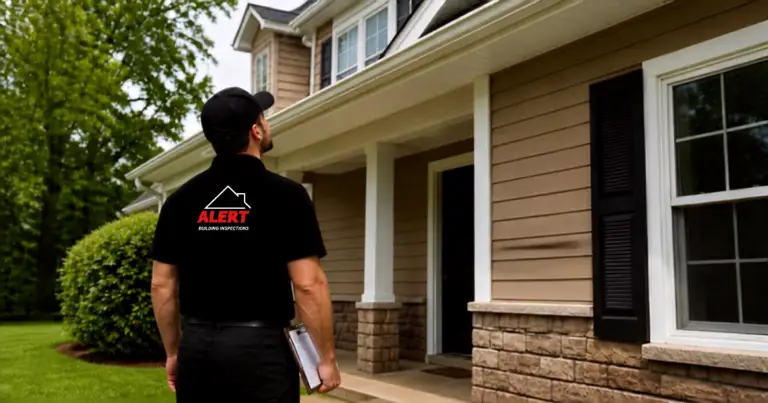
A builders report from Alert tells you what a viewing can’t. Our trade-qualified inspectors are practising builders, and they assess structural integrity, weathertightness and maintenance requirements across every accessible area of the property, in accordance with NZS 4306:2005.
Every report is written in plain English, with findings categorised by severity, photographs of each issue, and specific recommendations — not a checklist of ticks and crosses. All major banks and lending institutions accept our reports.
We inspect across all of Greater Christchurch — from Rangiora and Kaiapoi in the north through to Rolleston, Lincoln and Prebbleton in the south, and from the western suburbs across to Lyttelton and Sumner on the coast.
Call 0800 4 ALERT or book online for a firm quote based on your property address.
+
+

24-48 Hour Report Delivery Guaranteed
Looking for a Building Inspector in Christchurch? Our trade-qualified inspectors provide thorough building reports with meticulous attention to detail.
Our Christchurch building inspection service is perfect for time-sensitive property purchases. Each inspector carries professional indemnity insurance and brings deep knowledge of Christchurch’s local market and common building challenges, including earthquake damage assessment, TC3 land considerations, foundation repairs, EQC remediation quality, and identifying issues with post-quake rebuild properties. All inspections comply with NZS 4306:2005 standards for comprehensive, reliable assessments.

"House inspection" and "building inspection" mean the same thing. If you are buying a home in Christchurch, this is the report you need — a trade-qualified inspector on site, assessing the property in person.
On the day, the inspector works through the property in a set order: the exterior and roof first, then the roof space, then the interior, and finally the subfloor, where accessible. That order is deliberate. In Christchurch, the most expensive problems are rarely found inside a room. Foundation performance and the quality of earthquake repairs are only visible from the subfloor — a cosmetic patch over a cracked foundation is easy to miss from the hallway. Weathertightness failures and timber decay turn up from the outside and from above.
One thing worth knowing before you book: a house inspection is not a valuation. They do different jobs — a valuation assesses market value, and a pre-purchase house inspection assesses condition — and your lender may require both. Buyers often assume one covers the other.
Call 0800 4 ALERT or book online for a firm quote based on your property address.
If you are buying property in Christchurch, you will almost certainly encounter the terms TC1, TC2, and TC3. These Technical Categories were introduced by the Ministry of Business, Innovation and Employment (MBIE) after the Canterbury earthquakes to classify how residential land is expected to perform in future seismic events. Understanding what these categories mean — and what they don't mean — is essential before making one of the biggest financial decisions of your life.
TC1 land experienced minimal ground damage during the Canterbury earthquake sequence and is expected to perform well in future earthquakes. Properties on TC1 land can use standard concrete slab foundations, much the same as pre-earthquake building practice. For buyers, TC1 is the most straightforward category — foundation requirements are conventional, and there are typically no additional engineering costs involved.
TC2 land experienced moderate ground damage, and there is some risk of liquefaction in future events. Properties on TC2 land generally require enhanced foundation designs, most commonly a ribraft slab system that distributes loads more evenly across the ground. The additional cost is modest compared to TC1, and most new builds on TC2 land are engineered to perform just as well as those on TC1. TC2 is the most common land category across Christchurch, so the majority of properties you look at will fall into this bracket.
TC3 land experienced more significant ground damage and carries a higher risk of liquefaction or lateral spreading. Properties on TC3 land require site-specific geotechnical investigation and custom-engineered foundations — often deep piles driven down to solid ground. This does not mean TC3 land is unsafe to build on. All three categories sit within Christchurch's Green Zone, meaning the government has confirmed it is appropriate to build on. The changes are in how you build and in the foundation system used.
During a building inspection, the land category directly influences what our inspectors focus on. On TC1 land, the foundation assessment follows standard practice, including checks for cracking, settlement, and adequate drainage. For TC2 properties, our inspectors pay particular attention to whether the foundation type matches the land category, especially in older homes built before the earthquake that may still have their original foundations.
On TC3 properties, the inspection becomes more detailed. Our inspectors look for evidence of ongoing settlement, check whether post-earthquake foundation work was carried out to an appropriate engineering standard, and assess whether any re-levelling or re-piling has been done correctly.
For older homes on TC2 and TC3 land that were not rebuilt after the earthquakes, foundation performance is one of the most important aspects of an inspection. A house that survived the earthquakes may still have subtle foundation damage that has worsened over time, particularly if repairs were cosmetic rather than structural.
Generally speaking, the western suburbs of Christchurch — including Fendalton, Merivale, Burnside, and Ilam — tend to sit predominantly on TC1 and TC2 land. The ground in these areas is typically more stable, gravel-based soil that performed relatively well during the earthquakes.
The eastern suburbs — areas such as New Brighton, Aranui, Dallington, and Avonside — are more commonly TC3, with sandier soils that are more susceptible to liquefaction. Some eastern areas were designated as Residential Red Zones and acquired by the government, thereby becoming unavailable for residential development.
Many suburbs across the central and southern parts of the city, including Spreydon, St Albans, Papanui, and Hoon Hay, contain a mix of TC1, TC2, and TC3 land. It is entirely possible for one side of a street to be TC2 while the other side is TC3, so you should always check the specific property rather than relying on general suburb-level assumptions. The Canterbury Maps website provides a technical category map that lets you look up any address.
More than 15 years after the Canterbury earthquakes, the legacy of rushed, sometimes inadequate repairs continues to affect Christchurch's housing stock. Thousands of homes were repaired under the Earthquake Commission (EQC) programme, and while many repairs were done well, a significant number were not. For buyers, this means a building inspection is not just about checking the current condition of a property — it is about understanding whether past earthquake repairs were carried out to an appropriate standard.
Our inspectors have seen the full spectrum of post-earthquake repair quality across Christchurch. Some of the most common issues we identify include cosmetic plaster applied over structural cracks without addressing the underlying cause, re-pointing of cracked brickwork without checking whether the brick ties behind the surface had failed, and re-levelling work where insufficient piles were replaced. In one common scenario, a house requiring twenty or more new piles might have received only a handful, leaving the floor unevenly supported and likely to settle again over time.
We also look for "drummy" plasterboard linings — panels that sound hollow when tapped because they have separated from the framing behind them. This reduces the bracing strength of internal walls, which is a structural concern rather than a cosmetic one. Cladding repairs that look acceptable on the surface but were not completed to code are another frequent finding, particularly on properties with monolithic or plaster-style exteriors where earthquake cracking may have been filled and painted over without restoring the weathertight envelope.
A casual walk-through of a property will not reveal the issues that matter most. Our inspectors specifically examine how new repair work integrates with the existing structure, checking joins in new framing, assessing the quality of foundation work, and looking for signs of ongoing settlement or movement that suggest repairs did not resolve the underlying problem.
We check subfloor areas for evidence of re-piling work and assess whether it was done to a professional standard — including whether piles are plumb, properly seated, and adequately braced. We examine the relationship between repaired and unrepaired sections of a house because differential settlement between old and new foundations is a common post-repair issue.
Our moisture testing also takes on added importance in earthquake-repaired homes, since cracking in foundations, cladding, and rooflines can create water ingress pathways that did not exist before the earthquakes.
The passage of time does not erase structural damage — in many cases, it makes it worse. Issues that were minor or hidden at the time of repair are now manifesting as visible problems. Hairline cracks have widened. Foundations that were partially re-levelled have continued to settle unevenly.
Cosmetic repairs to cladding have deteriorated, allowing moisture to penetrate wall cavities. Properties that received EQC cash settlements but were never properly repaired are now showing the cumulative effects of deferred maintenance on top of earthquake damage.
For buyers, the risk is compounded by the fact that many of these properties have changed hands since the earthquakes, and documentation of the repairs — and who did them — may be incomplete or missing entirely. Our inspection provides an independent, current assessment of a property's condition, regardless of what the seller or previous EQC records might say.
If we identify concerns, our report clearly explains what we have identified and what we recommend, whether that is a structural engineer's assessment, a more invasive investigation, or simply awareness of an issue that will require future maintenance.
Christchurch's housing stock spans more than a century of building practices, and each era brings its own set of strengths, weaknesses, and inspection priorities. Understanding what to expect from properties built in different periods helps buyers make informed decisions and gives context to what our inspectors are looking for.
Christchurch's older villas are typically constructed from native timber — rimu, matai, and totara — which is generally durable and long-lasting. However, these properties are now approaching or exceeding 100 years old, and age brings specific issues. Borer infestation is common in native timber, particularly in subfloor areas where moisture levels are higher.
Our inspectors check for active borer activity versus old, inactive damage — a distinction that significantly affects both the severity of the issue and the cost of treatment.
Subfloor ventilation is a critical concern in pre-1940s homes. Many were built with inadequate ventilation openings by modern standards, and subsequent landscaping, path construction, or alterations may have further restricted airflow.
Poor subfloor ventilation leads to moisture accumulation, which accelerates timber decay, encourages borer activity, and can cause musty odours throughout the home. Foundation systems in this era typically consist of concrete or stone piles, which may have shifted or deteriorated over time.
In Christchurch, many of these older foundations sustained earthquake damage that was either undetected or inadequately repaired.
Properties from the mid-twentieth century in Christchurch commonly feature concrete block construction, flat or low-pitched roofing, and materials from the asbestos era. Concrete block walls can develop cracking over time, and the earthquake sequence accelerated this process significantly.
Our inspectors look for both structural cracking patterns and cosmetic cracking, as the distinction determines whether the damage is a maintenance issue or a safety concern.
Flat roofs from this era are approaching or have exceeded their design life, and membrane deterioration is a common finding. Asbestos-containing materials — including roofing, soffit linings, textured coatings, and vinyl floor tiles — are frequently present in homes from this period.
While asbestos is not dangerous when left undisturbed and in good condition, it becomes a significant concern during renovation, demolition, or when materials begin to deteriorate. Our reports identify suspected asbestos-containing materials so that buyers can factor testing and potential management costs into their purchase decision.
Properties built between approximately 1988 and 2004 fall within the highest-risk bracket for weathertightness issues — the period commonly referred to as the leaky building era. Many Christchurch homes from this time were built with monolithic cladding systems, including EIFS (Exterior Insulation and Finishing System) and plaster over fibre cement sheet, often in Mediterranean-inspired designs with flat roofs, minimal eaves, and complex junctions between different building elements.
The core problem was that these cladding systems relied on a thin paint coating as the primary defence against water ingress, and the cladding was often fixed directly to the timber framing without a drainage cavity behind it. When the paint coating cracked — from building movement, UV degradation, or earthquake damage — water entered the wall cavity and could not escape.
Combined with untreated kiln-dried timber framing, commonly used during this period, the result was widespread timber decay that could go undetected for years.
In Christchurch, the earthquakes added another layer of complexity. Properties with monolithic cladding that sustained earthquake cracking may have had cosmetic crack-filling done without restoring the full weathertight envelope.
Our inspectors use moisture testing and thermal imaging to assess properties from this era, and we allocate additional inspection time for monolithic-clad homes because a thorough evaluation requires careful attention to every penetration point, junction, and potential moisture pathway.
Properties built after the Canterbury earthquakes were constructed under updated building standards, including enhanced foundation requirements based on the TC land categories and stricter weathertightness provisions following the leaky building reforms. These homes are generally sound, and the building consent and inspection processes during this period were more rigorous than in previous decades.
That said, the Canterbury rebuild placed enormous pressure on the construction industry. Demand for tradespeople significantly exceeded supply, and construction activity was intense. Our inspectors occasionally find quality issues in rebuild-era homes that suggest rushed workmanship — incomplete flashings, poorly finished junctions, minor framing defects, and finishing work that was not quite up to the standard the building consent process was intended to ensure.
A pre-purchase inspection of a post-2011 home provides reassurance that the property was built to the standard it should have been, or identifies issues that are still relatively straightforward to address.
Every property tells a different story. Here are some anonymised examples from recent inspections our team has carried out across Christchurch, showing the kinds of issues we identify and why a professional building inspection matters.
This three-bedroom Papanui home appeared well-maintained from the street. The vendor confirmed earthquake repairs had been completed and provided an EQC settlement letter. During our inspection, we identified significant cracking in the concrete block walls that had been cosmetically repaired with a skim coat of plaster and repainted.
The crack pattern was structural — stepped cracking following the mortar joints — rather than superficial surface cracking. In the subfloor, we found that re-levelling work had been partially completed, with only four of an estimated twelve piles replaced. The floor had a noticeable slope that the vendor attributed to "character" in an older home.
We recommended a structural engineer's assessment before proceeding, and the buyer was able to renegotiate the purchase price to account for the remediation work required.
This Burnside property was a two-storey home with monolithic plaster cladding, built during the peak of the leaky building era. The home had minimal eaves, a complex roofline with internal gutters, and a second-storey deck with a plaster balustrade.
Our moisture testing identified elevated readings at multiple locations around window and door penetrations, and thermal imaging revealed temperature anomalies consistent with moisture within the wall cavity on the southern elevation. The cladding showed fine cracking that had been painted over but not properly repaired. We advised the buyer to commission a full invasive moisture investigation before committing to the purchase.
The subsequent investigation confirmed timber decay in the framing behind the cladding on two elevations, with an estimated remediation cost exceeding $180,000.
A beautifully presented St Albans character villa that had been extensively renovated. The renovation included a new kitchen and bathroom, as well as a rear addition.
Our inspection revealed that although the renovation was finished to a high cosmetic standard, the junction between the original house and the new addition was not properly weatherproofed. We also identified active borer in the original native timber subfloor framing, with several bearers showing significant cross-section loss.
The subfloor ventilation was inadequate — original vents had been partially blocked by new decking and landscaping. The vendor was unaware of both issues. Our report enabled the buyer to negotiate specific remediation as a condition of sale, including borer treatment, replacement of the worst-affected bearers, and installation of additional subfloor ventilation.
A relatively new four-bedroom Hoon Hay home built during the Canterbury rebuild on TC2 land with a ribraft foundation. The property appeared to be in excellent condition throughout, and many buyers might have questioned whether an inspection was worthwhile on such a recent build.
Our inspector identified that the garage-to-house junction had inadequate flashing, creating a potential moisture pathway into the wall framing. Several downpipe connections to the stormwater system were incomplete, allowing water to discharge directly against the foundation rather than drain away.
The bathroom extractor fan was ducted into the roof space rather than to the exterior, creating a risk of moisture accumulation in the ceiling cavity. None of these issues was visible during a normal walk-through, and all were straightforward to remedy — but left unaddressed, each could have led to significant damage over time.
Our comprehensive building inspection reports start from $299 for a verbal report and from $499 for a full written pre-purchase report. The final price depends on the property's size, age, and complexity. Larger homes, multi-storey properties, and those with monolithic cladding or known earthquake history typically require more inspection time and therefore cost more.
We provide a firm quote based on your property address before you commit, so there are no surprises. When you consider that a building inspection might identify tens of thousands of dollars in hidden issues — or give you the confidence to proceed with your purchase — the cost represents a small fraction of what is likely the largest financial decision you will make.
Our Christchurch building inspectors conduct a systematic inspection of every accessible area of the property, carried out in accordance with NZS 4306:2005. Inside the property, we inspect wall linings, windows and doors, floors, bathroom fixtures and fittings, tiled areas, kitchen cabinetry, and any areas showing signs of moisture penetration or damage.
We conduct thorough moisture testing throughout the house, checking all windows, doors, bathrooms, and other potential water-entry points.
In the subfloor area, where accessible, we inspect foundations, piling, ventilation, plumbing pipework, and look for signs of moisture, borer activity, or timber decay. In Christchurch, subfloor inspections are particularly important because this is where earthquake damage to foundations is most visible and where the quality of re-piling or re-levelling work can be assessed.
We inspect ceilings, roof spaces, roof framing, insulation, wiring, and ventilation. Externally, we assess the condition of the cladding, door and window frames, garages, fences, paving, driveways, decking, drainage, and the overall site.
For Christchurch properties, we pay particular attention to earthquake repair quality, foundation performance relative to the land category, and weathertightness — especially on properties built during the monolithic cladding era of the 1990s and early 2000s.
You will receive a detailed, professionally formatted report that uses clear, straightforward language — not technical jargon. Every issue we identify is documented with photographs and explained in terms of its implications for you as a buyer.
We categorise findings by severity so that you can quickly distinguish between urgent issues requiring immediate attention, maintenance items that should be addressed within a reasonable timeframe, and minor observations for your general awareness.
Each report includes specific recommendations—not vague statements, but practical guidance on what to do. Where we recommend further specialist investigation, such as a structural engineer's assessment or an invasive moisture test, we explain why and what the likely outcomes might be.
Our reports are accepted by all major banks and lending institutions, and they are designed to support your decision-making, whether that means proceeding with confidence, renegotiating the purchase price, requesting specific repairs as a condition of sale, or walking away from a property that carries too much risk.
A building inspection is a detailed, independent examination of a property's condition conducted by a qualified inspector. In Christchurch, a building inspection is even more important than in most other New Zealand cities because of the city's unique combination of challenges.
The Canterbury earthquake sequence damaged thousands of properties, and not all repairs were carried out to an adequate standard. Many homes have changed hands since the earthquakes, and the current owner may not have full knowledge of the property's repair history.
Beyond earthquake-related issues, Christchurch's housing stock includes properties from every building era, each with its own characteristic problems — from borer in pre-war native timber villas to weathertightness risks in 1990s monolithic-clad homes.
The city's climate, including exposure to nor'west winds, coastal moisture from the east, and cold southerly conditions, places ongoing demands on building envelopes that can accelerate deterioration when maintenance has been deferred.
A professional building inspection gives you the information you need to make an informed purchasing decision, avoiding costly surprises after settlement.
Most building inspections take 1-2 hours on site, depending on the property's size, age, and condition. Larger homes, properties with extensive subfloor areas, and those with monolithic cladding systems typically take longer because these require more detailed assessment. Multi-storey homes and properties with known earthquake history also require additional time.
Our inspectors don't rush — a thorough inspection is worth far more than a quick one. After the on-site inspection, we prepare and deliver your report within 24–48 hours.
Yes, and Christchurch is a particularly good example of why. During the Canterbury rebuild, the construction industry was under enormous pressure to deliver homes quickly, and the demand for qualified tradespeople far exceeded supply.
While the building consent and inspection process provides a level of quality assurance, it does not catch everything. Our inspectors regularly find issues in relatively new homes, including incomplete flashings, poorly connected drainage, bathroom extraction ducted into roof spaces rather than to the exterior, and finishing defects that could lead to problems over time.
Identifying these issues before settlement gives you the opportunity to have them remedied by the builder while they are still straightforward to fix.
Absolutely — we encourage it. Attending the inspection gives you the opportunity to see the property through the eyes of an experienced building professional, ask questions in real time, and gain a far deeper understanding of the home than a report alone can provide.
Our inspectors will walk you through their findings on site, point out areas of concern, explain what is normal for the age and type of property, and provide context to help you interpret the written report when it arrives.
There is no additional charge for attending, and most clients find it one of the most valuable parts of the process.
Christchurch has a distinct set of common building issues that reflect the city's earthquake history, climate, and the eras in which its housing stock was built. Post-earthquake foundation damage and settlement remain one of the most frequent findings, particularly in properties where repairs were cosmetic rather than structural. Ongoing settlement in homes on TC2 and TC3 land that were not rebuilt or adequately re-piled is a related concern.
Weathertightness issues are common across all property types, but are most prevalent in homes built during the monolithic cladding era of the late 1980s through to the mid-2000s. Moisture penetration through cracked or deteriorating cladding, failed sealant joints, and inadequate flashings leads to timber decay within wall cavities — damage that is often invisible from both inside and outside the home until it becomes severe.
Nor'west wind damage is a Christchurch-specific issue. The hot, dry föhn winds that blow off the Southern Alps can reach speeds that loosen roofing, lift flashings, and accelerate the deterioration of exterior coatings on the exposed western and north-western faces of buildings. Properties on elevated sites in suburbs such as Cashmere and the Port Hills are particularly exposed.
Rotting timber, particularly in subfloor areas with poor ventilation, is common in older homes. Borer infestation in native timber framing is another frequent finding in pre-war villas. Poor or absent insulation, inadequate drainage, leaking plumbing, and deferred general maintenance round out the list of issues our inspectors encounter regularly across Christchurch properties.
Yes, pre-purchase building inspections are our core service in Christchurch. Whether you are buying your first home, upgrading to a larger property, purchasing an investment property, or acquiring a commercial building, our inspections are designed to give you the detailed, independent information you need before committing to a purchase.
We inspect properties across all of Greater Christchurch and wider Canterbury, from Kaiapoi and Rangiora in the north to Rolleston, Lincoln, and Prebbleton in the south, and from Lyttelton and Sumner on the coast through to the central city and western suburbs.
All of our building inspectors are trade-qualified through the Building and Construction Industry Training Organisation (BCITO) and bring extensive hands-on experience as practising builders. They hold professional indemnity insurance and conduct all inspections in accordance with NZS 4306:2005.
Critically for Christchurch, our inspectors have deep local knowledge — they understand the specific challenges of Canterbury's housing stock, from earthquake damage assessment and TC land category implications through to the particular building defects associated with each era of Christchurch construction.
This is not theoretical knowledge; it comes from inspecting hundreds of Christchurch properties and seeing firsthand what issues recur in specific suburbs, building types, and construction periods.
A building inspection — more specifically, a pre-purchase building inspection — is commissioned by the buyer to assess the condition of a property before purchasing it. The report is designed to identify defects, maintenance issues, and potential risks so the buyer can make an informed decision.
A pre-listing inspection, by contrast, is commissioned by the seller before listing the property. The purpose is to identify any issues in advance so the seller can either address them before listing or disclose them transparently to potential buyers. Both types of inspection follow the same rigorous methodology.
For sellers in Christchurch, a pre-listing inspection can be particularly valuable because it demonstrates transparency about earthquake history and repair quality, which builds buyer confidence and can support a smoother, faster sale process.
Yes, and moisture testing matters more in Christchurch than in most New Zealand cities. Christchurch has a large stock of homes built during the leaky building era of roughly 1988 to 2004, when monolithic cladding was often fixed directly to untreated timber framing with limited cavity or eaves protection.
The Canterbury earthquakes added a second layer of risk. Cracking in cladding, foundations and rooflines created new pathways for water to reach wall cavities, and where repairs were cosmetic - plaster or sealant over a crack rather than a proper repair - that moisture can sit undetected for years.
We use both pin-type and non-invasive moisture meters to test around windows, doors, cladding penetrations and bathrooms, and we extend that testing on properties from the leaky building era. Where readings indicate a concern, your report recommends a full invasive moisture investigation by a specialist weathertightness consultant.
If you are looking for a building inspector near you in Christchurch, we cover the whole city and wider Canterbury - not just the central suburbs.
Our inspectors regularly work across Riccarton, Fendalton, Merivale, Ilam, Burnside, Cashmere, Spreydon, Hoon Hay, St Albans, Papanui, and the central city, as well as outlying areas including Kaiapoi, Rangiora, Rolleston, Lincoln, Prebbleton, Lyttelton, and Sumner.
Book online or call 0800 4 ALERT (425 378), and we will confirm your inspection time and give you a firm quote based on the property address.

Copyright © 2016- Alert Building Inspections