
Alert Building Inspections provides professional building inspections across Whangaparaoa and the wider Hibiscus Coast for home buyers, sellers, and property investors. The peninsula was Crown land from 1853 and remained farmland until the Harbour Bridge turned its baches into permanent homes, so its housing runs from 1920s cottages to today's new builds. Our trade-qualified building inspectors assess the property, explain what they find in plain English, and provide practical advice through a comprehensive written or verbal builders report. With fast bookings and reports available within 24-48 hours, getting the information you need is simple.
Ngati Kahu lived and fished on the Whangaparaoa Peninsula for generations before the Crown bought it in 1853. The Shakespear family then farmed most of it for over a century, and it stayed rural until the 1920s, when Auckland families started building holiday baches around its bays. A New Zealand Army camp took over the eastern end during the Second World War, and the peninsula's permanent suburban growth dates from the 1950s and 1960s.
The ground shapes building inspection here. The peninsula is made almost entirely of Waitemata Group rock — Lower Miocene sandstone, siltstone and mudstone laid down as undersea flows and only weakly cemented since. It is a textbook locality for ancient slumping: one fossil slump sheet runs roughly 16 kilometres from the peninsula's western side out to Whangaparaoa Head. Long-term cliff erosion on Waitemata Group coasts has been measured between about 1 and 53 millimetres a year; Army Bay has among the lowest rock mass quality of any site assessed in Auckland, and beds that dip towards the sea erode fastest.
That matters because rainfall triggers it. Saturated ground raises pore pressure, shear strength drops, and the cliff gives way. During the January 2023 Anniversary Storm, the peninsula recorded collapses along its cliff tops, and many coastal properties in Auckland sit less than ten metres back from an edge. Salt-laden air is the quieter problem: it works on roof fixings, flashings and joinery every year a house stands this close to the sea.
Fast Turnaround 24-48 hours
A builders report from Alert tells you what a viewing can't. Our trade-qualified inspectors are practising builders, and they assess structural integrity, weathertightness and maintenance requirements across every accessible area of the property, in accordance with NZS 4306:2005.
On a Whangaparaoa property, that assessment has a particular emphasis. The ground here is Waitemata Group rock, which weakens when saturated, so anything structural on or near a slope gets close attention, along with retaining walls and how the section drains. Because the peninsula is coastal, we also look closely at whether the roof fixings, flashings, and metal joinery have been corroded by salt air, and how recent the protective coatings are.
Every report is written in plain English, with findings categorised by severity, photographs of each issue, and specific recommendations — not a checklist of ticks and crosses. All major banks and lending institutions accept our reports.
Call 0800 4 ALERT or book online for a firm quote based on your property address.
+
+
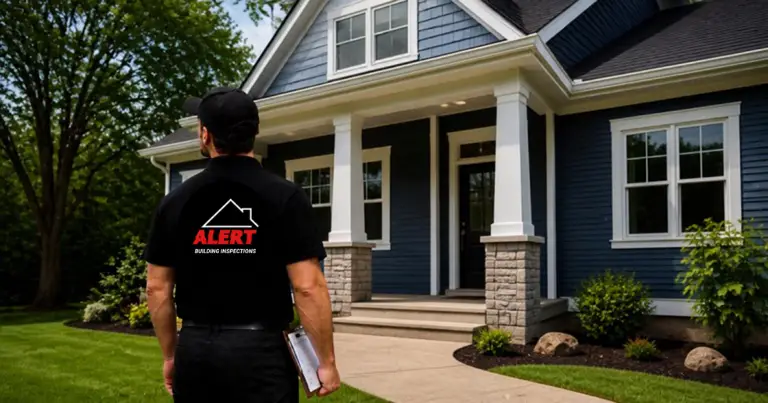
A house inspection and a building inspection mean the same thing. If you are buying a home on the peninsula, this is the report you need — a trade-qualified inspector on site, assessing the property in person. On the day, the inspector works through the property in a set order: the exterior and roof first, then the roof space, then the interior, and finally the subfloor, where accessible.
Which of those carries the most weight depends on the property. Whangaparaoa's older homes — the 1920s and 1930s baches, and the weatherboard houses built once the Harbour Bridge opened — generally stand on timber piles, so the subfloor is where the significant findings usually are: pile and bearer condition, borer, ventilation, and how much moisture the ground beneath is holding. Later homes on concrete slabs shift the attention to the envelope and overhead, where roofing, cladding junctions and joinery carry the load.
What makes Whangaparaoa distinctive is the site as much as the house. On a peninsula of weak rock and steep coastal sections, how far the building sits from an edge, and whether the ground around it has moved, can matter more than the building itself.
24-48 Hour Report Delivery Guaranteed
Looking for a Building Inspector in Whangaparaoa? Our trade-qualified inspectors know the local building stock — 1920s baches on piles, 1960s and 1970s weatherboard homes, 1980s brick veneer, and recent infill and terraced housing.
This is a coastal peninsula of weak Waitemata Group rock, and salt air works on fixings and joinery year-round. We assess the roof, cladding, visible foundation performance and the stability of the ground around the building, and will say plainly what needs attention. All inspections comply with NZS 4306:2005.
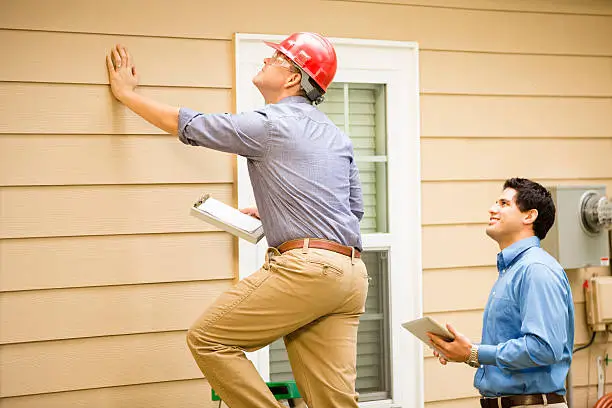
Purchasing a home is a major investment. Our in depth inspection helps you understand the property's condition before making a decision. We provide a thorough assessment, examining everything for potential issues such as moisture or pests, to give you confidence in your purchase.
Our inspection are designed to protect your investment. Conducted by experienced and qualified inspectors, we identify hidden defects, safety concerns, and maintenance issues. You’ll receive a detailed, easy-to-read report that empowers you to make informed choices.
Need results fast? Our fast turnaround provides a thorough property review with detailed findings delivered on the same day. Perfect for time-sensitive situations, this service ensures you can move forward with confidence without delays or unnecessary waiting periods.
We inspect across Whangaparaoa and the wider Hibiscus Coast — Orewa, Red Beach, Stanmore Bay, Manly, Tindalls Beach, Arkles Bay, Gulf Harbour, Hatfields Beach, Silverdale, Millwater and Milldale — as well as Auckland and the rest of the region. See our full locations directory for coverage across Auckland.

Purchasing a property is one of life's biggest investments – getting a professional builder's report is essential for making the right decision. Alert Building Inspections is New Zealand's trusted building inspection network, with decades of experience in pre-purchase inspections.

Our trade-qualified building inspectors conduct thorough inspections covering structural integrity, weathertightness, and potential maintenance issues. We deliver reports within 24-48 hours, including photographs, detailed findings, and specific recommendations.

When investing in real estate, likely your biggest ever commitment, a house inspection is essential. We deliver comprehensive reports from inspectors with extensive local knowledge throughout New Zealand. Select your location to get started!

Need a Building Inspector? Our trade-qualified team delivers comprehensive reports within 24-48 hours. We specialise in rapid building inspections without compromising quality across all our New Zealand locations.
Whangaparaoa has been settled since 1853, and it has been built over in distinct waves — farmland, then holiday baches, then suburbia. Each wave left a different kind of house behind, and each fails in its own way.
The Crown bought the peninsula in 1853 and leased it for grazing. Kauri was milled out of the gullies and gum diggers worked the ground, but there was no town — just the Shakespear family's farm, a few farm buildings, and Māori settlements at the eastern end that continued into the 1890s. Almost nothing domestic from this period survives.
Through the early twentieth century the peninsula stayed farmland. Access was by boat or by rough road, and the few buildings were farm cottages, woolsheds and small boarding houses. Construction of that era is simple, unlined and almost always on timber piles.
From the 1920s, Auckland families began building holiday baches around the bays, reached by ferry and a growing road network. These were small, often unconsented, weatherboard or fibrolite structures on piles, frequently extended over the decades that followed. A surprising share of the peninsula's older housing started life as one of these.
The Second World War changed the peninsula abruptly. The army built a major camp at the eastern end and two coastal gun batteries, one of them a 9.2-inch battery whose underground chambers the Navy still uses as an ammunition store. Roads and services followed the military in, and after 1945 the area was no longer remote.
Post-war housing went up around the bays for returning servicemen and holidaymakers, but growth was limited. Until 1959, the only way to Auckland was the long way round, so the peninsula remained a seasonal place with a small permanent population.
The Auckland Harbour Bridge opened in 1959, making commuting possible. Town centres were built, sections were subdivided, and baches were converted into permanent homes or replaced. Most of the peninsula's housing stock dates from this period: single-storey weatherboard and brick veneer homes on piles or slabs, built quickly and often added to later.
The 1980s brought a second wave on the remaining paddocks and on the flatter ground inland. Houses got larger, brick veneer became standard, and double garages appeared. Many of these homes are now reaching the age where the original roof, joinery and exterior coatings are due for replacement.
Many New Zealand homes built in this window were clad in monolithic plaster systems, often without the drained and vented cavity that later became mandatory, and Auckland was the centre of the resulting leaky building crisis. Where detailing or maintenance has been poor, these houses are most likely to have hidden weathertightness problems.
Whangaparaoa's population rose 18.5 per cent between 2013 and 2023, and the peninsula is being intensified — infill, terraced housing and medium density around the town centres, plus new development at its base. The O Mahurangi Penlink highway, now due to open in late 2029, will reshape access to the whole area.
Whangaparaoa has been settled since 1853, though most of its housing is post-war. On a coastal peninsula of weak rock, that history shapes what is worth checking:
If you would rather work through it yourself first, our property inspection checklist covers the same ground from a buyer's point of view.
Our comprehensive building inspection and report start from $299 and can go higher depending on the property's size, age, and condition. A verbal report for a straightforward home sits at the lower end, while larger or older properties with more to check take longer. See typical building inspection costs, or call us for a firm quote based on the property address.
The risk is real, and it is well documented. The peninsula is Waitemata Group rock, which loses strength when saturated, and during the January 2023 Anniversary Storm it recorded collapses along its cliff tops. Many coastal properties in Auckland sit less than ten metres back from an edge. If a section is close to a cliff or a steep slope, we look for signs of movement and recommend a geotechnical assessment where the setback is tight.
It is the layer of sandstone, siltstone and mudstone laid down across this part of Auckland roughly 20 million years ago. It is weakly cemented, and it is the reason this coast has cliffs at all. Long-term erosion on these cliffs has been measured between about 1 and 53 millimetres a year, and the rate depends on which way the beds dip — beds leaning towards the sea erode fastest.
A leaky building is one where water has got behind the cladding and into the framing, usually because a monolithic plaster system was installed without a drained and vented cavity. The problem is concentrated in homes built between the early 1990s and 2004, and Auckland was the centre of it. A builders report will identify the cladding system and look for the early signs.
Parts of it do. The peninsula has steep catchments that shed water quickly, and flooding and surface ponding show up on the low-lying ground at its base and around the bays. As with any coastal location, low ground can also be affected by coastal inundation during storm-tide events.
The accessible structure from the piles to the roof — pile and bearer condition, subfloor moisture and ventilation, roof and cladding condition, joinery, and the state of the section. On a bach-era cottage, we pay particular attention to the subfloor and whatever has been added over the years, since extensions are where the detailing is most often wrong.
Looking for building inspection services on the Hibiscus Coast? Alert Building Inspections provides detailed builders reports and pre-purchase inspections across Whangaparaoa, the wider Hibiscus Coast and the Auckland region, with trade-qualified inspectors and reports delivered within 24 to 48 hours.

Copyright © 2016- Alert Building Inspections