
Alert Building Inspections provides professional building inspections across West Auckland and the wider Auckland region for home buyers, sellers, and property investors. Our trade-qualified building inspectors thoroughly assess the property, explain what they find, and provide practical advice through a comprehensive written or verbal builders report. With fast bookings and reports available within 24-48 hours, getting the information you need is simple.
West Auckland is not one housing market but several, and that is the first thing an inspection here has to deal with. Within twenty minutes of the Henderson town centre, you can be standing in front of an Edwardian villa in one of the old boroughs, a 1950s state house on a full section, a 1990s plaster-clad townhouse on a rear site, and a three-year-old terrace in a master-planned subdivision. The older centres — Henderson, New Lynn, Glen Eden, Avondale — carry the pre-war villas and bungalows; Massey, Ranui, Kelston and Glendene carry the large post-war state and low-cost estates; Titirangi, Laingholm and the foothills carry houses built onto slopes; and Hobsonville, West Harbour, Westgate, Kumeu and Huapai carry the modern stock. Each fails in its own way, and none can be inspected on the same list.
The ground is the other half, and in West Auckland it is unusually varied. Much of the flat land sits on Waitematā Group soils where the clay is reactive — it shrinks through summer and swells again in winter, and it moves foundations with it. The foothills and ranges are steep and weathered, and houses on them often sit on cut-and-fill platforms with retaining walls that are now decades old. Kauri dieback adds a constraint that exists nowhere else in the country: the highest infection levels recorded in Auckland have been on private land around Titirangi, Huia and Laingholm, which changes what can be done on any section with kauri on it. And the 1990s and early 2000s left the west a large legacy of monolithic-clad housing from the leaky building years — the period when framing was often untreated, and cladding was frequently fixed without a drainage cavity. Read together, those four facts decide what matters on a given West Auckland property before the inspector gets out of the car.
Fast Turnaround 24-48 hours
A builders report from Alert tells you what a viewing can't. Our trade-qualified inspectors are practising builders, and they assess structural integrity, weathertightness and maintenance requirements across every accessible area of the property, in accordance with NZS 4306:2005.
Every report is written in plain English, with findings categorised by severity, photographs of each issue, and specific recommendations — not a checklist of ticks and crosses. All major banks and lending institutions accept our reports.
We inspect across West Auckland — Henderson, New Lynn, Glen Eden, Avondale, Te Atatu, Titirangi, Massey, Ranui, Kelston, Glendene, Laingholm, Oratia, Swanson, Whenuapai, West Harbour, Hobsonville, Kumeu, Huapai and Riverhead — as well as the wider Auckland region.
Call 0800 4 ALERT or book online for a firm quote based on your property address.
+
+
"House inspection" and "building inspection" mean the same thing: a trade-qualified inspector on site, working in a set order — exterior and roof, roof space, interior, then the subfloor where there is one. That order matters here, because the housing changes type sharply from street to street.
A pre-war villa in Henderson or Avondale has native framing and a suspended timber floor, so the subfloor holds the useful information. A 1950s or 1960s state house in Massey or Ranui is often on a concrete slab with no subfloor at all, moving the questions to the slab, roof and services. A 1990s plaster-clad townhouse is different again: its defect is rarely visible and has to be found by moisture testing. And a Titirangi or Laingholm house on a slope brings retaining walls, cut-and-fill platforms and drainage into the report.
Clay across much of the flat land is reactive, moving foundations as it shrinks and swells with the seasons, and the steep ranges and foothills make slips a genuine consideration. The Piha and Karekare failures during Cyclone Gabrielle in February 2023 were shallow slips in that weathered layer on steep slopes, and where platforms had been cut and filled or retaining built, those failed too. So on a West Auckland slope the risk is decided less by the geology than by what was done to it — and whether that has been maintained. Kauri dieback is the third constraint: the highest infection levels in Auckland are on private land around Titirangi, Huia and Laingholm, and kauri on site changes what can be built, dug or drained.
24-48 Hour Report Delivery Guaranteed
Looking for a Building Inspector in West Auckland? Our trade-qualified inspectors provide thorough reports and carry professional indemnity insurance.
Our West Auckland building inspection service brings deep knowledge of the local market and its common building challenges — concrete tile and decramastic roofs past their bedding, cracking in slabs and ring beams from reactive clay movement, timber retaining walls at the end of their working life, moisture in 1990s plaster-clad townhouses, uninsulated walls and original wiring and plumbing in the post-war stock, and asbestos in the eaves, ceilings and pipe lagging of pre-1980s homes.
Two things are unique to this part of Auckland. Kauri dieback subjects earthworks, drainage and landscaping near the ranges to controls and hygiene requirements, with the highest infection levels in Auckland recorded on private land around Titirangi, Huia and Laingholm. And the Waitakere Ranges Heritage Area Act 2008 sets the planning framework across the foothills and coasts. Every inspection complies with NZS 4306:2005.
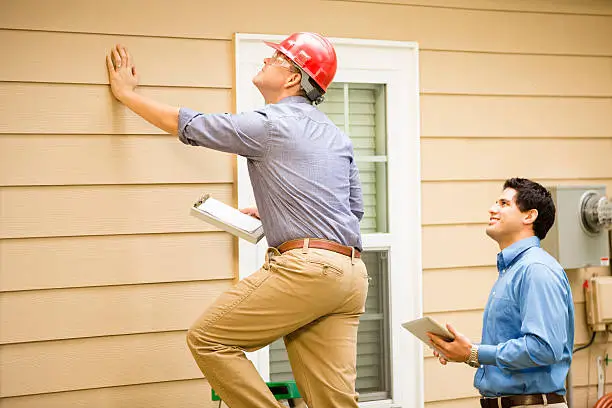
Purchasing a home is a major investment. Our in depth inspection helps you understand the property's condition before making a decision. We provide a thorough assessment, examining everything for potential issues such as moisture or pests, to give you confidence in your purchase.
Our inspection are designed to protect your investment. Conducted by experienced and qualified inspectors, we identify hidden defects, safety concerns, and maintenance issues. You’ll receive a detailed, easy-to-read report that empowers you to make informed choices.
Need results fast? Our fast turnaround provides a thorough property review with detailed findings delivered on the same day. Perfect for time-sensitive situations, this service ensures you can move forward with confidence without delays or unnecessary waiting periods.

Purchasing a property is one of life's biggest investments – getting a professional builder's report is essential for making the right decision. Alert Building Inspections is New Zealand's trusted building inspection network, with decades of experience in pre-purchase inspections.

Our trade-qualified building inspectors conduct thorough inspections covering structural integrity, weathertightness, and potential maintenance issues. We deliver reports within 24-48 hours, including photographs, detailed findings, and specific recommendations.

When investing in real estate, likely your biggest ever commitment, a house inspection is essential. We deliver comprehensive reports from inspectors with extensive local knowledge throughout New Zealand. Select your location to get started!

Need a Building Inspector? Our trade-qualified team delivers comprehensive reports within 24-48 hours. We specialise in rapid building inspections without compromising quality across all our New Zealand locations.
West Auckland's buildings are far younger than most people expect, and the reason is the kauri. The trees came down first, from the 1840s, and the farmland, brickworks, and orchards came after. What survived into the twentieth century was a scatter of small industrial and horticultural settlements strung along the railway, and only after the Second World War did the west become the place most Aucklanders actually live.
That history is still legible in the housing: the old boroughs of Henderson, New Lynn and Glen Eden carry the pre-war villas and bungalows, Massey, Ranui, Kelston and Glendene carry the state housing and low-cost estates of the 1950s and 1960s, Titirangi, Laingholm and the foothills carry houses built onto slopes, and the 1990s left a substantial legacy of plaster-clad housing from the leaky building years. Knowing when a house was built tells you which parts of it are likely to fail. What lies underneath tells you how much that failure will cost.
The first industry in West Auckland was neither farming nor building. It was the removal of the forest, and it happened at a scale that is hard to picture now. In 1844, Thomas Henderson and John Macfarlane arranged with Ngāti Whātua for roughly eighteen thousand acres of the ranges, paying in goods and the schooner Lucy Dunn.
The government subsequently treated that transaction as void, and the partners had to obtain formal permission from Governor George Grey in 1847 before they could cut. The mill went up around 1848 where the Opanuku and Oratia streams meet — the place that still carries Henderson's name — and by the time it closed in 1868, it had taken something like forty-five million super feet of kauri in fifteen years.
That mill, and the ones that followed, is why almost nothing from the suburb's first half-century remains standing here, and it's worth being clear about because buyers often assume the opposite. Kauri was worth more shipped out than left standing, so the early west was built to extract timber rather than to house people, and the buildings that went with that — the mill, the wharf, the track, the tram line into the ranges — have all gone.
Between 1840 and 1940 twenty-three mills worked these hills, and something like a hundred and twenty thousand trees came down. What the period left behind is a set of names, a road network that still follows the old timber tracks, and two creeks that many West Auckland houses now sit beside.
Next, West Auckland provided Auckland with its clay. Dr Daniel Pollen set up a brick kiln at the mouth of the Whau in 1852, and by 1901 the brick and tile works had clustered at New Lynn, where they stayed for most of a century. Crown Lynn grew out of that cluster to become the largest pottery in the southern hemisphere before it closed in the 1980s. It is a neat irony that the same clay that made the west a brick-making centre now makes its foundations move, and anyone buying in New Lynn or Avondale is dealing with both halves of that fact.
The other thing that arrived in this period was a railway, and it changed everything. The line reached Henderson in 1881, which turned a scattering of mills and farms into somewhere people could live and travel from, and New Lynn, Glen Eden and Henderson each became boroughs with their own councils.
Alongside the railway came the west's institutions — the schools, the churches and the Waikumete cemetery on the ridge, which remains one of the largest in the country. The housing of these decades is modest and mostly still standing: small weatherboard cottages and villas close to the rail and the works, built for the people who ran the kilns, the orchards and the timber trade. They are the oldest residential buildings in West Auckland, and far fewer remain than the suburb's age would suggest.
Orchards were tried at Glen Eden as early as 1853 and largely failed because fruit needs a market it can reach, and transport wasn't there. A wave of immigration changed the industry. From the early 1900s, Dalmatian settlers — from the Croatian coast — began taking up land around Henderson and Oratia, and they made the orchards work commercially where the earlier attempts had not. By 1960, the vineyards and orchards of just those two districts were producing around eighty per cent of Auckland's crop, and the family names on West Auckland wine labels today are largely those growers' names.
The consequence for anyone inspecting here is that much of the west's older housing is rural working housing rather than town housing. Around Oratia, Henderson Valley, Swanson and the Waikumete hills there are farmhouses, packing sheds, pickers' cottages and small wineries from this period, and they come with a set of problems that a suburban villa does not have: sheds and outbuildings of unknown consent status, older and sometimes chemical-heavy uses on the land, water supply and drainage that was never connected to a town system, and long driveways and accessways that carry their own drainage and retaining questions.
The same decades also gave Titirangi its character, because the painters and potters who settled in the bush there from the 1950s built small houses on difficult sections — and those sections are why the area's inspection questions are about slope rather than age.
This is the period that built the West Auckland most people live in today. After the war, the government and the Auckland City and Waitemata councils put up large state housing estates across Massey, Ranui, Kelston, Glendene and parts of Glen Eden, and alongside them the low-cost Neil Homes were built in volume through the 1950s and 1960s to put ordinary families into new houses cheaply.
Immigration did the rest: Dutch families settled heavily in the west from the 1950s, and by the 1980s around a third of New Zealand's Dutch population lived in West Auckland. The North-Western Motorway, opened in stages from the 1950s, made it all commutable.
The housing from these three decades is surprisingly consistent, and that consistency helps during an inspection. The earliest state houses and Neil Homes are single-storey weatherboard or brick veneer under concrete tile or corrugated metal, often on a suspended timber floor with a usable subfloor. As the period goes on, construction moves to concrete slabs, sections get smaller, and garages move under the house on sloping sites.
Decramastic and similar pressed-metal tile roofs appear from the 1970s, and they bring their own failure mode — the coating and the fixings, rather than the tile. Original wiring, copper or galvanised plumbing, no wall insulation and minimal ceiling insulation are near-universal. Asbestos in the eaves and soffit linings is also common in anything built before the 1980s, which matters here because this is the largest single block of housing in West Auckland.
From the 1970s, the west thickened rather than spread. Rear sections were subdivided, cross-leases were created, and small blocks of flats and terrace units went up on the back of existing lots in Henderson, New Lynn, Glen Eden and Te Atatu. At the same time Titirangi, Laingholm, Waiatarua and the coastal settlements became genuinely popular addresses, and building on those sections meant dealing with the ground rather than avoiding it — cut-and-fill platforms, pole and pile foundations stepping down a slope, retaining walls, decks cantilevered out over a bank, and long driveways that have to get stormwater off the site and away downhill.
Two things from this period keep coming up on inspections. The first is retaining. A timber retaining wall has a working life commonly estimated at fifteen to twenty-five years, and the walls built to create West Auckland's bush sections in the 1970s and 1980s are now well past that, often with no drainage behind them and no consent record. When one fails, it takes the ground with it, and a house on the platform above is directly affected.
The second is drainage and overland flow. On a clay section on a slope, water that cannot soak away has to go somewhere, and the failure mode is a wet subfloor, a scoured driveway or a neighbour's problem. Both are things an inspector can see and report, and both are routinely missed by buyers focused on the view.
West Auckland has a large share of the country's leaky buildings, and the years matter because the defects stem from that period rather than neglect. The crisis ran roughly from 1992 to 2004. Until 1992, most house framing was boron-treated; from 1998 to April 2004, houses were commonly built with untreated kiln-dried radiata; and treatment was restored for higher-risk framing from April 2004, with the Building Act 2004 taking effect from 31 March 2005.
Over the same period, monolithic cladding systems—plaster over fibre cement or polystyrene—became common, and the drainage cavity that lets a wall dry out was required only after a design-risk assessment rather than in every case. Untreated framing, cladding fixed without a cavity, and complex shapes with parapets, balconies and junctions add up to walls that hold water rather than shed it.
Nationally, the consensus estimate is around forty-two thousand affected homes, with a total cost of eleven point three billion dollars in 2008 terms, and Auckland carried a heavy share of it. In West Auckland the signature is the plaster-clad townhouse and the 1990s infill subdivision, particularly around Massey, Henderson, Te Atatu and West Harbour.
In recent decades, housing types have changed again. Hobsonville Point, built from around 2010 on the old air force land, is one of the largest master-planned developments in the country, and with Westgate and the surrounding terraced and walk-up development, it has made medium density the norm rather than the exception in the north-west. Auckland Council replaced Waitākere City on 1 November 2010, ending Henderson's run as a council town.
The inspection questions that come with this housing are different again: inter-tenancy walls and their acoustic and fire separation, shared roofs and shared drainage, small freehold and cross-lease arrangements that decide who pays for what, no-cavity modern cladding systems, and the plain fact that a house three years old can still have a bathroom fan ducted into the ceiling cavity and flashings that were never finished.
Flat West Auckland and hilly West Auckland fail in completely different ways, and both are common enough here to shape what an inspector looks for. Across much of the flat west — Henderson, Massey, New Lynn, Avondale, Te Atatu — the ground is Waitematā Group soil, and its clay is reactive. Reactive clay shrinks as it dries through summer and swells again in winter, and it moves foundations with it.
That movement is seasonal and cumulative rather than sudden, and it shows up as stepped cracking in concrete block walls, diagonal cracking in ring beams, floors that vary in level across a room, doors and windows that stick in one season and free up in another, and paths, driveways and garage slabs that crack along a line that tracks the house.
It matters for lending and design as well as repair, because clay-like ground can fall outside what the standard NZS 3604 timber-framed construction rules accept as "good ground", in which case specific engineering design and a geotechnical investigation are required. A house can be perfectly sound on reactive clay; the question is always whether the foundations were designed for it and whether the movement is still going on.
The hills fail differently. In the Waitākere Ranges and coastal settlements, the soil is a relatively thin layer of weathered rock on steep slopes, and when it is saturated, it moves. The failures in Piha and Karekare during Cyclone Gabrielle in February 2023 were shallow translational slips in that upper weathered layer, and the pattern was clear: they triggered on slopes steeper than about twenty-five degrees, with thin soil cover, on ground already saturated by the anniversary weekend floods a fortnight earlier. That is a natural process, but the report also separated out a second category, and it matters most to a buyer.
Failures also occurred in ground people had modified — cut-and-fill building platforms and retaining walls — which means that on a West Auckland slope the risk is not decided by the geology alone, but by what was done to the slope when the house was built and whether the retaining has been maintained since. Council's regional landslide mapping treats the ranges as their own assessment area for exactly this reason.
Kauri dieback is the third constraint, and West Auckland is the only part of the country where it is routinely considered on a private residential section. In the Waitākere Ranges Regional Park, which covers more than sixteen thousand hectares of native forest, the recorded extent of infection rose from 7.9 per cent of the kauri area in 2011 to 18.95 per cent in 2016, with a further 4.65 per cent possibly infected, and 58.3 per cent of the distinct kauri stands larger than five hectares were showing symptoms.
There is no proven cure. What matters for a house, rather than a forest, is that the highest infection levels recorded anywhere in Auckland have been on private land in the residential areas of Titirangi, Huia and Laingholm. For a buyer, that translates into real constraints on earthworks, drainage, driveway work and landscaping anywhere kauri are present, along with hygiene requirements that apply to anyone going onto the section — which is worth knowing before you plan a renovation, a new deck or a subdivision.
Above all of it sits the Waitakere Ranges Heritage Area Act 2008, a local Act that gives the ranges, their foothills, and their coasts their own planning framework. It directs that subdivision and development must not contribute to urban sprawl, that low-density urban areas and coastal villages are maintained so the built environment stays subservient to the landscape, and that the adverse cumulative effects of development be avoided.
It also formally recognises the area's human history — timber extraction, gum-digging, flax milling, quarrying, farming, and water supply. In practice, this is why the west's hills have stayed as they are, and why consenting anything on the fringes of the ranges takes longer and requires more work than it would elsewhere in Auckland.
Put the era and the ground together, and the shortlist for a West Auckland inspection follows. On the flat land: the foundation type, the cracking pattern, floor levels measured across the rooms, and whether previous crack repairs or re-levelling have held. On the slopes: the retaining and its age, cut-and-fill platforms, drainage and overland flow paths, and any sign of past movement on the section.
On the pre-war villas and cottages of the old boroughs: borer and decayed pile heads and bearers in native timber, original joinery, and lead-based paint. On the 1950s and 1960s state housing and Neil Homes, which is the largest single block of housing in the west: slab cracking, original wiring and plumbing, decramastic or concrete tile roofs at the end of their bedding, and unmodified interiors that were never insulated.
On anything built in the 1990s or early 2000s with monolithic cladding: moisture readings, whether there is a drained cavity, and the junction and parapet details — and where the readings are elevated, an invasive investigation rather than a walk-around. And on all of it before the 1980s: asbestos in eaves and soffit linings, ceilings, vinyl and pipe lagging. The houses in West Auckland are, on the whole, what they claim to be. The ground varies from one street to the next, and it is the part worth reading properly.
Our comprehensive building inspection and report start from $299 and can go higher depending on the size and nature of the property. Your address is the key factor in determining the price of your building inspection, so you'll know the cost upfront.
We check the accessible structure from the foundation to the roof — the slab or the ring beam and its cracking pattern, the subfloor and its piles where there is one, the roof covering and the state of its bedding, coating and fixings, the cladding and its junctions, the joinery, insulation levels, visible plumbing and electrical components, and moisture levels throughout the house.
West Auckland's housing is mostly post-war, so what we focus on depends on the decade. On a 1950s or 1960s home, it is the slab, the original services and the roof. On a 1970s home it is decramastic roofing and aluminium joinery. On a 1990s plaster-clad townhouse it is the cladding system and the shared elements. And on anything before the 1980s, it is asbestos in the eaves and soffit linings. On all of them, it is any addition or alteration done since — and whether it was done to a reasonable standard.
It depends entirely on which part, and the honest answer is that West Auckland has two very different ground conditions. The flat west — Henderson, Massey, New Lynn, Avondale, Te Atatu — sits largely on Waitematā Group clays, which are reactive: they shrink in summer and swell in winter, and they move foundations with them. Much of that land is fine to build on, but the clay can fall outside what the standard NZS 3604 rules accept as "good ground", in which case a geotechnical investigation and specific engineering design are required.
The hills and coastal settlements — Titirangi, Laingholm, Piha, Swanson — present a different risk: shallow slips in weathered soil on steep slopes, and a separate set of failures in ground people have modified, such as cut-and-fill platforms and retaining walls. Neither is a verdict on any individual house. We assess cracking patterns, floor levels and the standard of any earlier repair on every inspection.
Most building inspections take 1-2 hours, depending on the property size and condition. Sloped sections in the hills and multi-unit properties take longer.
Yes, and in West Auckland this is one of the most important parts of the inspection. The leaky building era ran from roughly 1992 to 2004, and West Auckland has a substantial share of it — plaster-clad townhouses and 1990s infill, particularly around Massey, Henderson, Te Atatu and West Harbour.
Our inspections include moisture testing throughout the house, and we test around windows, doors, bathrooms and the exterior cladding junctions. On monolithic cladding, we check how it is fixed, whether there is a drained cavity, and whether the parapet, balcony, and junction details were done properly.
West Auckland is also exposed on its western side to the prevailing south-westerly weather, which arrives off the Tasman and is pushed up over the Waitākere Ranges — so west-facing elevations take more wind-driven rain than the other sides of the same building, and cladding and flashing failures often show up there first.
Asbestos-containing materials were widely used in New Zealand building products until the 1980s, and most of West Auckland's housing was built inside that window. Common locations include eaves and soffit linings, textured ceilings, vinyl floor tiles, and lagging on pipes, ducting and hot water cylinders.
If it is intact and undisturbed, it is generally considered low risk, but you will need to manage it during any renovation. Our inspection will report any materials that may contain asbestos; confirmation requires specialist testing, which we can recommend.
Not necessarily — many are sound and have provided decades of trouble-free service. But they are the highest-risk building type in West Auckland, and the risk is not visible from a walk-through. Concerns include untreated framing used between 1998 and April 2004, cladding fixed without a drained cavity, and complex shapes with balconies, parapets, and junctions that hold water rather than shed it. A standard inspection includes moisture testing at the likely entry points.
Where readings are elevated, the right next step is an invasive moisture investigation — cutting into the cladding to see the framing — rather than a second opinion from the outside. It is better to know before you commit than to discover it during a reclad.
On a West Auckland slope, the retaining wall is often the most important structure on the property, and buyers look at it most. Timber retaining walls commonly have a working life of fifteen to twenty-five years, and many of the walls built to create these sections in the 1970s and 1980s are past that, with no drainage behind them and no consent record.
When a wall fails, it takes the ground above it with it, and a house on that platform is directly affected. Our inspection covers the retaining wall and its condition, the cut-and-fill platform the house sits on, drainage and overland flow paths, and any sign of past movement on the section. We will also flag where kauri are present, since earthworks, drainage and landscaping around them are subject to controls and hygiene requirements.
Yes. New builds can have incomplete work, missed flashings, poorly connected drainage, and finishing defects — and it is common to find a bathroom extractor ducted into the ceiling cavity rather than to the exterior, and flashings that were never finished.
West Auckland has a great deal of new medium-density development at Hobsonville Point, Westgate and through the terraced and walk-up housing in the north-west, and on those, the inspection also covers inter-tenancy walls and their acoustic and fire separation, the shared roof and drainage, and the body corporate or cross-lease arrangements that decide who pays for what. An independent inspection verifies that the property was built to the standard it should have been.
Absolutely! We encourage clients to attend their building inspection to gain firsthand insights and ask questions directly to our inspector in West Auckland.
Yes — and in West Auckland this is one of the most common property types we inspect. The West has had townhouse and unit development since the 1970s, and the pace increased sharply through the 1990s and again since.
On a multi-unit property, the inspection covers the individual unit plus the building elements it shares with its neighbours — inter-tenancy acoustic and fire separation, the common drainage system, the roof and external walls where they are shared, and the quality of the common-area construction.
On a cross-lease or unit title, those shared elements are where the liability sits, so they are a core part of the report rather than an optional extra.
Yes, our building inspectors are fully qualified and experienced in West Auckland's building standards, ensuring accurate and reliable reports. Every inspector carries professional indemnity insurance, and our inspections comply with NZS 4306:2005.
Typical issues while conducting a building inspection in West Auckland include: cracking in slabs and ring beams, and floors out of level, from reactive clay movement; original concrete tile roofs with degraded bedding and pointing, and decramastic roofs with failing coatings and fixings; timber retaining walls at the end of their working life; moisture in 1990s and early 2000s plaster-clad townhouses, and the parapet, balcony and junction defects that cause it; asbestos-containing materials in eaves and soffit linings, ceilings, vinyl and pipe lagging; no wall insulation and minimal ceiling insulation in the post-war housing stock; original wiring and switchboards and aged galvanised plumbing; subfloor moisture and poor drainage on sloping sections; unconsented additions, outbuildings and garage conversions, particularly on the former orchard land around Oratia, Henderson Valley and Swanson; and on multi-unit properties, defects in the shared drainage, roof and inter-tenancy separations.
Looking for building inspection services in West Auckland? Alert Building Inspections provides detailed building reports within 24-48 hours, conducted by trade-qualified inspectors who understand West Auckland's property market and common building issues. We follow the New Zealand Standard for Property Inspections (NZS 4306:2005).

Copyright © 2016- Alert Building Inspections