
Building Inspection Foxton
BUILDING REPORT FOXTON
Residential & Commercial Building Reports
Alert Building Inspections provides professional building inspections across Foxton and the wider Horowhenua for home buyers, sellers and property investors. Foxton has an unusual history — the oldest European settlement in the southern Manawatū, a former river port that lost its trade to the railway, and the only town in New Zealand to become genuinely dependent on flax. Its housing reflects all three chapters. Our trade-qualified building inspectors assess the property, explain what they find in plain English, and provide practical advice through a comprehensive written or verbal builders report. With fast bookings and reports available within 24-48 hours, getting the information you need is simple.
CUSTOMER REVIEWS
Foxton's Unique Building Challenges
Foxton sits on the Manawatū River estuary, and modern Foxton is really two places: the town itself and Foxton Beach out toward the coast. The town grew as a port, and its shape still shows that — a wharf was started in 1873, a wooden tramway linked it to Palmerston North the same year, and for a decade the settlement was the main gateway for the whole Manawatū district.
Its setting brings the hazards. The Manawatū River reaches the sea here, and the town sits on low-lying land around the mouth. Since 1942, the river has run through the Whirokino Cut, which redirected it, and the surrounding land is the drained swamp and floodplain that has always defined this part of the coast.
Horowhenua District Council's own liquefaction assessment maps potential risk across parts of Foxton, and the district plan identifies coastal erosion and inundation at Foxton Beach as significant hazards — the Horowhenua coast is generally accreting, but there are periods and locations where erosion occurs, and built development inside the area of natural beach movement is where that becomes a problem.
Add a housing stock that runs from 1870s port-era cottages and flax workers' homes to post-war family houses and recent coastal building, and every Foxton property has its own set of inspection priorities. Knowing which apply to yours is the difference between a building report that lists observations and one that tells you what you are actually taking on.
TESTING
Report
BUILDERS REPORT FOXTON
Fast Turnaround 24-48 hours
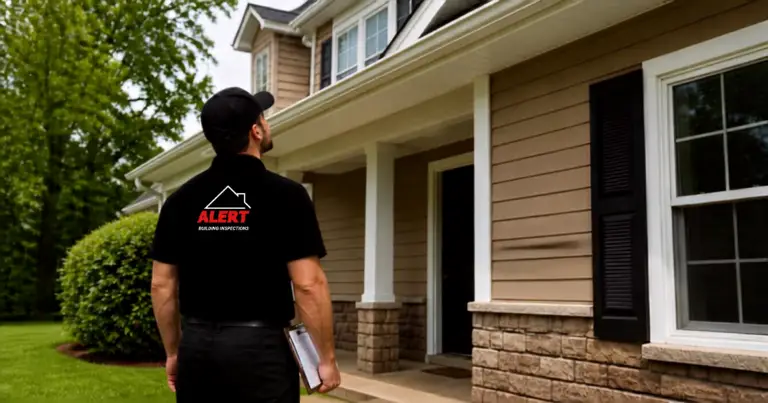
A builders report from Alert tells you what a viewing can't. Our trade-qualified inspectors are practising builders, and they assess structural integrity, weathertightness and maintenance requirements across every accessible area of the property, in accordance with NZS 4306:2005.
On a Foxton property, that assessment has a particular emphasis. River-mouth land, drained swamp, a shallow water table and mapped liquefaction potential mean moisture, drainage and foundation performance are live considerations here rather than theoretical ones. We check the drainage serving the property, how surface water behaves around the building, and whether the subfloor is dry and ventilated.
Every report is written in plain English, with findings categorised by severity, photographs of each issue, and specific recommendations — not a checklist of ticks and crosses. All major banks and lending institutions accept our reports.
Call 0800 4 ALERT or book online for a firm quote based on your property address.
+
+
HOUSE INSPECTION FOXTON
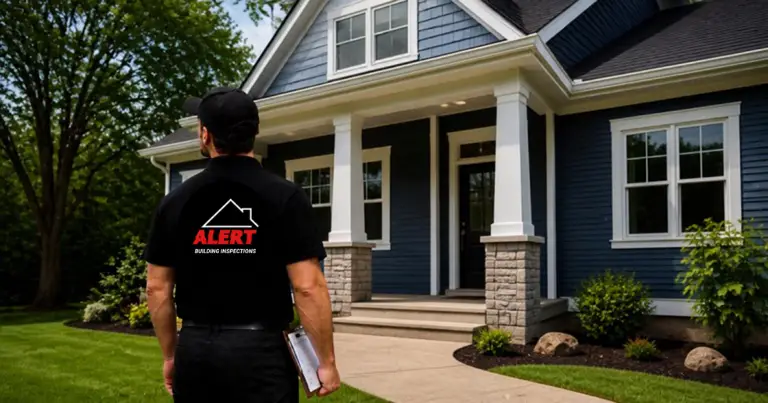
A house inspection and a building inspection mean the same thing. If you are buying a home in Foxton, this is the report you need — a trade-qualified inspector on site, assessing the property in person. On the day, the inspector works through the property in a set order: the exterior and roof first, then the roof space, then the interior, and finally the subfloor, where accessible.
Which of those carries the most weight in Foxton depends on the property. The town's older homes — port-era cottages and the flax workers' houses of the boom decades — stand on timber piles, so the subfloor is where the significant findings usually are: pile and bearer condition, borer, ventilation, and how much moisture the ground beneath is holding. Post-war homes on concrete slabs shift the attention to the envelope and overhead — roofing, cladding junctions, joinery, and whether later additions kept their weathertightness detailing intact.
Foxton's distinctive features are the ground and the water. Low-lying land at a river mouth, with mapped liquefaction potential and a coastal settlement exposed to erosion and inundation, means drainage and foundation performance deserve close attention rather than a passing glance.

BUILDING INSPECTOR FOXTON
24-48 Hour Report Delivery Guaranteed
Looking for a Building Inspector in Foxton? Our trade-qualified inspectors know the local housing stock — subfloor and pile condition in the town's older cottages, and post-war roofing, joinery and cladding now past their service life.
Foxton sits on low-lying ground at the Manawatū River mouth, and the district's liquefaction assessment maps potential risk across parts of the town. We assess visible foundation performance and will say plainly when a geotechnical assessment is warranted. All inspections comply with NZS 4306:2005.

Pre Sale Building Inspection Foxton
Purchasing a home is a major investment. Our in depth inspection helps you understand the property's condition before making a decision. We provide a thorough assessment, examining everything for potential issues such as moisture or pests, to give you confidence in your purchase.
Pre-Purchase Building Inspection Foxton
Our inspection are designed to protect your investment. Conducted by experienced and qualified inspectors, we identify hidden defects, safety concerns, and maintenance issues. You’ll receive a detailed, easy-to-read report that empowers you to make informed choices.
Your Inspection Completed Within 24-48 hours
Need results fast? Our fast turnaround provides a thorough property review with detailed findings delivered on the same day. Perfect for time-sensitive situations, this service ensures you can move forward with confidence without delays or unnecessary waiting periods.
Our Working Process
Book
Confirm
Inspect
Report
Horowhenua - Areas of Service
We inspect across Foxton and the surrounding Horowhenua — Foxton Beach, Waitarere Beach, Himatangi, Moutoa, Ohau and Shannon — as well as Levin, Otaki, Palmerston North and Feilding. See our full locations directory for coverage across the lower North Island.
Foxton Building Types by Era
Foxton's housing grew in distinct waves, and unusually, the first wave came after an earthquake elsewhere. Each era used its own methods and materials, and those methods fail in predictable ways at predictable ages. Knowing which era your property belongs to tells you a great deal about what an inspector will look at.
1840s-1870s — Paiaka, Te Awahou and the Port
European settlement in the lower Manawatū began upriver at Paiaka, near present-day Shannon, in 1844. The severe earthquake of 1855 damaged and destroyed much of what the settlers had built there, and they moved downstream to the Māori settlement of Te Awahou on the Manawatū River estuary. The settlement took the name Foxton from 1866, after Premier William Fox.
Foxton's early importance was as a port. The west coast of the lower North Island has no natural harbours, and the Manawatū mouth had a dangerous bar — but as the only real harbour between Whanganui and Wellington, it was used anyway. The port of Manawatū was formally defined in 1868, a harbour board followed in 1877, and the name had already changed to Foxton. Thomas Upperdine Cook, who built a store, residence and wharf on the present town site, is regarded as the town's founder.
Housing from this period clustered around the wharf and the river landing — modest timber cottages and store buildings built for traders, ferrymen, and farmers working the surrounding land. Very little survives unaltered, and what does is of heritage value rather than mainstream housing stock.
1873-1900 — The Flax Town
Foxton's boom years began with infrastructure. The first pile of the wharf was driven in February 1873, and the Government built a wooden tramway from Palmerston North to Foxton with a wharf at the river-bank terminus. That tramway was converted to a railway and opened on 27 April 1876. By May 1878 Foxton was linked by rail to Wanganui via Palmerston North. The town was constituted a borough in 1883.
Then came flax. The first flax boom ran from 1869 and saw 22,000 tonnes of fibre pass through the port. Further booms in 1888-89 and from 1898 to 1919 followed, and Foxton became the only town in New Zealand to centre a large-scale flax industry for a sustained period — and the only town whose prosperity rose and fell with world flax prices. From 1888 to 1974 flax fibre was the town's principal source of income, and three generations of workers were employed in the swamps and mills of the district. In 1897, seven mills employed around 210 men.
Housing from these decades is the distinctive Foxton stock: workers' cottages and small villas built close to the mills and the rail, timber-framed on piles, and generally modest in scale. On these, the inspection focus is the original piles, the subfloor, borer, and how much original fabric survives nearly 140 years of alteration.
1900-1940 — Decline of the Port, Persistence of the Mill
The port's decline was gradual and well documented. River silting and bar strandings meant coastal shipping began avoiding Foxton by 1908, and by 1916 only two ships were calling. When the shipping company's main shed burned down in 1922, it ceased operating altogether, and ships last called at the port in 1941. By 1951 Foxton had ceased to be a commercial port.
The flax industry proved more resilient than the port. By 1935 only three of the town's eleven mills remained, but the surviving mills were better capitalised and operated intermittently — closing when prices fell, reopening when they recovered. Residential building through these decades was steady rather than expansive: bungalows and modest family homes, many on the low-lying ground cleared for the town.
1940s-1960s — The Cut, the Rail Closure and Post-War Housing
Three changes reshaped Foxton in a single generation. In 1942, the Whirokino Cut redirected the Manawatū River, permanently changing the town's relationship with the water that had made it. The Foxton–Longburn railway section closed on 19 July 1959, leaving the town with road access only. A carpet factory opened after the Second World War, giving the town a new industrial base — the Feltex plant employed local people for decades before closing in 2008.
Housing through this period followed the national pattern: post-war subdivisions, smaller sections, and state and ex-state homes built to standardised plans alongside private building. These houses were generally built on concrete slabs with brick veneer or weatherboard cladding, and they were soundly constructed for their time. The issue now is age rather than quality — original roofing, plumbing and wiring reaching the end of their service life, and insulation that was minimal or absent because nothing required it.
1970s-1990s — A Residential Town
With the port and railway gone, Foxton settled into a residential and service town for the surrounding farming district, within commuting distance of Levin and Palmerston North. Housing from this period is larger than the post-war stock — more bedrooms, bigger footprints, double garages — and aluminium joinery became the default. That joinery predates thermal breaks, which is why it condenses heavily in winter and why its seals and friction stays are now failing across the era. The period's pressed-metal tile roofing is also well past its expected life.
2000s to Today — Reinvention, Commuting and the Coast
Recent decades have seen Foxton reinvent itself. The town now trades on its heritage and its position on State Highway 1, with museums and cafés serving travellers, and the $8.6 million Te Awahou Nieuwe Stroom complex opened in 2017, combining Dutch and Māori culture in one building. It has also become a commuter town: Palmerston North is about 30 minutes away and Levin about 15, which has brought new residential building and refurbishment of older stock.
Growth toward Foxton Beach brings different considerations again. Horowhenua's district plan identifies coastal erosion and inundation at Foxton Beach as significant hazards, and the district's coastline — while generally accreting — has periods and locations where erosion occurs. Foredune protection reserves and planted dune stabilisation exist at most coastal settlements because development has occurred within areas of natural beach movement.
A point worth putting to buyers: on a Foxton Beach property, the questions to ask are less about the house than about the coast. What does the LIM say about coastal hazard? Where is the foredune and how is it protected? Those answers matter more at the beach than in the town.
What 180 Years Means for a Foxton Home
Foxton's housing spans nearly two centuries, though most of it is post-war. That matters, because the older and newer ends of the stock fail in different ways, and a buyer should know which end they are looking at. Components have service lives, and a house that is 60, 100 or 140 years old has had several rounds of them.
Ground, liquefaction and foundations. This is one of the most important local considerations. Foxton sits on drained swamp and river-floodplain land at the Manawatū mouth, and Horowhenua District Council engaged Tonkin & Taylor to carry out a high-level liquefaction vulnerability assessment of the district's main urban areas, updated in June 2023. The district's liquefaction risk is mapped and viewable on the council's own maps. The practical implication for building work is real: because the standard foundation solution cannot be used on liquefaction-prone ground, a site-specific assessment may be required, and Horowhenua also applies Sections 71 to 74 of the Building Act to land subject to natural hazards. See our foundation inspections page for what we assess.
⚠️ A PIM or LIM is worth obtaining early in Foxton. Horowhenua District Council issues these, and they identify any hazards on file for a property — flooding, inundation, subsidence, slippage and the rest. Section 72 of the Building Act requires the Council to consider building consents for new buildings or major alterations on land subject to a natural hazard, and to refuse consent where the work would worsen the situation. Knowing what is on file before you buy avoids discovering it at consent stage. Our LIM reports vs building reports page explains the difference and why you need both.
Flooding and drainage. Foxton is low-lying and sits where the Manawatū River meets the sea. The river has run through the Whirokino Cut since 1942, and the surrounding land is drained swamp and floodplain. Beyond river flooding, poorly drained ground means stormwater and surface water have nowhere to go quickly — so where a property's stormwater discharges, and whether the ground falls away from the house, are among the most common findings we record. Our moisture testing measures the consequences.
Coastal erosion and inundation at Foxton Beach. Horowhenua's district plan treats this as a significant natural hazard for the district's coastal plain. The Horowhenua coast generally accretes rather than erodes, but erosion occurs in some periods and locations, and river-mouth migration is an important factor in that long-term pattern. Foredune protection designations and planted dune stabilisation exist at most coastal settlements because development has occurred within areas of natural beach movement. If you are buying at Foxton Beach, coastal hazard information matters as much as the building.
Roofing. Original corrugated iron rusts at the fixings and around penetrations but can last a very long time. Concrete tile, common from the 1950s onward, depends on the bedding and pointing holding the ridge and hip caps — typically a 25 to 35 year life. Pressed-metal tile roofs of the 1970s and 80s are well past their expected life and frequently leak. A full replacement commonly runs $15,000 to $30,000 depending on size and complexity, and coastal exposure at the beach shortens those lives. See our roof inspections service.
Subfloor and piles. In the town's pre-war housing, this is where the expensive findings live. Timber piles, bearers and joists from that period are still in service on sections where the ground can stay wet for much of the year. Borer, rot, replaced piles and improvised repairs are all common.
Joinery and weathertightness. Original timber joinery needs ongoing maintenance but can be repaired. Aluminium joinery from the 1970s and early 80s predates thermal breaks, so it condenses heavily, and its seals and stays are failing. Where cladding junctions, decks or porches have been altered, weathertightness becomes the priority.
Insulation. Houses built before 1978 often have little or no insulation. Many Foxton homes still have minimal ceiling insulation and no wall or underfloor insulation. With current Healthy Homes requirements for rental properties, this is a cost to budget for, not a comfort preference.
Plumbing and wiring. Original pipework is reaching the age where pinhole failures and joint weeping become recurring rather than one-off. Older switchboards, limited RCD protection, and six or seven decades of electrical work with little documentation. An inspector reports what is visible; anything further warrants a licensed electrician.
Coastal exposure at the beach. Salt-laden air accelerates corrosion on fixings, flashings, roofing and metal joinery, and it shortens the life of external paint systems. On a beach property, this is a maintenance reality rather than a defect, but it is worth understanding as an ongoing cost.
Frequently Asked Questions
How much does a building inspection cost in Foxton?
Our comprehensive building inspection and report start from $299 and can go higher depending on the size and nature of the property. Your address is the key factor, so you'll know the cost upfront. We explain how pricing works in building inspection costs explained.
Is Foxton at risk of flooding?
Foxton is low-lying and sits at the Manawatū River mouth, so water is a genuine consideration here. The river has run through the Whirokino Cut since 1942, and the surrounding land is drained swamp and floodplain. The flooding that affects properties is often not river flooding but poor drainage and surface water with nowhere to go. Current Horowhenua District Council flood hazard mapping covers the district, and a LIM will identify any hazards on file for a specific property. Have the drainage and subfloor inspected.
Is Foxton Beach affected by coastal erosion?
Horowhenua's district plan identifies coastal erosion and inundation at Foxton Beach as a significant natural hazard. The Horowhenua coast is generally accreting rather than eroding, but erosion occurs in some periods and locations, and river-mouth migration is part of that long-term pattern. Foredune protection reserves and planted dune stabilisation exist at the coastal settlements for exactly this reason. Check the LIM and the regional coastal hazard mapping before buying.
Is there a liquefaction risk in Foxton?
Horowhenua District Council engaged Tonkin & Taylor to carry out a district-wide liquefaction vulnerability assessment, updated in June 2023, and mapped potential liquefaction risk for the district. Foxton sits on drained swamp and river-floodplain land, where that matters. Because the standard foundation solution cannot be used on liquefaction-prone ground, new building work may require a site-specific assessment. Our inspection assesses visible foundation performance, and we will tell you when one is warranted. See our foundation inspections.
Do I need a LIM as well as a building report in Foxton?
They answer different questions, and in Foxton both are worth having. A LIM is Council's record of what it knows about the property — consents, hazards on file, zoning, and the like. A building report assesses the building's physical condition on the day. A LIM will not tell you the roof is failing, and a building report will not tell you the property is in a mapped hazard area.
What do you check on an older Foxton home?
The accessible structure from the piles to the roof — pile and bearer condition, the subfloor, borer, original joinery, cladding and its junctions, and moisture levels throughout. On Foxton's pre-war housing, the subfloor carries particular weight because those houses stand on original timber piles in ground that can stay wet for much of the year. It is also the part of the house most buyers never see. See our property inspection checklist.
How long does a building inspection take in Foxton?
Most building inspections take 1-2 hours, depending on the property size and condition.
Should I worry about asbestos in an older Foxton home?
Asbestos-containing materials were widely used in New Zealand building products until the 1980s. In a Foxton home from that period, common locations include soffits, eaves linings, vinyl floor tiles, textured ceilings, and older ducting and pipe lagging. If it is intact and undisturbed, it is generally considered low risk, but it needs managing during any renovation. Our inspection reports any materials that may contain asbestos — see asbestos in New Zealand homes; confirmation requires specialist testing, which we can recommend.
Do I need a building inspection for a new build in Foxton?
Yes. New builds can have incomplete work, missed flashings, poorly connected drainage and finishing defects. In Foxton, there is an additional reason: on ground mapped for liquefaction potential, a new home's foundations aren't the standard solution and deserve independent verification. Our new construction inspections cover that, and for multi-unit developments we also assess inter-tenancy acoustic and fire separation.
Can I attend the building inspection?
Absolutely. We encourage clients to attend their building inspection to gain firsthand insight and ask the inspector questions directly.
Are your building inspectors qualified in Foxton?
Yes. Our building inspectors are fully qualified and experienced, ensuring accurate and reliable reports. Every inspector carries professional indemnity insurance, our inspections comply with NZS 4306:2005, and you can read more about the team on our about our team page.
What common issues are found during building inspections in Foxton?
Typical findings in Foxton include: subfloor moisture, poor ventilation and inadequate or blocked ground drainage on low-lying land; original timber piles and borer in the town's port-era cottages and flax-era workers' housing; corrugated iron rusting at fixings, degraded bedding and pointing on concrete tile roofs, and pressed-metal tile roofs past their life; failing seals on 1970s and 1980s aluminium joinery; minimal or absent insulation in pre-1978 housing; original plumbing and wiring reaching the end of its life; salt-laden air accelerating corrosion on beach properties; and signs of foundation movement consistent with the town's drained swamp and floodplain ground.
Building inspections near me?
Looking for building inspection services in Foxton? Alert Building Inspections provides detailed building reports within 24-48 hours, conducted by trade-qualified inspectors who understand Foxton's property market and its common building issues. We follow the New Zealand Standard for Property Inspections (NZS 4306:2005) and serve Foxton, Foxton Beach and the surrounding Horowhenua. You can also see our full range of services.
