
Alert Building Inspections provides professional building inspections across Bulls and the wider Rangitīkei for home buyers, sellers and property investors. Bulls began as Daniell's Bush — a carpenter's store and sawmill beside Captain Daniell's Killeymoon homestead, after which the town was eventually named. It became the market town for the surrounding sheep and dairy country, and today it is the service centre at the junction of State Highways 1 and 3. Our trade-qualified building inspectors assess the property, explain what they find in plain English, and provide practical advice through a comprehensive written or verbal builders report. With fast bookings and reports available within 24-48 hours, getting the information you need is simple.
Bulls grew where the tracks met, at the junction of State Highways 1 and 3, about 28 kilometres northwest of Palmerston North. Captain Edward Daniell took up a 2,850-acre block here in 1855 and called it Killeymoon. James Bull, a carpenter who had arrived at Scott's Ferry to build a house, leased five acres from him, opened a store in 1859 with a sawmill behind it, and by 1861 the store was also the local post office.
The 1866 subdivision of Killeymoon created the town, and a further 800 acres were cut up in 1868 with reserves set aside for a cemetery, a school and a doctor's residence. By 1897 the Cyclopaedia of New Zealand described Bulls as the market town for the farming, agricultural and dairying settlements around it — 521 people, two churches, three hotels, and a post and telegraph office.
The hazards here are about water, and about which terrace you are standing on. Bulls sits on river terraces above the Tutaenui Stream, and the difference between them is not cosmetic. The Council's own flood assessment of the BUL03 growth area found extensive modelled flooding across the lower terrace — enough that residential development was ruled out there — against much shallower depths on the upper terrace, with stormwater entering the area through the Henratty Drain.
That assessment also sets the standard the district builds to: new residential floor levels are expected to sit above the 0.5% AEP flood level with freeboard. The Rangitīkei River has its own history of enormous floods — the Easter 1897 event destroyed every bridge between Mangaweka and the sea and silted the lower river so badly that Port Rangitīkei never functioned again — and the district carried out a full plan review in response to the 2004 and 2006 floods.
One thing worth knowing: Rangitīkei does not publish a district-level liquefaction assessment the way neighbouring Horowhenua does. Horizons Regional Council holds that information at regional scale, so it is worth asking directly for any specific site.
A housing stock that runs from the town's earliest timber cottages and Edwardian villas, through post-war state and farm-worker homes, to recent builds on the upper terraces means every Bulls property has its own set of inspection priorities. Knowing which apply to yours is the difference between a building report that lists observations and one that tells you what you are actually taking on.
Fast Turnaround 24-48 hours
A builders report from Alert tells you what a viewing can't. Our trade-qualified inspectors are practising builders, and they assess structural integrity, weathertightness and maintenance requirements across every accessible area of the property, in accordance with NZS 4306:2005.
On a Bulls property, that assessment has a particular emphasis. River terrace ground, a stream floodplain running through the township, and a district that rebuilt its planning rules after the 2004 and 2006 floods mean drainage and groundwater are live considerations here, not theoretical ones.
We check how surface water behaves around the building and where it discharges, the condition of the stormwater serving the property, and whether the subfloor is dry and ventilated. On the town's older villas, that means pile and bearer condition; on post-war and modern homes, it means the envelope and the junctions where additions meet the original building.
Every report is written in plain English, with findings categorised by severity, photographs of each issue, and specific recommendations — not a checklist of ticks and crosses. All major banks and lending institutions accept our reports.
Call 0800 4 ALERT or book online for a firm quote based on your property address.
+
+

A house inspection and a building inspection mean the same thing. If you are buying a home in Bulls, this is the report you need — a trade-qualified inspector on site, assessing the property in person. On the day, the inspector works through the property in a set order: the exterior and roof first, then the roof space, then the interior, and finally the subfloor, where accessible.
Which of those carries the most weight in Bulls depends on the property. The town's older homes — the earliest timber cottages and the villas built through the market-town years — stand on piles, so the subfloor is where the significant findings usually are: pile and bearer condition, borer, ventilation, and how much moisture the ground beneath is holding. Post-war homes on concrete slabs shift the attention to the envelope and overhead — roofing, cladding junctions, joinery, and whether later additions kept their weathertightness detailing intact.
What makes Bulls distinctive is the terraces and the stream. The township sits on river terraces above the Tutaenui Stream, and the Council's own modelling shows how differently the upper and lower levels behave in a flood. That makes site levels, drainage and foundation performance worth close attention rather than a passing glance — and it makes a property's flood history something worth asking about before you commit.

24-48 Hour Report Delivery Guaranteed
Looking for a Building Inspector in Bulls? Our trade-qualified inspectors know the local housing stock — timber villas raised on piles, post-war homes on concrete slabs, and newer builds on the terraces above the Tutaenui Stream.
Bulls sits on river terraces, and the district's own flood modelling shows how much difference the terrace makes: extensive flooding on the lower levels, shallow depths on the upper levels. We assess visible foundation performance and will say plainly when a geotechnical assessment is warranted. All inspections comply with NZS 4306:2005.
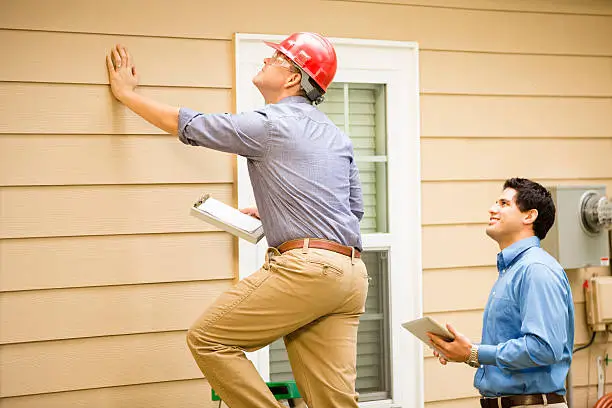
Purchasing a home is a major investment. Our in depth inspection helps you understand the property's condition before making a decision. We provide a thorough assessment, examining everything for potential issues such as moisture or pests, to give you confidence in your purchase.
Our inspection are designed to protect your investment. Conducted by experienced and qualified inspectors, we identify hidden defects, safety concerns, and maintenance issues. You’ll receive a detailed, easy-to-read report that empowers you to make informed choices.
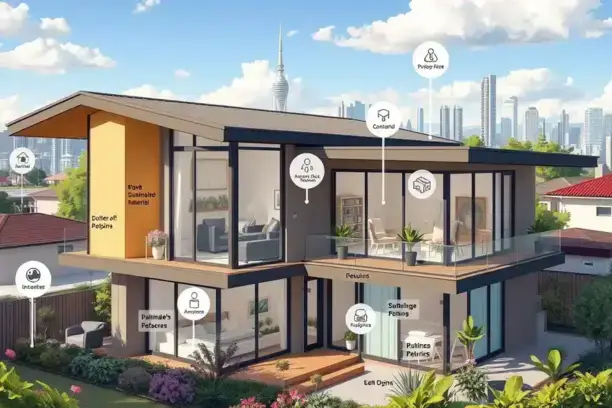
Need results fast? Our fast turnaround provides a thorough property review with detailed findings delivered on the same day. Perfect for time-sensitive situations, this service ensures you can move forward with confidence without delays or unnecessary waiting periods.
We inspect across Bulls and the surrounding Rangitīkei — Sanson, Scotts Ferry, Turakina, Ratana, Koitiata and Hunterville — as well as Marton, Feilding, Palmerston North, Foxton, Levin and Otaki. See our full locations directory for coverage across the lower North Island.
Bulls has been a town since the 1860s, and unusually for a settlement of its size, it began with its own sawmill — so its earliest buildings were cut from the bush that stood where the town now is. Each era since has built to its own methods and materials, and those methods fail in predictable ways at predictable ages. Knowing which era your property belongs to tells you a great deal about what an inspector will look at.
The town's first buildings went up around Captain Edward Daniell's Killeymoon homestead, and around James Bull's store and sawmill from 1859. When Killeymoon was subdivided in 1866, sections sold for £30 each. The timber milled on site was rimu, matai and totara — dense heart timber, never treated.
Very little of that first generation survives, but where original framing remains in a later building it is often still sound, and borer and concealed decay are the real risks rather than structural failure. Buildings from this era have usually been altered several times, and the junctions between the original work and the additions are where a report earns its fee.
This is when Bulls became the town it still is: the service centre for the sheep runs and dairy farms around it. The Cyclopaedia of New Zealand recorded 521 people, two churches, three hotels and a State school in 1897. Downriver, Port Rangitīkei at the old Scott's Ferry site was busy enough to take 120-ton steamers, with its largest cargo — 350 bales of wool — loaded in February 1897.
That Easter, two days of heavy rain in the upper catchment sent a flood down the river that destroyed every bridge between Mangaweka and the sea, formed a six-mile lake behind the mouth, and silted the lower river so thoroughly that the port never operated again. Houses from this period are timber villas on timber piles, and the raised floor was not decorative — it responded to groundwater and flood levels. Pile condition and whether a building has been releveled are the first things to check.
With the port gone, Bulls settled into its role as the district's market town, servicing large grazing runs and the smaller farms they were progressively broken into. Housing from this period is mostly weatherboard — well-proportioned villas and bungalows with sash windows, deep verandahs, pressed-tin or early plaster ceilings, and lead flashings at the junctions. Concrete piles gradually replaced timber beneath new work. Characteristic failures are gradual and maintenance-related: weathered joinery, corroded flashings, and the slow accumulation of small leaks at parapets, chimneys, and lean-to junctions.
The post-war decades brought state housing and farm-worker homes, and the move to concrete slab construction. That change matters for inspection: a slab-on-grade house has no subfloor to examine, so the envelope carries all the weight — roofing, cladding, joinery and the junctions between them. Framing from this period is rimu, and in the better-built examples it is excellent. Fibrolite and asbestos-cement appear in soffits, eaves linings and outbuildings, and brown or terracotta-toned vinyl floor tiles from this era are a common asbestos-containing material. Wire-cut brick veneer became common toward the end of the period.
Houses got larger and lighter in this period: aluminium joinery throughout, hardboard and early sheet claddings, and much less overhanging eaves. Bulls also acquired the identity most people know it for. A book of bovine puns published in 1985 prompted a local campaign around 1990 that saw businesses adopt names like Const-a-bull, Reliev-a-bull and Forgive-a-bull — each one registered at the information centre to avoid duplicates. Some 13,000 vehicles a day pass through town on State Highway 1. Aluminium joinery from this era has no thermal break, so condensation and the resulting timber decay around window reveals are common findings.
Bulls is now as much a commuter town as a rural service centre, about 28 km from Palmerston North, with a population of around 2,100. New subdivisions have gone onto the upper terraces, where the district expects floor levels above the 0.5% AEP flood level with freeboard, and where site-specific geotechnical work is often part of the consent. The homes are modern, but a large share of what was built nationally between the mid-1990s and the mid-2000s sits in the leaky building period, and that applies here as much as anywhere. For recent builds, our new construction inspections cover the defects that appear in the first years of a new house.
Bulls has been settled since 1855, though most of its housing is considerably younger. That matters, because the oldest and newest ends of the stock fail in entirely different ways, and a buyer should know which end they are looking at. Components have service lives, and a house that is 60, 100 or 140 years old has had several rounds of them.
Ground, terraces and flood levels. This is the most important local consideration. Bulls sits on river terraces above the Tutaenui Stream, and the Council's own flood assessment of the BUL03 growth area found extensive modelled flooding on the lower terrace and much shallower depths on the upper — with stormwater entering through the Henratty Drain.
The district's standard for new residential development is a floor level above the 0.5% AEP flood level with freeboard. Older houses were built before that standard existed, and some predate modern stopbanking entirely. Establish site levels and drainage before you buy, not after. See our foundation inspections page for what we assess.
⚠️ A PIM or LIM is worth obtaining early in Bulls. Rangitīkei District Council issues these, and the district plan includes both planning maps and separate hazard maps for Bulls. Sections 71 to 74 of the Building Act apply to land subject to natural hazards, and section 72 requires the Council to consider consents for new buildings or major alterations on that land — and to refuse consent where the work would make the situation worse.
Relocated dwellings are assessed against the same hazards rules. Knowing what is on file before you buy avoids discovering it at consent stage. Our LIM reports vs building reports page explains the difference and why you need both.
Flooding and drainage. Bulls has a genuine flood history. The 1897 flood reshaped the district, and the 2004 and 2006 events were serious enough to prompt a full review of the district plan. The Tutaenui Stream runs through the township, and the Henratty Drain carries stormwater into the lower terrace. Beyond river flooding, ground that holds water means surface water has nowhere to go quickly, so how a property drains, and where it discharges, matters as much as the building itself.
The roof and the envelope. Corrugated iron has a long service life but not an unlimited one, and Bulls roofs take the prevailing weather directly. Where a house has been added to — and most of the town's older homes have — the junctions between old roof and new are the most common source of leaks. Our roof inspections and weathertightness assessments cover both.
Asbestos. Asbestos-containing materials were widely used in New Zealand building products until the 1980s, and in a Bulls home from that period, common locations include soffits, eaves linings, vinyl floor tiles, textured ceilings, and older ducting and pipe lagging. A 1940s villa and a 1960s state house have different likely locations again. See our asbestos in New Zealand homes page for the details.
If you would rather work through it yourself first, our property inspection checklist sets out what to look at on a viewing — and what to leave to an inspector.
Our comprehensive building inspection and report start from $299 and can go higher depending on the size and nature of the property. Your address is the key factor, so you'll know the cost upfront. We explain how pricing works in building inspection costs explained.
It depends which terrace you are on, and that is the honest answer. Bulls sits on river terraces above the Tutaenui Stream, and the Council's own flood assessment of the BUL03 growth area found extensive modelled flooding on the lower terrace — enough that residential development was ruled out there — against much shallower depths on the upper terrace.
The district expects new residential floor levels above the 0.5% AEP flood level with freeboard. Unlike Horowhenua, Rangitīkei does not publish a district-level liquefaction assessment; Horizons Regional Council holds that data at the regional scale, so it is worth asking about for a specific address. Check site levels and drainage on any purchase.
Bulls has a real flood history. The Easter 1897 flood destroyed every bridge between Mangaweka and the sea, formed a six-mile lake behind the river mouth and silted the lower Rangitīkei so badly that the port never operated again. More recently, the 2004 and 2006 floods were significant enough that the district carried out a full review of its plan.
Within the township, the Tutaenui Stream is the main floodpath, and stormwater reaches the lower terrace through the Henratty Drain. The risk is not uniform — the lower terrace is markedly more exposed than the upper — so check the district's hazard maps for the specific property, obtain a LIM, and have drainage and site levels inspected.
The accessible structure from the piles to the roof — pile and bearer condition, the subfloor, borer, the original timber joinery, weatherboard cladding and its junctions, and moisture levels throughout. On a villa or early cottage in Bulls the subfloor is where the significant findings usually are, and it is the part of the house most buyers never see. We also look closely at any additions, because a house that has grown in stages hides its weakest junctions where the new work meets the old.
Most building inspections take 1-2 hours, depending on the property size and condition.
Asbestos-containing materials were widely used in New Zealand building products until the 1980s. In a Bulls home from that period, common locations include soffits, eaves linings, vinyl floor tiles, textured ceilings, and older ducting and pipe lagging. If it is intact and undisturbed, it is generally considered low risk, but it needs managing during any renovation. Our inspection reports any materials that may contain asbestos; confirmation requires specialist testing, which we can recommend.
Yes. New builds can have incomplete work, missed flashings, poorly connected drainage, and finishing defects — and on the terraces, site levels and drainage are worth verifying independently of the consent process. An independent inspection confirms the property was built as it should have been, rather than relying on the builder's own sign-off.
Looking for building inspection services in Bulls? Alert Building Inspections provides detailed building reports within 24-48 hours, conducted by trade-qualified inspectors who understand the Rangitīkei's property market and its common building issues. We follow the New Zealand Standard for Property Inspections (NZS 4306:2005) and serve Bulls and the surrounding Rangitīkei. You can also see our team, our full range of services, or our builders reports and pre-purchase building inspections.

Copyright © 2016- Alert Building Inspections