
Building Inspection Woodville
BUILDING REPORT WOODVILLE
Residential & Commercial Building Reports
Alert Building Inspections provides professional building inspections across Woodville and the wider Tararua District for home buyers, sellers, and property investors. Woodville grew as a bush-sawmilling and railway town at the mouth of the Manawatu Gorge, and its housing today is still dominated by early villas, weatherboard homes and railway-era cottages. Our trade-qualified building inspectors assess the property, explain what they find in plain English, and provide practical advice through a comprehensive written or verbal builders report. With fast bookings and reports available within 24-48 hours, getting the information you need is simple.
CUSTOMER REVIEWS
Woodville's Unique Building Challenges
Woodville began as “The Junction” — the third of three sizeable timber-milling towns in the Seventy Mile Bush, the largest podocarp forest in New Zealand. The railway from Napier reached the town in 1887, the line from Palmerston North followed in the 1890s, and Woodville grew on timber, sleepers and freight.
Wind shapes building inspection here. Woodville sits at the gateway to the Manawatū Gorge, and the gorge funnels the prevailing westerlies through the gap between the Tararua and Ruahine ranges. The district council describes the town as a high-wind zone, and the resource is strong enough that the Te Āpiti wind farm on Saddle Road above the town — 55 turbines generating about 90 megawatts, enough for roughly 30,000 homes — was sited there for exactly that reason. NZS 3604 classifies wind zones from Low to Extra High and beyond, and defines lee zones where landform locally accelerates wind. A town whose wind can power 30,000 homes is a town whose buildings take a sustained hammering.
Seismic risk is the second factor, and it differs from most places. Tararua District sits in a High Risk seismic zone under the Building Act, which shortens remediation timeframes, and the category catching most of Woodville's older stock is pre-1935 one- and two-storey buildings. The third is water: the Mangatainoka, Tiraumea and Mangahao rivers converge between Woodville and the gorge, and the district's flood maps also mark poor drainage and surface ponding, which it treats as floodable for building purposes. Set that beside housing, from bush-era cottages to recent builds, and every property has its own priorities.
TESTING
Report
BUILDERS REPORT WOODVILLE
Fast Turnaround 24-48 hours
A builders report from Alert tells you what a viewing can't. Our trade-qualified inspectors are practising builders, and they assess structural integrity, weathertightness and maintenance requirements across every accessible area of the property, in accordance with NZS 4306:2005.
On a Woodville property, that assessment takes on particular importance. Wind is the local constant, and it works on a building continuously rather than occasionally — roof fixings, ridge and barge flashings, cladding junctions and gable ends are where a high wind zone shows itself over the years. We check the roof covering and its fixings, the condition of the cladding and its junctions, and whether any of it has been patched rather than properly replaced.
Every report is written in plain English, with findings categorised by severity, photographs of each issue, and specific recommendations — not a checklist of ticks and crosses. All major banks and lending institutions accept our reports.
Call 0800 4 ALERT or book online for a firm quote based on your property address.
+
+
HOUSE INSPECTION WOODVILLE
A house inspection and a building inspection mean the same thing. If you are buying a home in Woodville, this is the report you need — a trade-qualified inspector on site, assessing the property in person. On the day, the inspector works through the property in a set order: the exterior and roof first, then the roof space, then the interior, and finally the subfloor, where accessible.
Which of those carries the most weight in Woodville depends on the property. The town's older homes — the bush-era cottages and the weatherboard houses that followed the railway — stand on piles, so the subfloor is where the significant findings usually are: pile and bearer condition, borer, ventilation, and how much moisture the ground beneath is holding. Post-war homes on concrete slabs shift the attention to the envelope and overhead, where roofing, cladding junctions and joinery carry the load.
What makes Woodville distinctive is the wind. A high wind zone places continuous load on every roof, fixing and gable, so the exterior and roof carry more weight here than in a sheltered town — and a repair that would hold elsewhere may not hold here.

BUILDING INSPECTOR WOODVILLE
24-48 Hour Report Delivery Guaranteed
Looking for a Building Inspector in Woodville? Our trade-qualified inspectors know the local building stock — bush-era timber cottages and railway-era weatherboard homes on piles, post-war houses on slabs, and recent builds on the town's edges.
Woodville sits in a high wind zone, where the Manawatū Gorge funnels the westerlies straight through town. That loads every roof and fixing continuously. We assess the roof, cladding and visible foundation performance, and will say plainly what needs attention. All inspections comply with NZS 4306:2005.
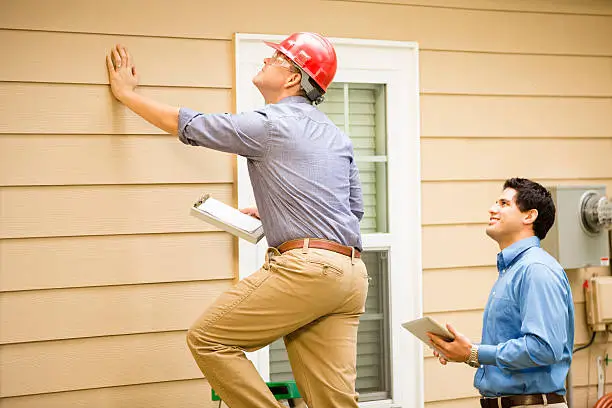
Pre Sale Building Inspection Woodville
Purchasing a home is a major investment. Our in depth inspection helps you understand the property's condition before making a decision. We provide a thorough assessment, examining everything for potential issues such as moisture or pests, to give you confidence in your purchase.
Pre-Purchase Building Inspection Woodville
Our inspection are designed to protect your investment. Conducted by experienced and qualified inspectors, we identify hidden defects, safety concerns, and maintenance issues. You’ll receive a detailed, easy-to-read report that empowers you to make informed choices.
Your Inspection Completed Within 24-48 hours
Need results fast? Our fast turnaround provides a thorough property review with detailed findings delivered on the same day. Perfect for time-sensitive situations, this service ensures you can move forward with confidence without delays or unnecessary waiting periods.
Our Working Process
Book
Confirm
Inspect
Report
Tararua - Areas of Service
We inspect across Woodville and the surrounding Tararua District — Pahiatua, Mangatainoka, Ballance, Kumeroa, Papatawa, Hopelands, Eketāhuna, Norsewood and Dannevirke — as well as Palmerston North, Feilding, Marton and Bulls. See our full locations directory for coverage across the lower North Island.

Builders Report
Purchasing a property is one of life's biggest investments – getting a professional builder's report is essential for making the right decision. Alert Building Inspections is New Zealand's trusted building inspection network, with decades of experience in pre-purchase inspections.

Building Report
Our trade-qualified building inspectors conduct thorough inspections covering structural integrity, weathertightness, and potential maintenance issues. We deliver reports within 24-48 hours, including photographs, detailed findings, and specific recommendations.

House Inspection
When investing in real estate, likely your biggest ever commitment, a house inspection is essential. We deliver comprehensive reports from inspectors with extensive local knowledge throughout New Zealand. Select your location to get started!

Building Inspector
Need a Building Inspector? Our trade-qualified team delivers comprehensive reports within 24-48 hours. We specialise in rapid building inspections without compromising quality across all our New Zealand locations.
Woodville Building Types by Era
Woodville has been a town since the 1870s, and it grew in distinct waves — first as a bush-milling camp at a road junction, then rapidly once the railway arrived. Each wave built to its own methods and materials, and those methods fail in predictable ways at predictable ages. Knowing which era your property belongs to tells you a great deal about what an inspector will look at.
1874-1890 — The Junction: Bush, Sleepers and the First Mills
Woodville's sections were advertised in Napier in 1874, and the first residents were transient bush fellers, road contractors, bridge builders and speculators who camped at the spot known simply as The Junction. The town took its eventual name from the Seventy Mile Bush, the largest podocarp forest in New Zealand, which was cleared from the 1870s largely by assisted Scandinavian immigrants who cut it for building timber, firewood, and totara railway sleepers. Woodville School opened in 1877. The earliest buildings were milled on the spot from rimu, matai and totara — dense heart timber, never treated. Very little of it survives as original fabric, but where it does, borer and concealed decay are the real risks rather than structural failure, and the junctions where later work meets it are where a report earns its fee.
1887-1900 — The Railway Arrives
The line from Napier reached Woodville in 1887, and the Palmerston North line followed in the 1890s, making the town the point where Hawke's Bay, the Wairarapa and the Manawatū met. The station was a serious piece of infrastructure — locomotive depot, engine sheds, and a balloon loop, a rare piece of railway engineering in which trains reverse direction on a loop track so through running to Wellington via the Wairarapa is possible.
Housing from this period is railway-town weatherboard: cottages and early villas on timber piles, built close to the yards. The characteristic failures are gradual and maintenance-related — weathered joinery, corroded flashings, and slow leaks at chimneys and lean-to junctions. Dannevirke became the district's dominant town in this period; Woodville held the junction but never capitalised on it.
1900-1930 — Dairy, Borough and Weatherboard
As the bush came down, the surrounding country turned to dairy and sheep and beef, and small dairy factories were established to process the milk. At one stage, sheep and beef supported several local trucking firms. Dannevirke Power Board connected Woodville to the Mangahao hydro-electric station in 1925. Residential building in this period was solid and conventional: weatherboard villas and bungalows with sash windows, deep verandahs and lead flashings, with concrete piles gradually replacing timber beneath new work. Houses were built to withstand weather, but not to any formal wind standard — and in a high-wind zone, that distinction matters over a century.
1930-1945 — Depression and War
Building slowed sharply, as it did nationally. What was built was modest and economical, and much maintenance was deferred through the Depression and then the war years. Plenty of Woodville houses from this period still carry the consequences: original wiring and plumbing well past their service life, and roofs that have been patched rather than replaced. For a buyer, this is the era where an inspection most often finds a long list of small accumulated issues rather than one large one.
1945-1970 — Post-War Woodville
The post-war decades brought state housing and workers' homes, and the move to concrete slab construction. That change matters for inspection: a slab-on-grade house has no subfloor to examine, so the envelope carries all the weight — roofing, cladding, joinery and the junctions between them. Framing from this period is rimu, and in the better-built examples it is excellent. Fibrolite and asbestos-cement appear in soffits, eaves linings and outbuildings, and brown or terracotta-toned vinyl floor tiles from this era are a common asbestos-containing material. Wire-cut brick veneer became common toward the end of the period.
1970-1990 — Deregulation, and the Town's Base Removed
Houses got larger and lighter: aluminium joinery throughout, hardboard and early sheet claddings, and much less overhanging eaves. Aluminium joinery from this era has no thermal break, so condensation and the resulting timber decay around window reveals are common findings. At the same time, Woodville's economic base was dismantled in a single decade.
The Oringi meatworks opened in 1980-81 and brought wages into the town. The dairy factory at the western end, on the highway toward the gorge, was still running a cheese line and a factory shop into the mid-1980s. Then the lifting of distance restrictions in the 1984 transport deregulation removed the rule that had kept haulage firms based in towns like this one, and Woodville's role as a transport hub fell away quickly. A town that loses its employers in a decade tends to carry more deferred maintenance in its housing stock, and that's what an inspection is for.
1990 to Today — Wind Farm, Commuters and a Growing Town
Woodville's modern chapter is the wind. The Te Āpiti wind farm went up on the ridges above the town on Saddle Road — 55 turbines, about 90 megawatts, enough electricity for roughly 30,000 homes — and the construction and maintenance work has genuinely boosted the town. The Oringi meatworks closed in 2008, and the milk transfer station at Oringi railed milk to Hawera until 2015. When the Manawatū Gorge road closed indefinitely, Saddle Road and the Pahiatua Track became the main east-west routes, keeping traffic coming through.
Against that backdrop, the town has been growing: the population rose 18.6% between 2013 and 2023, and there were 699 dwellings at the last census. New building in this period is mostly infill and modest subdivision, and a large share of what was built nationally between the mid-1990s and mid-2000s sits in the leaky building period. For recent builds, our new construction inspections cover the defects that appear in the first years of a new house.
What 150 Years Means for a Woodville Home
Woodville has been settled since the 1870s, and much of its housing predates the Second World War. That matters, because the oldest and newest ends of the stock fail in entirely different ways, and a buyer should know which end they are looking at. Components have service lives, and a house that is 60, 100 or 140 years old has had several rounds of them.
Wind. This local consideration matters most, and it is easy to underestimate because it is invisible on a still day. Woodville sits at the mouth of the Manawatū Gorge, which funnels the prevailing westerlies between the Tararua and Ruahine ranges, and the district council describes the town as a high-wind zone. Under NZS 3604, wind zones run from Low through Medium, High, Very high and Extra high, with specific design required above that — and the standard also defines lee zones, where landform creates localised wind acceleration.
In practice, this means roof fixings, ridge and barge flashings, gable ends and cladding junctions are the components that fail first here, and a repair done to a sheltered-suburb standard may not hold. It also means a roof patched repeatedly deserves a proper look, not another patch. Our roof inspections and weathertightness assessments cover both.
⚠️ A PIM or LIM is worth obtaining early in Woodville. Tararua District Council issues these, and the district's flood maps identify areas potentially affected by flooding, poor drainage and surface ponding — the council notes that it treats poor drainage as floodable because, for the purposes of designing a house or an effluent system, the effects are much the same. Those maps are indicative only and are explicitly not for use at finer resolution, so a site-specific check is worth doing. Our LIM reports vs building reports page explains the difference and why you need both.
⚠️ Seismic risk and the earthquake-prone register. Tararua District is classified as a High-Risk seismic zone under the Building Act, which means shorter remediation timeframes than a medium- or low-risk area. The council's identification categories catch unreinforced masonry first, then pre-1976 buildings of three or more storeys or 12 metres or taller, and then pre-1935 buildings of one or two storeys.
That last category is most likely to reach a residential or small commercial buyer in Woodville, because it extends well beyond the obviously old shopfronts. If you are buying an older building, ask whether it is on the earthquake-prone register or has a seismic assessment.
Flooding and drainage. Three of the Manawatū's major tributaries — the Mangatainoka, the Tiraumea and the Mangahao — converge between Woodville and the gorge, and the district's flood maps cover flooding, ponding and poor drainage across the district. Ground that holds water gives surface water nowhere to go quickly, so how a property drains and where it discharges matters as much as the building itself. Have the drainage and site levels checked as part of any purchase.
Asbestos. Asbestos-containing materials were widely used in New Zealand building products until the 1980s, and in a Woodville home from that period the usual locations are soffits, eaves linings, vinyl floor tiles, textured ceilings, and older ducting and pipe lagging. A 1900s villa and a 1960s state house have different likely locations again. See our asbestos in New Zealand homes page for the details.
If you would rather work through it yourself first, our property inspection checklist sets out what to look at on a viewing — and what to leave to an inspector.
Frequently Asked Questions
How much does a building inspection cost in Woodville?
Our comprehensive building inspection and report start from $299 and can go higher depending on the size and nature of the property. Your address is the key factor, so you'll know the cost upfront. We explain how pricing works in building inspection costs explained.
Is Woodville really that windy, and does it affect a house?
It is, and yes. Woodville sits at the gateway to the Manawatū Gorge, which funnels the prevailing westerlies between the Tararua and Ruahine ranges, and the district council describes the town as a high-wind zone. The wind resource is strong enough that the Te Āpiti wind farm was built on the ridge above town — 55 turbines producing about 90 megawatts, enough for roughly 30,000 homes.
For a building, sustained wind load shows up first in roof fixings, ridge and barge flashings, gable ends and cladding junctions. Under NZS 3604, the site may also fall in a lee zone, where the landform accelerates wind locally beyond the general zone. It is the single most useful thing to have inspected here.
Is Woodville at risk of flooding?
Parts of the district are. The Mangatainoka, Tiraumea and Mangahao rivers — three of the Manawatū's major tributaries — converge between Woodville and the gorge, and Tararua District Council's flood maps identify areas potentially affected by flooding, poor drainage and surface ponding across the district.
The council notes those maps are indicative only and should not be used at a finer scale than they were drawn, and that poor drainage is mapped alongside flooding because the effects are similar for building and effluent design purposes. The practical answer is to check the maps for the specific property, obtain a LIM, and have drainage and site levels inspected.
What is an earthquake-prone building, and could it affect a Woodville purchase?
It could, so it is worth asking about. Tararua District is classified as a High-Risk seismic zone under the Building Act, which means shorter timeframes for remediation than in medium- or low-risk areas. The council's identification categories cover unreinforced masonry buildings, pre-1976 buildings of three or more storeys or 12 metres or taller, and pre-1935 buildings of one or two storeys.
That last category is the one most likely to affect an ordinary older home or small commercial building. If you are buying an older property, ask whether it is on the earthquake-prone register or has had a seismic assessment.
What do you check on an older Woodville home?
The accessible structure from the piles to the roof — pile and bearer condition, the subfloor, borer, the original timber joinery, weatherboard cladding and its junctions, and moisture levels throughout. Given the wind exposure here, we also look closely at roof fixings, barge and ridge flashings, and any part of the exterior that has been patched rather than properly repaired. On a villa or bush-era cottage, the subfloor is where the significant findings usually are.
How long does a building inspection take in Woodville?
Most building inspections take 1-2 hours, depending on the property size and condition.
Should I worry about asbestos in an older Woodville home?
Asbestos-containing materials were widely used in New Zealand building products until the 1980s. In a Woodville home from that period, common locations include soffits, eaves linings, vinyl floor tiles, textured ceilings, and older ducting and pipe lagging. If it is intact and undisturbed, it is generally considered low risk, but it needs managing during any renovation. Our inspection reports any materials that may contain asbestos; confirmation requires specialist testing, which we can recommend.
Do I need a building inspection for a new build in Woodville?
Yes. New builds can have incomplete work, missed flashings, poorly connected drainage, and finishing defects. In a high wind zone, exterior fixings and cladding junctions are worth verifying independently. An independent inspection confirms the property was built as it should have been, rather than relying on the builder's own sign-off.
Building inspections near me?
Looking for building inspection services in Woodville? Alert Building Inspections provides detailed building reports within 24-48 hours, conducted by trade-qualified inspectors who understand the Tararua's property market and its common building issues. We follow the New Zealand Standard for Property Inspections (NZS 4306:2005) and serve Woodville and the surrounding Tararua District. You can also see our team, our full range of services, or our builders reports and pre-purchase building inspections.
