
Building Inspection Papatoetoe
BUILDING REPORT PAPATOETOE
Residential & Commercial Building Reports
Alert Building Inspections provides professional building inspections across Papatoetoe for home buyers, sellers, and property investors. From Old Papatoetoe and St George Street through Hunter’s Corner and Puhinui to the streets toward Middlemore, Ōtara and Manukau Central, we give you an independent, evidence-based picture of the property before you commit — and we tell you plainly what the condition is worth to you. Every written report includes photographs and clear recommendations and is delivered within 24- 48 hours.
CUSTOMER REVIEWS
Papatoetoe’s Unique Building Challenges
Papatoetoe is low, flat South Auckland ground about 18 kilometres southeast of the city centre, between the Manukau Harbour catchments to the west and the Tāmaki River to the north-east. The name means grounds where toetoe grows — and the land still reads that way: open flats, not hills. Kohuora, a tuff crater that became wetland, and Crater Hill sit in that landscape. What buyers actually deal with, street by street, is postwar housing on those flats, cut by Ōtara Creek, Puhinui Creek and Waokauri Creek, with large sections now filling under the Unitary Plan.
The town grew around the railway after Papatoetoe station opened in 1875. Early estates east of the line — Kolmar, Central, Ideal and others — set the timber bungalow pattern. Then the Auckland Southern Motorway (Ellerslie to Redoubt Road, 1955) and the postwar decades multiplied the population by roughly fourfold. Papatoetoe became a borough in 1946 and a city in 1965 before joining Manukau City in 1989 and Auckland Council in 2010. So the stock runs in clear bands: railway-era and interwar timber, the big 1950s–70s boom, and a large share of later cladding and today’s infill and townhouses on the same big sections.
Water is the other constant. Ōtara Creek drains toward the Tāmaki side; Puhinui Creek flows south toward the Manukau. Council flood viewers and local stream work flag low points and stream corridors — not every street, and not evenly. Floor level, overland flow and how the section sheds water matter here. Soft, low volcanic flats and channelled streams are not a reason to avoid Papatoetoe; they are a reason to ask the right questions about the ground beneath and the boundaries before you buy.
TESTING
Report
BUILDERS REPORT PAPATOETOE
Fast Turnaround: 24-48 hours
A builders report tells you what a viewing can't. Our trade-qualified inspectors are practising builders, and they assess structural integrity, weathertightness and maintenance across every accessible part of the property, under NZS 4306:2005.
Every report is written in plain English, with findings categorised by severity, photographs of each issue, and specific recommendations — not a checklist of ticks and crosses. All major banks accept our reports, and because Papatoetoe runs from older timber stock to infill on the flats, our severity notes distinguish urgent work from ordinary maintenance.
We inspect across Papatoetoe — Old Papatoetoe, Hunter’s Corner, Puhinui, and the streets toward Middlemore and Manukau — as well as the wider Auckland coverage on our Auckland and South Auckland pages. Ring 0800 4 ALERT or book online for a firm quote for your address, or see our full range of services.
+
+
HOUSE INSPECTION PAPATOETOE
A house inspection and a building inspection are the same thing — a trade-qualified inspector on site, working in a set order: exterior and roof, roof space, interior, then the subfloor.
That order matters in Papatoetoe because so much of the suburb sits on low flats between stream catchments. Piles, subfloor ventilation, and how stormwater leaves the section are where the answers show first, especially near Ōtara Creek, Puhinui Creek, and other low points on the council maps.
Where the house sits decides. St George Street and Old Papatoetoe hold the earlier railway-town timber. Hunter’s Corner mixes shops with postwar bungalows. Puhinui sits closer to Puhinui Creek and the motorway edge. Newer townhouses sit on the same large sections that once held a single house — different cladding questions above the floor, and often the same ground questions below it.
See what a buyer should work through on our property inspection checklist.

BUILDING INSPECTOR PAPATOETOE
24- 48-Hour Report Delivery Guaranteed
Looking for a building inspector in Papatoetoe? Our trade-qualified inspectors deliver thorough building reports, and every one complies with NZS 4306:2005.
Each carries professional indemnity insurance and knows this suburb’s housing — railway-era and interwar weatherboard near the station and St George Street, postwar brick and tile from the motorway boom, former state and mid-century stock, and monolithic cladding from the leaky building years now mixed with Unitary Plan infill.
Because so much of Papatoetoe sits on low flats with streams close by, we look hard at how the building meets the ground — pile condition, subfloor moisture and ventilation, and where stormwater is discharged. Floor level against mapped flood paths matters here. Certifying fill or bearing capacity needs an engineer, and we will say so. You can meet the inspectors on our team page.
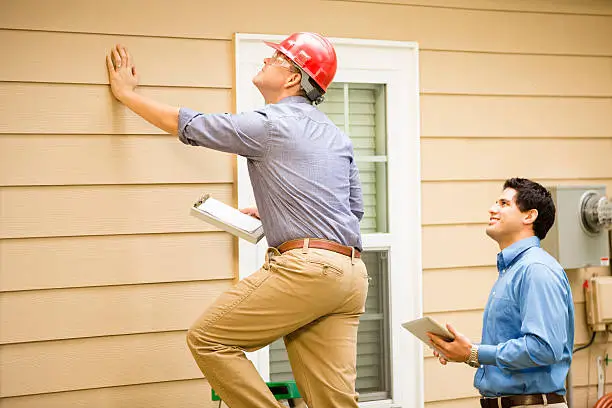
Pre Sale Building Inspection Papatoetoe
Purchasing a home is a major investment. Our in depth inspection helps you understand the property's condition before making a decision. We provide a thorough assessment, examining everything for potential issues such as moisture or pests, to give you confidence in your purchase.
Pre-Purchase Building Inspection Papatoetoe
Our inspection are designed to protect your investment. Conducted by experienced and qualified inspectors, we identify hidden defects, safety concerns, and maintenance issues. You’ll receive a detailed, easy-to-read report that empowers you to make informed choices.
Your Inspection Completed Within 24-48 hours
Need results fast? Our fast turnaround provides a thorough property review with detailed findings delivered on the same day. Perfect for time-sensitive situations, this service ensures you can move forward with confidence without delays or unnecessary waiting periods.
Our Working Process
Book
Confirm
Inspect
Report

Builders Report
Purchasing a property is one of life's biggest investments – getting a professional builder's report is essential for making the right decision. Alert Building Inspections is New Zealand's trusted building inspection network, with decades of experience in pre-purchase inspections.

Building Report
Our trade-qualified building inspectors conduct thorough inspections covering structural integrity, weathertightness, and potential maintenance issues. We deliver reports within 24-48 hours, including photographs, detailed findings, and specific recommendations.

House Inspection
When investing in real estate, likely your biggest ever commitment, a house inspection is essential. We deliver comprehensive reports from inspectors with extensive local knowledge throughout New Zealand. Select your location to get started!

Building Inspector
Need a Building Inspector? Our trade-qualified team delivers comprehensive reports within 24-48 hours. We specialise in rapid building inspections without compromising quality across all our New Zealand locations.
Papatoetoe Building Types by Era
Papatoetoe was a farming and railway township before it became one of Auckland’s largest suburbs. The line, the motorway and the Unitary Plan each added a layer of housing, and almost every house you can buy here sits in one of those layers rather than in a slow mix. Knowing the era tells you which questions to ask — and on this ground, the era and the street often say more than the asking price.
1850s to 1920s — Toetoe Flats, the Road and the Railway
European settlers used the name Papatoetoe from the 1850s — grounds where toetoe grows on the flat land between the Manukau and Tāmaki catchments. Great South Road and the coach services south opened the district; the lasting change was the railway. Papatoetoe station opened in 1875; the township grew around it, and by the 1880s dairy farming was feeding Auckland. Early country houses such as Hillside, Puhi Nui and Papahinu sat among farms rather than streets.
Housing estates began east of the station in the early 1900s — Kolmar (1903), Central, Ideal, Llanforda, Station and Green Park among them. By 1911, the population had roughly doubled to about 400; a public hall was built in 1918, and Papatoetoe became a town district in 1919. A second commercial strip grew at Hunter’s Corner on Great South Road. Housing from this band is modest timber — weatherboard cottages and bungalows on low piles. Expect thin paperwork, older joinery, wiring added to rather than replaced, and fibre-cement that may contain asbestos. Little survives unaltered from the farming century; the street pattern and the railway corridor are what remain.
1930s to 1960s — Borough, Motorway and the Fourfold Boom
Growth slowed in the Depression, then accelerated hard after the war. Papatoetoe became a borough in 1946. Middlemore Hospital opened in 1947. The Auckland Southern Motorway was completed from Ellerslie to Redoubt Road in 1955, and the suburb’s population rose by roughly fourfold in the postwar decades. In 1958, New Zealand’s first modern supermarket opened here; Nestlé’s Cambria Park factory followed in 1962 as a major employer. Papatoetoe became a city in 1965.
This is the stock most buyers still see — timber-framed weatherboard or brick veneer on concrete or timber piles, on larger sections than later infill. Fibrolite and other asbestos-era products appear on the earlier houses. Because so much went up on low volcanic flats between stream catchments, subfloor moisture and drainage are the recurring questions, not just roof age. A house from this band is usually well built; the risk lies in what water and time have done since, and in what has been added without clear consent.
1970s to Today — City, Mall and Unitary Plan Infill
Papatoetoe was amalgamated into Manukau City in 1989 and into Auckland Council in 2010. Hunter’s Plaza opened in 1991 and was later upgraded. Population growth stalled through the 1990s and early 2000s, then picked up again after 2006 as immigration rose and the Auckland Unitary Plan allowed denser housing on large postwar sections. The 2023 census counted 47,907 people in 13,275 dwellings — median age 32.1 against 38.1 nationally — across statistical areas from Grange and Dingwall through Papatoetoe Central to Puhinui North and South.
The result is a suburb that is both mid-century and newly dense. Older bungalows sit beside townhouses and units on the same original sections. Homes built in the 1990s and 2000s fall into the leaky building era. The newest housing raises cladding, junction, and drainage questions above the floor; under the floor, the same low flats and stream edges still determine how the section behaves in heavy rain. A 1950s weatherboard near St George Street and a 2010s plaster-clad townhouse toward Puhinui ask different questions above ground and surprisingly similar ones below it. The era tells you which to ask. It does not tell you the answer.
Frequently Asked Questions
How much does a building inspection cost in Papatoetoe?
Our comprehensive building inspection and report start at $299 and may be higher depending on the size and nature of the property. Your address is the key factor, so you'll know the cost upfront before you commit. Cost drivers here: an older timber home with a tight or damp subfloor on the flats, a larger multi-level alteration, a monolithic-clad home from the 1990s or 2000s that needs more moisture testing, and newer townhouses or units where cladding junctions and inter-tenancy details take time. Ring us with the address, and we will give you a firm price rather than a range. For more detail, see building inspection costs explained.
What does a building inspection cover in Papatoetoe?
Our inspector conducts a comprehensive building inspection in accordance with NZS 4306:2005, the New Zealand Standard for residential property inspections. It covers:
- Inside the property — wall linings, windows and doors, floors, bathroom fixtures, tiled areas, kitchen, cabinetry and waterproofing
- Sub-floor, where accessible — foundations, piling, ventilation, plumbing pipework, borer and timber decay
- Ceilings, walls, roof and roof space — including roof framing and wiring
- Outside — exterior cladding, door and window frames, flashings, fixings, garages, fences, paving, drives, decking and retaining walls
We test for moisture throughout, concentrating on windows, doors, bathrooms and cladding junctions. On a Papatoetoe property, the subfloor and site drainage matter more than usual because so much of the suburb sits on low-lying flats between Ōtara Creek, Puhinui Creek, and related catchments. You get a written building report in plain English within 24 to 48 hours, with photographs, findings grouped by severity, and practical recommendations. If any of the terms look unfamiliar, this guide to reading a builders report explains them.
Is Papatoetoe on good ground?
Much of it is low, flat ground rather than natural high ground, and that is the honest answer. Papatoetoe sits on South Auckland’s volcanic flats — including features such as the Kohuora tuff ring that became wetland — between stream catchments that drain toward the Tāmaki and Manukau sides. Well-built houses on properly drained sections perform perfectly well. The problems show where fill or low soils hold water, where subfloors are closed in, or where surface water has nowhere to go. So the ground is not a reason to avoid Papatoetoe. It is a reason to ask specific questions: pile condition, subfloor ventilation, how the section drains, and where the house sits against mapped flood paths. A geotechnical report is the right tool for bearing capacity; an inspection reports what is visible.
Does Papatoetoe flood?
In specific places, yes — and the council’s flood tools are the map to trust, not a suburb-wide label. Ōtara Creek and Puhinui Creek (with Waokauri and related waterways) cross low ground through and around Papatoetoe. Local stream work and council flood viewers flag corridors and low points rather than every street. The practical questions for a buyer are: the floor level relative to the mapped flood path, where overland flow would go, the presence of gully traps and surface drains, and whether the section is at a low point. A LIM will show the hazards the council maps for that address; a building inspection shows how the building itself is handling water today.
What should I know about buying near Hunter’s Corner or Old Papatoetoe?
They are two different commercial hearts of the same suburb. Old Papatoetoe grew around the railway and St George Street; Hunter’s Corner grew later on Great South Road as a motor-bus terminus and shopping strip. Housing around both is often earlier timber or postwar boom stock on larger sections, with newer infill mixed in. We look at the age of the cladding and joinery, how the paving and additions shed water onto the building, and the usual subfloor questions on the flats. Proximity to shops is not a building risk; deferred maintenance on mid-century stock and unclear additions are the more common issues.
What is the risk of a leaky building in Papatoetoe?
Real enough to test for, especially on homes clad between roughly the early 1990s and the mid-2000s. That era used monolithic sheet cladding — Harditex, EIFS and similar — often over untreated timber framing with no drainage cavity. Papatoetoe’s later growth and the post-2006 infill wave mean a share of the stock sits in that group. None of that means a plaster-clad Papatoetoe house is defective. It means moisture testing and a close look at junctions, decks and parapets are worth doing before you buy. See monolithic cladding and the signs of a leaky home.
Do you check for dampness, moisture and leaky building issues?
Moisture is the most common serious problem we find, and Papatoetoe has the ground and the housing types that show it. We check subfloor ventilation and ground moisture; moisture levels in walls, ceilings, floors, and joinery; where water is entering around windows, doors, flashings, and cladding penetrations; bathroom and shower waterproofing; and the roof space, including the framing. For leaky-era cladding, we test more extensively and assess risk from the cladding, the design, the site’s exposure and the maintenance history. Where we find real concern, we recommend a full invasive moisture investigation by a specialist weathertightness consultant. See moisture testing and common building defects.
Do I need a building inspection for a new build in Papatoetoe?
For a genuinely new house or townhouse, a final inspection before practical completion or your final payment is money well spent. Much of Papatoetoe’s newest housing is infill on former large sections — engineered platforms, shared drives and denser cladding systems — and the defects that turn up tend to be the same ones everywhere: incomplete cladding junctions, flashings never finished properly, missed fixings, drainage that does not fall the way it should, and landscaping that directs water at the house. A final inspection provides you with a written list, and the builder is still obliged to fix it. See new construction inspections.
Do I need a LIM report as well as a building report?
They answer different questions and are worth having together. A LIM is the council’s record of the property: consents, resource consents, zoning, and the hazards mapped for that address — including flood. A building report is what a qualified inspector finds on-site when looking at the building. Neither replaces the other: a LIM will not tell you the roof is near the end of its life, and a building report cannot tell you whether the deck was consented. In Papatoetoe, a LIM is particularly worth reading for flood mapping and for any filled or low-lying section near the streams. Our LIM reports vs building reports guide sets it out.
How long does a building inspection take in Papatoetoe?
Most single-house inspections take between 1 and 2 hours on site, and you will receive the written report within 24 to 48 hours. A Papatoetoe property can take longer when the subfloor is tight or damp, when later additions have blocked access, or when monolithic cladding requires moisture testing in more locations. We would rather be on site an extra half hour than leave a subfloor or a wall unexamined. Ring with the address, and we will tell you honestly what the property is likely to need before you book.
Can I attend the building inspection?
You are very welcome to, and most buyers find it useful. Being on site lets the inspector show you what he is looking at, explain what matters and what does not, and answer questions while you are standing in the room rather than three days later. It is also the best way to understand the difference between a serious defect and ordinary maintenance on an older house. Two practical conditions: you must not need to be shown around by the vendor or agent, because the inspection is not a viewing, and the inspector has to keep working — so a lot of moving around in tight subfloor spaces slows things down. If you cannot attend, the report is written so that it stands on its own.
Are your building inspectors qualified in Papatoetoe?
They are. Every inspector who works for Alert Building Inspections is trade-qualified with a building background, carries professional indemnity insurance, and inspects to NZS 4306:2005, the New Zealand Standard for residential property inspections. That matters because a building inspection is a judgement call made on the day: what counts as much as the standard is knowing what a 1950s weatherboard on the flats, a Hunter’s Corner-era bungalow, a monolithic-clad 1990s house or a new infill townhouse should look like when it is right. Our inspectors work across Auckland continuously and see those types every week. You can meet them on our team page.
Should I worry about asbestos in an older Papatoetoe home?
On the earlier stock, yes — treat it as a real question. Papatoetoe has houses from before and after the main decades of asbestos use. Fibre-cement cladding and sheeting, soffits, vinyl floor tiles and their backing, textured ceilings, and older ducting or lagging can all contain asbestos in mid-century homes. Later 1980s and 1990s houses are much less likely to. If it is intact and undisturbed, it is usually not a problem; it becomes one the moment a renovation cuts, sands, drills or demolishes it. We identify suspect materials and tell you where they are, but confirming asbestos needs laboratory testing, and removing it needs a licensed removalist. Our guide to asbestos in New Zealand homes covers where to look.
What about infill and townhouses on large Papatoetoe sections?
Worth understanding, not fearing. After 2006, the Unitary Plan made denser housing on large postwar sections common, so many original sites now hold more than one dwelling. An inspection there is the same job as anywhere else: foundations and drainage on altered ground; cladding and junctions on the newer builds; shared drives and boundary detailing; and, on any remaining mid-century house, the usual questions about age, moisture, and materials. The LIM and title tell you the planning history; we tell you what the building is doing today.
Building inspections near me — do you cover Papatoetoe?
Yes. Papatoetoe is one of the South Auckland areas we work in continuously, along with Ōtara, Manukau, Middlemore, Māngere East, Papakura, Manurewa and the wider Auckland region. Being local matters less for the driving and more for the pattern recognition: an inspector who works South Auckland every week knows what a low-flat Papatoetoe subfloor looks like when ventilation has failed, and knows a monolithic-clad home here is worth testing thoroughly. Ring 0800 4 ALERT with the address, or book online, and we will confirm the price and the earliest time we can be there. Same-day and urgent inspections are often possible — see urgent building inspections, or contact us.
