
Building Inspection Petone
BUILDING REPORT PETONE
Residential & Commercial Building Reports
Alert Building Inspections provides professional building inspections across Petone for home buyers, sellers, and property investors. From Jackson Street and Petone Central through the Esplanade, Ava and Wilford to Moera, Korokoro and Alicetown, we give you an independent, evidence-based picture of the property before you commit — and we tell you plainly what the condition is worth to you. Every written report includes photographs and clear recommendations and is delivered within 24-48 hours.
CUSTOMER REVIEWS
Petone’s Unique Building Challenges
Petone is small and flat, with little room to spread out. The suburb covers about 3.9 square kilometres, bounded by the Hutt River to the north and east, Wellington Harbour to the south, and the western hills behind. Jackson Street is the spine, with shops, heritage buildings and older cottages crowded along it. Around that sit the three statistical areas — Petone Central, Petone East and the Esplanade — with Ava, Wilford, Moera, Korokoro and Alicetown close by. Korokoro Stream comes down off Belmont Regional Park into the harbour at the western end of the foreshore.
The ground is the real story, and it is younger than the town. When Edward Jerningham Wakefield described this coast in 1840, he found forest to within a mile and a half of the beach, then “swamps full of flax and a belt of sand hummocks”. The 1855 Wairarapa earthquake — magnitude 8.2, the strongest ever recorded in New Zealand — lifted the coastline here by a metre or more and improved drainage around the Hutt River mouth; it is largely because of that uplift that Petone could be built on at all. What is underneath is soft: river and marine sediment, drained swamp and harbour fill, with the water table close to the surface. The Waiwhetu Aquifer runs beneath the whole suburb and surfaces at the foreshore — residents still fill bottles at Te Puna Wai Ora on Buick Street.
Three hazards sit on that ground. The first is the Wellington Fault, whose surface trace runs through the western side of Petone; Hutt City Council maps a 150 metre hazard overlay along it and manages development within 20 metres, because a rupture could move the ground up to 4 metres horizontally and 0.5 metres vertically. The second is liquefaction — the council’s own plan describes this valley floor as soft soils with high liquefaction potential, and saturated silt and fine sand is exactly what liquefies. The third is water. Petone is low-lying between a river mouth and a harbour, and in December 1976 Korokoro Stream pushed almost a metre deep through the Cornish Street industrial area, with more than 40 people rescued from factory roofs.
TESTING
Report
BUILDERS REPORT PETONE
Fast Turnaround 24-48 hours
A builders report tells you what a viewing can’t. Our trade-qualified inspectors are practising builders, and they assess structural integrity, weathertightness and maintenance across every accessible part of the property, under NZS 4306:2005.
Every report is written in plain English, with findings categorised by severity, photographs of each issue, and specific recommendations — not a checklist of ticks and crosses. All major banks and lending institutions accept our reports, and because Petone’s stock runs from 1880s cottages to new apartments, our severity notes tell you what is urgent and what is maintenance.
We inspect across Petone — Jackson Street and Petone Central, Petone East, the Esplanade, Ava, Wilford, Moera, Korokoro, Alicetown and Maungaraki — as well as the wider Wellington region covered on our Wellington page. Ring 0800 4 ALERT or book online for a firm quote on your address, or see our full range of services.
+
+
HOUSE INSPECTION PETONE
A house inspection and a building inspection are the same thing — a trade-qualified inspector on site, working in a set order: exterior and roof, roof space, interior, then the subfloor.
In Petone, the ground is the story. The town stands on swamp the 1855 earthquake lifted and drained, so the soil is soft river and marine sediment, with the water table close under the floors, over the artesian Waiwhetu Aquifer. Piles, subfloor ventilation and drainage are where the real answers are.
What matters depends on where the house sits. The Esplanade and foreshore bring salt air, coastal inundation and modern apartments; central Petone and Jackson Street hold the region’s oldest timber cottages and villas, on low piles; the western end carries the Wellington Fault trace and Korokoro Stream, which flooded Cornish Street almost a metre deep in 1976; and the Hutt River mouth is the flood end of town.
See what a buyer should cover in our property inspection checklist.
BUILDING INSPECTOR PETONE
24-48 Hour Report Delivery Guaranteed
Looking for a building inspector in Petone? Our trade-qualified inspectors deliver thorough building reports, and every one complies with NZS 4306:2005.
Each carries professional indemnity insurance and knows this town’s housing — 1880s to 1920s timber villas, the 1906 Heretaunga Settlement workers’ dwellings in Patrick Street, 1930s to 1960s state homes, the 1960s Star Flats on Jackson Street, and weathertightness failures in monolithic-clad buildings from the 1990s and 2000s.
Because so much of Petone sits on drained swamp and harbour fill with the water table close to the surface, we look hard at how the building meets the ground — pile condition, subfloor moisture and ventilation, and where stormwater is carried away from the house. We also check how each section drains, because low ground is where water arrives first. You can meet the inspectors on our team page.
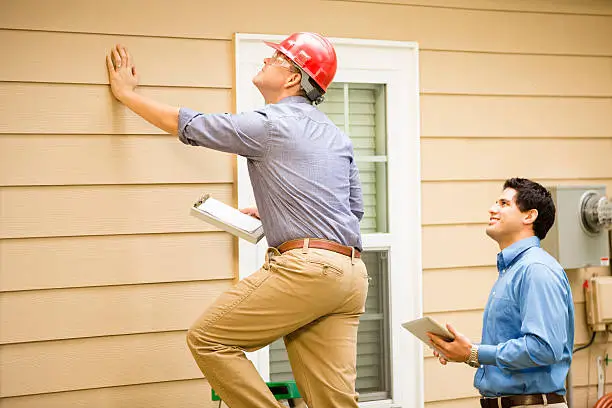
Pre Sale Building Inspection Petone
Purchasing a home is a major investment. Our in depth inspection helps you understand the property's condition before making a decision. We provide a thorough assessment, examining everything for potential issues such as moisture or pests, to give you confidence in your purchase.
Pre-Purchase Building Inspection Petone
Our inspection are designed to protect your investment. Conducted by experienced and qualified inspectors, we identify hidden defects, safety concerns, and maintenance issues. You’ll receive a detailed, easy-to-read report that empowers you to make informed choices.
Your Inspection Completed Within 24-48 hours
Need results fast? Our fast turnaround provides a thorough property review with detailed findings delivered on the same day. Perfect for time-sensitive situations, this service ensures you can move forward with confidence without delays or unnecessary waiting periods.
Our Working Process
Book
Confirm
Inspect
Report
Wellington - Areas of Service
Alicetown, Aro Valley, Ava, Avalon, Belmont, Boulcott, Brooklyn, Days Bay, Eastbourne, Epuni, Gracefield, Heretaunga, Hutt Central, Island Bay, Johnsonville, Karori, Kelburn, Kelson, Khandallah, Kilbirnie, Korokoro, Lowry Bay, Lyall Bay, Mahina Bay, Manor Park, Maungaraki, Miramar, Moera, Mount Victoria, Naenae, Newtown, Ngaio, Normandale, Otaki, Paekakariki, Paremata, Petone, Petone Central, Petone East, Petone Esplanade, Plimmerton, Point Howard, Pomare, Porirua, Pukerua Bay, Raumati, Seaview, Seatoun, Silverstream, Sorrento Bay, Stokes Valley, Sunshine Bay, Taita, Tawa, Thorndon, Titahi Bay, Trentham, Upper Hutt, Wadestown, Wainuiomata, Waikanae, Waterloo, Whitby, Wilford, Woburn, York Bay.

Builders Report
Purchasing a property is one of life's biggest investments – getting a professional builder's report is essential for making the right decision. Alert Building Inspections is New Zealand's trusted building inspection network, with decades of experience in pre-purchase inspections.

Building Report
Our trade-qualified building inspectors conduct thorough inspections covering structural integrity, weathertightness, and potential maintenance issues. We deliver reports within 24-48 hours, including photographs, detailed findings, and specific recommendations.

House Inspection
When investing in real estate, likely your biggest ever commitment, a house inspection is essential. We deliver comprehensive reports from inspectors with extensive local knowledge throughout New Zealand. Select your location to get started!

Building Inspector
Need a Building Inspector? Our trade-qualified team delivers comprehensive reports within 24-48 hours. We specialise in rapid building inspections without compromising quality across all our New Zealand locations.
Petone Building Types by Era
Petone holds the region’s housing history because the region started here. Almost nothing survives from 1840, but the town has been continuously occupied since and has worked through every phase — colonial timber, Edwardian villas, the country’s first state houses, 1960s flats, and now apartments on the foreshore. Knowing the era tells you what to look at.
1840s to 1900s — Britannia, the Great Flood and the Railway
In January 1840 the New Zealand Company’s settlers came ashore at Pito-one and built a beach settlement called Britannia. They were not first: two Te Ati Awa pā already stood on this shore, Pito-one pā at the western end of the beach and Hikoikoi pā near the mouth of the Hutt River, and by 1850 Pito-one pā was described as the largest and best fortified in the Wellington district. Wakefield’s 1840 account fixes the landscape precisely — a sandy beach two miles long, the Korokoro stream between the pā and the western hills, high forest to within a mile and a half of the beach.
The settlement did not survive its own site. From 23 February 1840 the rain came, and on 2 March the Hutt River rose, putting the riverbank huts knee-deep in water. Some settlers moved to a higher shingle ridge at today’s William Street, soon nicknamed Cornish Row, and their raupō shacks burned down that May. On 19 September 1840 the name Britannia was formally transferred to Thorndon, and most of the town went with it.
Petone stayed small and wet for another forty years; the forest was milled, the swamp drained, and Petone became a borough in 1888. What survives from the century is timber — St David’s Presbyterian in Britannia Street (1889), St Augustine’s (1902-03), the Petone Railway Workshops (1876-1929), and the villas and workers’ cottages that still line the streets back from Jackson Street. They sit on low piles or on the ground, and after a century on soft ground, that is the first thing we look at.
1900s to 1930s — The Heretaunga Settlement and the Borough Years
In 1906, under the Workers’ Dwellings Act 1905, the government built 25 rental houses in Patrick Street. This was the Heretaunga Settlement — New Zealand’s first state housing, and an area Heritage New Zealand has since identified as possibly the first national government-led housing development anywhere in the world. Twenty-four of the 25 are still standing, plus three more added in 1908, and the street is a historic precinct. The scheme itself failed, because most workers in Petone could not afford the rent plus the commute.
Around those houses the working town filled in. The railway workshops, the Gear Meat works and the woollen mills were the three biggest employers, and all three appear on the borough’s first coat of arms. The original Petone Wharf was built so Gear Meat could move its product quickly to Wellington for export, and the current wharf followed in 1908-09. Edwardian villas and bungalows went up alongside — weatherboard, timber-framed, mostly single-storey, with wide verandahs and bay windows. The materials of the period matter now: original joinery, lead-based paint, fibre-cement sheeting that may contain asbestos, and wiring that has been added to rather than replaced.
1930s to 1960s — Industry, State Housing and the Star Flats
This was Petone at its peak, and the housing from it is what most buyers see today. Todd Motors assembled vehicles here from 1935 until it left for Porirua in the early 1970s; WD & HO Wills made tobacco on the same site from 1919. Alongside them were car body plants, meat and wool processing, and a soap factory. Those employers needed workers, and the state built for them in the second, much larger wave of state housing — timber-framed, on concrete piles, built to standard plans that repeat street after street, making them predictable to inspect and easy to compare.
The 1960s added a new building type to Petone. The Star Flats, state apartment blocks in Jackson Street and East Street, are two- and three-storey concrete-framed flats with shared access and a common roof. Ageing comes to all of them at once, because Petone’s stock was built in a small number of tight bursts: roofs and joinery reaching the end of their life, insulation below today’s standards, original switchboards, and — on this ground — piles and subfloor moisture. A 1950s state house and a 1960s Star Flat ask different questions above the floor and remarkably similar ones below it.
1970s to Today — Closures, Jackson Street and the Foreshore
From the 1970s, the big employers left, and most industrial sites closed through the 1970s and 1980s. The effect on the housing stock was decades of deferred maintenance, and it is still what a buyer sees: well-built 1920s villas and 1950s state houses whose kitchens, bathrooms and wiring were last touched in the 1980s, or earlier. Petone’s revival came from its history rather than its industry. Jackson Street — more than 220 businesses and a Heritage New Zealand historic area — became the café and retail strip; the borough amalgamated with Lower Hutt in 1989, and the population has climbed steadily since, to 7,734 people in 3,270 dwellings at the 2023 census.
That growth has added the newest housing in town, mostly in the Esplanade and along the foreshore: low-rise apartment buildings and infill townhouses replacing older bungalows. They are usually built on engineered foundations and driven piles to suit soft ground, which is the right approach — but it moves the inspection questions rather than removing them. On an apartment building, the answers lie in the cladding and the decks, the parapets and membrane roofs typical of the 1990s and 2000s, the inter-tenancy acoustic and fire separation, and how the building meets ground that is low, soft and close to the harbour. Petone’s age tells you which questions to ask. It does not tell you the answer.
Frequently Asked Questions
How much does a building inspection cost in Petone?
Our comprehensive building inspection and report start from $299 and can go higher depending on the property's size and condition. Your address is the key factor, so you’ll know the cost upfront before you commit. Cost drivers here: an old villa with a deep or hard-to-access subfloor, a house on soft ground where the piles need close inspection, an apartment where cladding, decks and inter-tenancy details all come into it, or a pre-2004 building where weathertightness testing takes longer. Ring us with the address, and we will give you a firm price rather than a range. For more detail, see building inspection costs explained.
What does a building inspection cover in Petone?
Our inspector carries out a complete building inspection in accordance with NZS 4306:2005, the New Zealand Standard for residential property inspections. It covers:
- Inside the property — wall linings, windows and doors, floors, bathroom fixtures, tiled areas, kitchen, cabinetry and waterproofing
- Sub-floor, where accessible — foundations, piling, ventilation, plumbing pipework, borer and timber decay
- Ceilings, walls, roof and roof space — including roof framing and wiring
- Outside — cladding, door and window frames, flashings, fixings, garages, fences, paving, drives, decking and retaining walls
We test for moisture throughout, concentrating on windows, doors, bathrooms and cladding junctions, and in Petone we put extra weight on the subfloor. Drained swamp and a high water table mean ground moisture and ventilation matter more here than in most of the region.
You get a written building report in plain English within 24 to 48 hours, with photographs, findings grouped by severity, and practical recommendations. If any of the terms look unfamiliar, this guide to reading a builders report explains them.
Is Petone on good ground?
No — it is one of the softest suburbs in the Wellington region, and it is worth understanding why. The land here is young. Until the 1855 Wairarapa earthquake lifted the coast by a metre or more, this was a swampy river mouth; the uplift improved drainage and made settlement possible, and the town has been built on that ground ever since. Underneath is river and marine sediment, drained swamp and pockets of harbour fill, with the water table close to the surface and the artesian Waiwhetu Aquifer beneath it.
Petone is low-lying too, between the Hutt River mouth and the harbour. From a foundation inspection we can spot the symptoms — cracking, out-of-level floors, piles that have moved, doors that have been planed, damp ground under the house. We can't determine bearing capacity or provide a soil classification, because that is geotechnical engineering, and where it is warranted, we will say so.
Is Petone at risk of liquefaction?
Parts of it are, and the risk is mapped. Hutt City Council’s district plan describes the lower Hutt Valley floor — which includes Petone — as soft soils with high liquefaction potential, and the combination that liquefies is saturated loose silt and fine sand. That is precisely what the drained swamp and estuarine sediment under Petone are: the water table is close to the surface, with artesian pressure from the Waiwhetu Aquifer below. The ground becomes firmer towards the western hills and the older river terraces.
An inspection can show you the symptoms of ground movement that has already happened: cracking through cladding and linings, floors out of level, piles that have settled unevenly, and doors and windows that no longer sit square. What it cannot do is a liquefaction assessment, which is geotechnical work with its own testing. Where a site warrants one, we will tell you to get it.
What about the Wellington Fault in Petone?
It is real, and Petone is one of the few places in New Zealand where you can see why it matters. The Wellington Fault’s surface trace runs through the suburb's western side. Hutt City Council maps a 150 metre Wellington Fault Hazard Overlay along the inferred fault line and manages development within 20 metres of it, because a rupture could move the ground up to 4 metres horizontally and 0.5 metres vertically.
The fault’s mean recurrence interval is about 635 years, so it is not a next-decade concern for most buyers — but the consequences are planned for. Recent council work has also narrowed the overlay in parts of Petone, which removed more than 130 properties from the hazard band. The practical point is that council mapping and the LIM determine fault location, not an inspection, and most of Petone sits well outside the 20 metre rule. Our guide to LIM reports explains where that sits alongside a building report.
Does Petone flood?
It does, and the record is long. Petone is low-lying, sits at the mouth of the Hutt River, and has the Korokoro Stream coming off the Belmont hills into the harbour at the western end of the foreshore. In December 1976, a severe storm pushed Korokoro Stream almost a metre deep through the industrial area around Cornish Street, and more than 40 people had to be rescued from factory roofs.
Coastal inundation is the second risk, and the shallow sandy beach along the Esplanade is built from Hutt River sediment, so the shoreline is genuinely dynamic. The third is tsunami, for which a low-lying harbour suburb is always exposed. We look at site levels relative to the floor, ground drainage, where stormwater is carried, and whether a subfloor shows signs of regular wetting. Our climate change guide covers how these risks are shifting.
Do I need a LIM report as well as a building inspection in Petone?
More so here than in most towns, and the two answer different questions. A building inspection tells you what the building is like now. A LIM is where the council records its own view of the land — the Wellington Fault Hazard Overlay and the 20 metre rule, flood hazard and overland flow paths, liquefaction mapping, coastal inundation, any resource consents, and any unauthorised or unconsented building work on the property.
In Petone, several of those hazards are mapped at property level, so the LIM is the only place you see where a specific address sits in relation to them. Get both, and get the LIM early — the council issues it, and it takes time. Our guide to LIM reports explains what each one covers.
Do you check for dampness, moisture and leaky building issues?
Yes. Moisture is the most common serious problem we find, and Petone has its own causes. The water table sits close to the surface, the Waiwhetu Aquifer runs underneath with artesian pressure, and the suburb is exposed to salt-laden harbour air that works on fixings, flashings and joinery faster than inland. That combination makes a poorly ventilated subfloor the single most important thing to get right here.
We check subfloor ventilation and ground moisture; moisture levels in walls, ceilings, floors and joinery; where water is getting in around windows, doors and cladding penetrations; bathroom and shower waterproofing; and the roof space. For leaky building era properties (roughly 1988 to 2004), we test more extensively and assess the risk from cladding, design, exposure, and maintenance history.
Where we find real concern, we recommend a full invasive moisture investigation by a specialist weathertightness consultant — see monolithic cladding and weathertightness and our weathertight homes guide.
What do you check on an early-1900s Petone villa?
That era is much of what is on the market here, and it is the inspection we do most often. These houses were built well, but they are now 100 to 140 years old and sitting on soft ground, so the questions are specific. Under the floor: pile condition and whether the house has moved on them, subfloor ventilation, damp, plumbing pipework, and borer. Above it: roof and joinery age, original wiring and switchboards, insulation below any modern standard, and whether the hot water and heating have been renewed.
Then the additions — lean-tos, enclosed verandahs, converted sleepouts and garage conversions are common on these sections, and some are unconsented. Pre-1970s timber likely has lead-based paint, and fibre-cement sheeting from that period may contain asbestos. Our common building defects page covers what we find most often.
Should I worry about asbestos in an older Petone home?
Asbestos-containing materials were widely used in New Zealand building products until the 1980s, and Petone’s long build-up means much of its housing falls within that window. Fibre-cement cladding and sheeting is the classic example, and fibrolite from the 1940s through the 1970s is common here. Other locations include roof sheeting, soffits, vinyl floor tiles and their backing, textured ceilings, and older ducting and pipe lagging.
If it is intact and undisturbed, it is usually not a problem; it becomes one the moment a renovation cuts, sands, drills or demolishes it. That matters more than usual in Petone, because older bungalows are regularly being demolished for infill townhouses. We identify suspect materials and tell you where they are, but confirming asbestos needs laboratory testing, and removing it needs a licensed removalist. Our guide to asbestos in New Zealand homes covers where to look and what to do.
Do I need a building inspection for a new townhouse or Esplanade apartment in Petone?
Yes, and it is a different inspection from a 1900s villa, even though the standard is the same. New builds can have incomplete work, missed flashings, deck and parapet defects, drainage connected but not properly bedded or graded, extraction ducted into the roof space instead of outside, and finishing defects. In Petone, the foreshore apartment and townhouse developments add a layer, because they sit over drained swamp and close to a high water table, and they usually rely on engineered foundations and driven piles with settlement tolerances that assume the ground behaves as designed.
So the questions are whether the foundations match the design, whether any specified ground improvement was done, whether stormwater is managed as the design assumed, and how the inter-tenancy acoustic and fire separation has come out. An independent inspection verifies the property was built to the standard it should have been, and it is far easier to fix issues before settlement. See new construction inspections.
How long does a building inspection take in Petone?
Most building inspections take 1-2 hours, depending on the property size and condition. Allow longer for a multi-level home, an old villa with a deep or tight subfloor, an apartment where common property access must be arranged, or a pre-2004 building needing a more detailed moisture assessment, as those take more time. You are welcome to come along, and if you do, allow the full time. If you are working to a deadline, see urgent building inspections. The report follows within 24 to 48 hours.
Can I attend the building inspection?
Absolutely! We encourage clients to attend their building inspection to gain firsthand insights and ask questions directly to our inspector in Petone. It is particularly valuable here, where piles standing in drained swamp, a subfloor that does not dry out, or the way stormwater moves off a low section is far easier to understand standing under the house with the inspector than reading it in a report. There is no additional charge for attending.
Are your building inspectors qualified in Petone?
Yes. Our inspectors are trade-qualified with experience in New Zealand residential construction, and every inspection follows the New Zealand Standard for residential property inspections, NZS 4306:2005. We hold professional indemnity insurance. They also know this town — which streets sit on drained swamp and which are closer to the firmer ground towards the hills, how high the water table runs, the western edge where the fault trace passes, and which decades the housing comes from. You can meet the inspectors on our team page, and take a look at the services we provide.
Building inspections near me?
Looking for building inspection services in Petone? Alert Building Inspections provides detailed building reports within 24-48 hours, conducted by trade-qualified inspectors who know the town’s property market and the demands of building on drained swamp and harbour fill beside the Wellington Fault.
We serve Petone and the surrounding Hutt Valley and Wellington region, including Jackson Street, Petone Central, Petone East, the Esplanade, Ava, Wilford, Moera, Korokoro, Alicetown, Woburn, Maungaraki and the wider district. Book by ringing 0800 4 ALERT (425 378) or through our contact page, and we will confirm your inspection time. If you want to read more before you book, our building inspection questions and answers page covers the things people ask us most.
