
Alert Building Inspections provides professional building inspections across Waikanae for home buyers, sellers, and property investors. From the town centre and Waikanae North through Waikanae Beach and the flats along the river to Peka Peka and Reikorangi, we give you an independent, evidence-based picture of the property before you commit — and we tell you plainly what the condition is worth to you. Every written report includes photographs and clear recommendations, and is delivered within 24-48 hours.
Waikanae is really two towns wearing one name. The township sits inland on the coastal plain, with its shops, the rebuilt railway station and the state highway. Two and a half kilometres west, Waikanae Beach runs along the dunes from the river estuary to the Waimeha Stream, with the Waimanu Lagoon behind it. The Tararua Range shelters the town from the south and east and Kāpiti Island from the west, which is why it is drier and less windy than Wellington and why it became a retirement destination. Behind the township, the bush-clad Hemi Matenga Reserve rises to 514 metres — one of the largest stands of kohekohe forest left in New Zealand.
The ground under it is young, wet, and made of river sediment. Before people settled here, the coastal plain was a wetland divided by a maze of watercourses, and what remains is dune sand, peat, and old river gravel, with the water table often only a metre or two down. The Waimeha Stream once forked off the Waikanae River south of the township and wandered through what is now the town centre, roughly along Te Moana Road — those old channels are still in the ground under the houses built over them.
The river is the second fact of life here. The Waikanae has flooded seriously in 1955, 1956, 1998 and again in January 2005, when the peak flow was the largest since records began in 1975 and the level was rated at about one-in-one-hundred-years. About 700 people were evacuated from the holiday park at El Rancho. Protection was in place between 1956 and 1964 and was upgraded in 2017 with a $1.5m investment; those stopbanks now protect about 450 Waikanae Beach houses. The coast is in better shape than most of the district — Waikanae Beach sits in the wave shadow of Kāpiti Island, sand still arrives from the big rivers to the north, and the shoreline is growing rather than retreating. Flood water still arrives through the Waimeha and Ngārara streams and the Waimanu Lagoon, and the fault that dominates Paekākāriki and Raumati dies out before it reaches here.
Fast Turnaround 24-48 hours
A builders report tells you what a viewing can’t. Our trade-qualified inspectors are practising builders, and they assess structural integrity, weathertightness and maintenance across every accessible part of the property, under NZS 4306:2005.
Every report is written in plain English, with findings categorised by severity, photographs of each issue, and specific recommendations — not a checklist of ticks and crosses. All major banks and lending institutions accept our reports, and because most of Waikanae was built in a single decade, our severity notes tell you what is urgent and what is simply the next item on a 1970s maintenance list.
We inspect across Waikanae — the town centre, Waikanae North, Waikanae Beach, Peka Peka, Reikorangi and the hill roads — as well as the wider Wellington region covered on our Wellington page. Ring 0800 4 ALERT or book online for a firm quote on your address, or see our full range of services.
+
+
A house inspection and a building inspection are the same thing — a trade-qualified inspector on site, working in a set order: exterior and roof, roof space, interior, then the subfloor.
That order matters here, because Waikanae was wetland before it was a town and most of it was built over in the 1970s. Under the lawns are dune sand, peat and old river gravel with the water table close below, and the river has flooded badly four times in living memory. Piles, subfloor ventilation and drainage are where the answers are.
Where the house sits decides. Waikanae Beach sits on dunes behind a growing shoreline, with the Waimeha and Ngārara streams and the Waimanu Lagoon as its flood paths; the town centre sits over old watercourses that ran along Te Moana Road; the hill roads below Hemi Matenga bring cut-and-fill platforms and retaining walls; and Waikanae North is built on reworked duneland.
See what a buyer should cover in our property inspection checklist.
24-48 Hour Report Delivery Guaranteed
Looking for a building inspector in Waikanae? Our trade-qualified inspectors deliver thorough building reports, and every one complies with NZS 4306:2005.
Each carries professional indemnity insurance and knows this town’s housing: the 1970s homes that make up its largest single slice; 1960s and 70s baches at Waikanae Beach now lived in year-round; brick and tile homes from the 1980s and 90s; and weathertightness failures in monolithic-clad homes built between 1988 and 2004.
Because Waikanae was built over old wetland, peat, and dune sand, we look closely at how the building meets the ground—pile condition, subfloor moisture and ventilation, and where stormwater is carried away from the house. This is a river town as well, so we check how the section drains and how the floor level sits against the flood record. You can meet the inspectors on our team page.
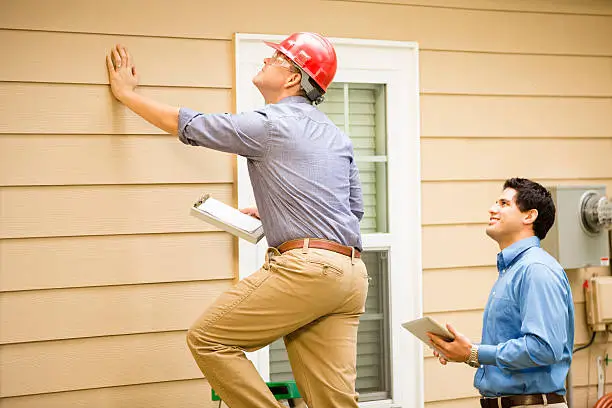
Purchasing a home is a major investment. Our in depth inspection helps you understand the property's condition before making a decision. We provide a thorough assessment, examining everything for potential issues such as moisture or pests, to give you confidence in your purchase.
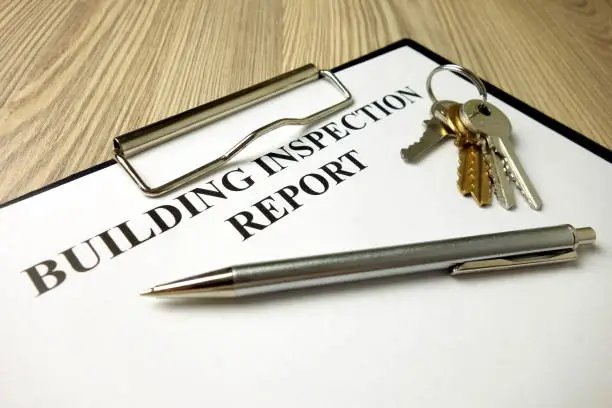
Our inspection are designed to protect your investment. Conducted by experienced and qualified inspectors, we identify hidden defects, safety concerns, and maintenance issues. You’ll receive a detailed, easy-to-read report that empowers you to make informed choices.
Need results fast? Our fast turnaround provides a thorough property review with detailed findings delivered on the same day. Perfect for time-sensitive situations, this service ensures you can move forward with confidence without delays or unnecessary waiting periods.
Alicetown, Aro Valley, Ava, Avalon, Belmont, Boulcott, Brooklyn, Days Bay, Eastbourne, Epuni, Gracefield, Heretaunga, Hutt Central, Island Bay, Johnsonville, Karori, Kelburn, Kelson, Khandallah, Kilbirnie, Korokoro, Levin, Lowry Bay, Lyall Bay, Mahina Bay, Manor Park, Maungaraki, Miramar, Moera, Mount Victoria, Naenae, Newtown, Ngaio, Normandale, Ōtaihanga, Ōtaki, Paekākāriki, Paraparaumu, Paremata, Peka Peka, Petone, Plimmerton, Point Howard, Porirua, Pukerua Bay, Raumati, Reikorangi, Seaview, Seatoun, Silverstream, Stokes Valley, Tawa, Te Horo, Thorndon, Titahi Bay, Trentham, Upper Hutt, Wadestown, Waikanae, Waikanae Beach, Waikanae North, Wainuiomata, Waterloo, Whitby, Wilford, Woburn, York Bay.

Purchasing a property is one of life's biggest investments – getting a professional builder's report is essential for making the right decision. Alert Building Inspections is New Zealand's trusted building inspection network, with decades of experience in pre-purchase inspections.

Our trade-qualified building inspectors conduct thorough inspections covering structural integrity, weathertightness, and potential maintenance issues. We deliver reports within 24-48 hours, including photographs, detailed findings, and specific recommendations.

When investing in real estate, likely your biggest ever commitment, a house inspection is essential. We deliver comprehensive reports from inspectors with extensive local knowledge throughout New Zealand. Select your location to get started!

Need a Building Inspector? Our trade-qualified team delivers comprehensive reports within 24-48 hours. We specialise in rapid building inspections without compromising quality across all our New Zealand locations.
Waikanae has been lived in for centuries and built over in barely one, and three things shaped the housing you see: the river, the railway, and retirement. Each era left a different kind of house and a different set of questions, and in Waikanae the era matters more than usual, because most of the town went up inside a single decade.
The coastal plain here was wetlands and kohekohe forest, and the first settlement was Te Āti Awa, who arrived from Taranaki in 1824 at Ngāti Toa's invitation. Their village at Waimeha stood on a sandhill overlooking the estuary of the two rivers, and near there the last of the intertribal musket wars was fought — the Battle of Kuititanga on 16 October 1839. The New Zealand Company ship Tory arrived days later; its surgeons tended the wounded, and the fighting was settled aboard her. The Treaty of Waitangi was signed at Waikanae on 16 May 1840.
The site did not hold. In 1848 more than 600 Te Āti Awa returned to Taranaki, and the villages they left had been damaged by an earthquake and by sand encroaching over them. Those who stayed moved inland to Tuku Rākau, a sheltered flat north of the river crossing, and under Wī Tako Ngātata-i-te-Rangi built homes, gardens, a meeting house called Puku Mahi Tamariki and, in 1877, a church. In 1884 railway officials met the community at Tuku Rākau, and the land for the line was given on one condition — that every train stopped at Waikanae.
The line opened in 1886, the settlement shifted to it, and the meeting house, Whakarongotai, was hauled to Marae Lane beside the new station and bridge, where it still stands. The Native Land Court had also awarded the 29,500-acre Ngārara Block to a section of Te Āti Awa as communal land — the ground the town is expanding onto now.
Little domestic building survives from this century. What does survive is the marae, St Luke’s Church at Tuku Rākau on Te Moana Road, consecrated in 1906, and the street layout around the railway and the old coach crossing — the 1894 Post Office Store at 12 Elizabeth Street and the post office that replaced it in 1907. Expect early timber work to have been altered repeatedly, and expect the paperwork to be thin.
Behind the township, the Reikorangi basin was cleared. Māori owners sold it in 1891, and from the 1890s to 1908 sawmills employing over a hundred men worked the bush, with a tramway running timber down to Waikanae Railway Station. A post office and school opened in 1895, and St Andrew’s Church held its first service in 1907; the Ōtaki Co-Operative Dairy Company ran a creamery there from 1902 to 1920. In 1908, a fire burned from the ranges to the sea, stopping the trains and closing the roads.
The railway turned Waikanae into a destination, and the first baches went up for Wellington families wanting a beach within a train ride. They were small — two or three rooms, timber-framed and weatherboard, on low piles or straight onto the ground — and most have been extended at least twice since, often without records. This is also the era of the disappearing river: the Waimeha forked off the Waikanae River south of the township and followed roughly the line of today’s Te Moana Road before turning south to the sea. Houses on those old channels are the ones that show damp subfloors first.
This period shaped the modern town, and it began with water. The Waikanae flooded twice in 1955 alone, and the 1955 and 1956 events are still the largest the coast has seen. Protection works followed between 1956 and 1964 — stopbanks, erosion control, and large-scale gravel extraction from the riverbed — and the stopbanks let Waikanae Beach be built out across the dunes. They were raised again in 2017 and now protect about 450 beach houses. Inland, Reikorangi emptied out as farming changed: the post office closed in 1962 and the school in 1970.
Away from the river, the town began to change character. Waikanae’s mild climate and shelter from the prevailing winds attracted Wellington people retiring, a trend usually dated from the opening of Marire Home in 1962, and the housing of this era reflects a settled rather than holiday population: single-storey, timber-framed, weatherboard or brick veneer, on concrete or timber piles, with generous sections and simple plans. One material of the period is worth naming: fibrolite cladding and sheeting, which may contain asbestos, is common on houses from the 1950s and 60s.
Here is the most useful fact about Waikanae’s housing stock: most of the town’s houses were built between 1970 and 1979. It is the largest of the Kāpiti Coast’s fourteen residential suburbs by number of residential properties, and it rose mostly in one decade, so roofs, joinery, wiring, plumbing, and insulation across whole streets reach the end of their life together. To that first wave add the 1980s and early 1990s brick and tile homes, and then the monolithic cladding years of roughly 1988 to 2004 — the era that deserves the closest inspection on this coast.
The town has also been reshaped by who moved into it. At the 2023 census, Waikanae had 12,966 residents in 5,727 dwellings, up 22.3% in a decade, with a median age of 54.8 against 38.1 nationally and 36.2% aged 65 or over. It is one of the region’s strongest retirement destinations, and the housing shows it — retirement villages, supported-living units, low-maintenance townhouses and a steady flow of properties from estates. Access improved twice over: the Kāpiti Expressway opened in February 2017 and took State Highway 1 around the town, and the Transmission Gully motorway cut the drive to Wellington.
Growth has since moved north and inward. The Waikanae North, Ngārara and Ratanui areas are zoned to absorb it, with Waikanae North planned for about a thousand dwellings and laid out in precincts — low-density Preserve and Perimeter housing on dunelands and wetlands, a medium-density Village of houses, terraces and retirement accommodation, and multi-unit and mixed-use precincts, alongside a wetland sanctuary and dune restoration. For a buyer, the newest housing here is not automatically the simplest to inspect.
It is often built on reworked, filled sand and engineered foundations with specific settlement tolerances, so the questions shift to drainage, ground improvement, and whether the building is doing what its design assumed. Waikanae’s age tells you which questions to ask. It does not tell you the answer.
Our comprehensive building inspection and report start from $299 and can go higher depending on the size and nature of the property. Your address is the key factor, so you’ll know the cost upfront before you commit. Cost drivers here: a house on reworked duneland at Waikanae North, a 1970s home with a deep or tight subfloor over old peat, a Waikanae Beach bach that has been extended three times without records, a property in a flood hazard area where site levels and drainage take longer to assess properly. Ring us with the address, and we will give you a firm price rather than a range. For more detail, see building inspection costs explained.
Our inspector carries out a complete building inspection in accordance with NZS 4306:2005, the New Zealand Standard for residential property inspections. It covers:
We test for moisture throughout, focusing on windows, doors, bathrooms, and cladding junctions, and in Waikanae we put extra weight on the subfloor because this town was wetland before it was a town. You get a written building report in plain English within 24 to 48 hours, with photographs, findings grouped by severity, and practical recommendations. If any of the terms look unfamiliar, this guide to reading a builders report explains them.
It is mixed, and the honest answer is that it depends very much on the address. Before people settled here, the Waikanae coastal plain was a wetland divided by a maze of natural watercourses, and what those left behind is dune sand, peat and old river gravel, with the water table often only a metre or two below the surface. The Waimeha Stream used to fork off the Waikanae River south of the township and wander through what is now the town centre along roughly the line of Te Moana Road, so some of the flattest, most convenient sections in town sit over old channels.
Ground lifts and firms as you go east towards the Hemi Matenga foothills. From a foundation inspection we can see the symptoms — cracking, out-of-level floors, piles that have settled unevenly, damp ground under the house, doors that have been planed. We can't determine bearing capacity or provide a soil classification, because that is geotechnical engineering, and we will say so where warranted.
It does, and the record is recent enough to matter to a buyer. The Waikanae has flooded seriously in 1955, 1956, 1998 and again in January 2005. The 1955 events are still the largest the coast has seen. In 2005, the peak flow on the Waikanae was the highest since records began in 1975, with a return period of roughly 80 years, and the flood protection engineer rated the level as about a one-in-one-hundred-year flood. About 700 people were evacuated from the holiday park at El Rancho, houses were inundated, and the stopbanks came close to being overtopped — in places they very nearly were.
Stopbanks, erosion works, and riverbed gravel extraction took place between 1956 and 1964, and the banks were raised again in a $1.5 million upgrade in 2017 to meet climate change projections. They now protect about 450 houses at Waikanae Beach. We look at site levels relative to the floor, how the section drains, and where water actually goes in a heavy fall. Our climate change guide covers how this is shifting.
Less than at the southern end of the district, and it is worth understanding why. Waikanae Beach sits at the northern end of the wave shadow cast by Kāpiti Island, so the biggest swells are broken before they arrive. Sand is still being delivered here by longshore drift from the four large rivers to the north — the Whanganui, Whangaehu, Rangitikei and Manawatū — and the supply exceeds what is carried away to the south, so the shoreline has been growing rather than retreating.
That is the opposite of the position at Raumati and Paekākāriki. It is not a free pass, though. In a storm with a one per cent chance of occurring in any year, the council’s coastal science projects up to 8 to 9 metres of erosion between the Waimeha Stream and the Waikanae Estuary, and 12 to 14 metres north of the Waimeha Stream. Coastal flooding is the more practical risk, arriving through the Waimeha and Ngārara streams and around the Waimanu Lagoon, where the causeway and outlet structure provide protection. Te Moana Road is the main evacuation route, so it is worth knowing how quickly you can get off it.
Far less than they affect the southern coast, and this is a genuine point of difference within the Kāpiti district. The Ohariu Fault runs north-east out of Wellington and reaches the coast around Paekākāriki and MacKays Crossing, then dies out in splays as it approaches Waikanae and Ōtaki, so the surface rupture hazard that shapes planning at Paekākāriki and Raumati does not extend to this end of the coast.
What Waikanae does have is a long record of ground movement — the earthquake of 1848 damaged the Te Āti Awa villages and sand encroached over the sites, which is one reason the settlement moved inland to Tuku Rākau. Shaking also amplifies more on the loose, saturated low-lying ground of the coastal plain than it does on rock, and the district’s liquefaction mapping covers the settled strip.
Whether a specific address sits in a fault or liquefaction zone is a question for the District Plan maps and the LIM, not for an inspection, and our guide to LIM reports explains where that sits alongside a building report.
Asbestos-containing materials were widely used in New Zealand building products until the 1980s, and Waikanae has plenty of housing inside that window. Fibrolite cladding and sheeting is the classic example, and it is common on the town’s 1950s and 1960s houses as well as on the earlier baches at Waikanae Beach. Other locations include roof sheeting, soffits, vinyl floor tiles and their backing, textured ceilings, and older ducting and pipe lagging. If it is intact and undisturbed, it is usually not a problem; it becomes one the moment a renovation cuts, sands, drills or demolishes it.
That matters here because the 1970s houses are now at the age where kitchens, bathrooms and extensions are being redone, and because beach baches have often had a century of alterations hiding the original materials behind newer linings. We identify suspect materials and tell you where they are, but confirming asbestos needs laboratory testing, and removing it needs a licensed removalist. Our guide to asbestos in New Zealand homes covers where to look and what to do.
Yes. Moisture is the most common serious problem we find, and Waikanae has both the ground and the housing types that produce it. We check subfloor ventilation and ground moisture; moisture levels in walls, ceilings, floors, and joinery; where water gets in around windows, doors, and cladding penetrations; bathroom and shower waterproofing; and the roof space. For leaky building era properties, roughly 1988 to 2004, we test more extensively and assess the risk from the cladding, the design, the site’s exposure and the maintenance history.
Waikanae is more sheltered than most of the coast, which helps with wind-driven rain — but the water table is the factor people underestimate, because a house can be dry above the floor and permanently damp underneath it. Where we find real concern, we recommend a full invasive moisture investigation by a specialist weathertightness consultant. See monolithic cladding and weathertightness and moisture testing for what the meters actually measure.
A bach is a different proposition from a family home, and honesty about that matters. Many were built as holiday cottages to a lower standard than a permanent dwelling, then extended over decades as families moved in full time, so the paperwork is often incomplete and the workmanship ranges from excellent to improvised. Look at the piles and the ground under the floor first, because much of Waikanae Beach is built on dune sand, and a sand foundation moves differently from the firm ground inland. Then the cladding and joinery, which salt-laden onshore wind is hard on, even in a sheltered bay. Then the roof, which on a small cottage is often original.
Check whether the additions were consented, whether the sleepout is habitable or just a shed, whether the house sits in a coastal flood path off the Waimeha or Ngārara streams, and whether the drainage was ever designed for year-round occupation rather than a few weeks in January. None of that means a bach is a bad buy — plenty are sound and wonderful — but it does mean the inspection should be read as a renovation plan as much as a condition report. Our common building defects page covers what we find most often.
Yes, and particularly here. New builds can have incomplete work, missed flashings, drainage connected but not properly bedded or graded, extraction ducted into the roof space instead of outside, and finishing defects. Waikanae North and the Ngārara and Ratanui areas add an extra layer, because they are being built out over reworked duneland and former wetland, and the design guide itself puts the lower-density housing on the dunelands and wetlands while the medium-density village sits on the main dune structure.
That ground settles differently from the firm alluvium further inland, so the questions shift to foundation design and settlement, whether specified ground improvement was actually done, and whether stormwater is being managed the way the design assumed. An independent inspection verifies the property was built to the standard it should have been—and it is far easier to fix things before settlement than after. See new construction inspections for what we check, and foundation inspections for the ground side.
Yes, and the two answer different questions. A building inspection tells you what the building is like now. A LIM is where the council records its own view of the land — flood hazard and overland flow paths, liquefaction mapping, coastal hazard and erosion lines, any resource consents, and any unauthorised or unconsented building work on the property.
In Waikanae, that matters, because the river flood hazard, the Waimeha and Ngārara stream paths and the Waimanu Lagoon flooding are all mapped at property level, and because a large share of the town’s housing is from the 1970s, and 1970s houses have been renovated a great deal since. Get both, and get the LIM early — the council issues it, and it takes time. Our guide to LIM reports explains what each one covers and where they overlap.
Most building inspections take 1-2 hours, depending on the property size and condition. Allow longer for a multi-level home, an extensive or tight subfloor, a riverfront or beachfront property where site levels and drainage take more time, a bach with a string of unrecorded additions, or monolithic cladding, as these need a more detailed assessment. You are welcome to come along, and if you do, allow the full time. If you are working to a deadline, see urgent building inspections. The report follows within 24 to 48 hours.
Absolutely! We encourage clients to attend their building inspection to gain firsthand insights and ask questions directly to our inspector in Waikanae. It is particularly valuable here, where a subfloor sitting over old peat, a pile that has settled in dune sand, or the way stormwater leaves a section near the Waimanu Lagoon is much easier to understand standing in front of it with the inspector. There is no additional charge for attending.
Yes. Our inspectors are trade-qualified with experience in New Zealand residential construction, and every inspection follows the New Zealand Standard for residential property inspections, NZS 4306:2005. We hold professional indemnity insurance. They also know this town — which streets sit over the old watercourses and which are on firmer ground, how shallow the water table runs, where the river stopbanks sit and what they protect, which decade each part of town was built in, and why a Waikanae North section on reworked dune needs different questions from a 1970s house in the middle of town. You can meet the inspectors on our team page, and take a look at the services we provide.
Looking for building inspections in Waikanae? Alert Building Inspections provides detailed building reports within 24-48 hours, conducted by trade-qualified inspectors who know the town’s property market and what building over old wetland, peat and dune sand involves.
We serve Waikanae and the surrounding Kāpiti Coast and Wellington region, including Waikanae Beach, Waikanae North, Peka Peka, Reikorangi, Te Horo, Ōtaki, Ōtaihanga, Paraparaumu, Raumati and Paekākāriki. Book by ringing 0800 4 ALERT (425 378) or through our contact page, and we will confirm your inspection time. Before you book, our building inspection questions and answers page covers the things people ask us most.

Copyright © 2016- Alert Building Inspections