
Building Inspection Wainuiomata
BUILDING REPORT WAINUIOMATA
Residential & Commercial Building Reports
Alert Building Inspections provides professional building inspections across Wainuiomata for home buyers, sellers, and property investors. From Homedale and The Village through Arakura, Glendale and Parkway to Fernlea, Moores Valley and the Coast Road, we give you an independent, evidence-based picture of the property before you commit — and we tell you plainly what the condition is worth to you. Every written report includes photographs and clear recommendations, and is delivered within 24-48 hours.
CUSTOMER REVIEWS
Wainuiomata’s Unique Building Challenges
Wainuiomata sits in a basin at the headwaters of the Wainuiomata River, between the eastern Hutt hills and the Orongorongo Range. One road reaches it: the Wainuiomata Hill Road climbs 195 metres in 1.9 kilometres, one of the steepest roads in the region. The suburb is really several — Homedale (still called The Village) on the river, Arakura and Glendale to the north, Parkway and Central around the Queen Street shops, and Fernlea to the south, with Moores Valley and the Coast Road beyond. The basin cuts local wind and traps air, so the valley runs colder on winter nights and hotter in summer than the rest of Wellington — exactly the condition that grows mould in a closed-up house.
The valley floor is the real story. Before European settlement, it was dense forest and large swamps; the 1855 earthquake lifted those swamps enough to make settlement practical, and Fitzherbert Road was known for generations as Swamp Road. A drillhole on the valley floor passed through 61.6 metres of sediment before reaching greywacke, and the middle of the valley holds up to 32 metres of soft silt, clay and lake sediment laid down when this basin was a lake more than ten metres deep at the end of the last glaciation. Groundwater is close to the surface — a key borehole at Mary Crowther Park hit artesian pressure. Greater Wellington flags the ground as potentially liquefiable, and soft-sediment zones can shake hard in a major earthquake, though the valley is six to eleven kilometres from the Wellington Fault and shakes less than Lower Hutt. The river floods, too: 254 mm of rain in a day in the 1939 Centennial Flood, and 344 mm over 48 hours in February 2004, which flooded 26 homes and 15 businesses and washed out the Moores Valley bridge.
TESTING
Report
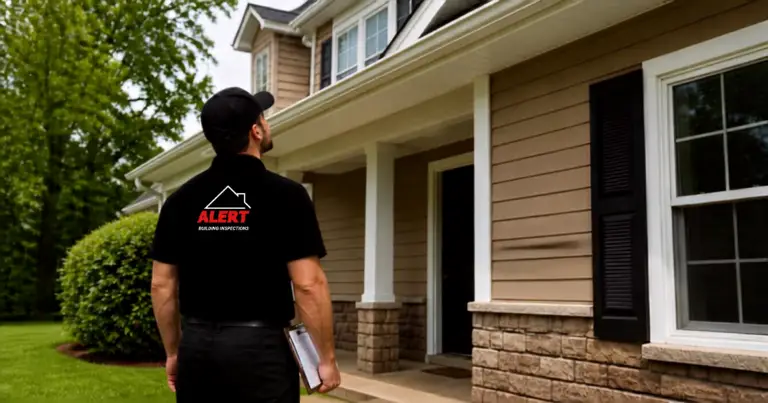
BUILDERS REPORT WAINUIOMATA
Fast Turnaround 24-48 hours
A builders report tells you what a viewing can’t. Our trade-qualified inspectors are practising builders, and they assess structural integrity, weathertightness and maintenance requirements across every accessible area of the property, under NZS 4306:2005.
Every report is written in plain English, with findings categorised by severity, photographs of each issue, and specific recommendations — not a checklist of ticks and crosses. All major banks and lending institutions accept our reports.
We inspect across Wainuiomata — Homedale and The Village, Arakura, Glendale, Parkway, Fernlea, Moores Valley and the Coast Road — as well as Lower Hutt and the wider Wellington region covered on our Wellington page. Ring 0800 4 ALERT or book online for a firm quote on your property address, or see our full range of services.
+
+
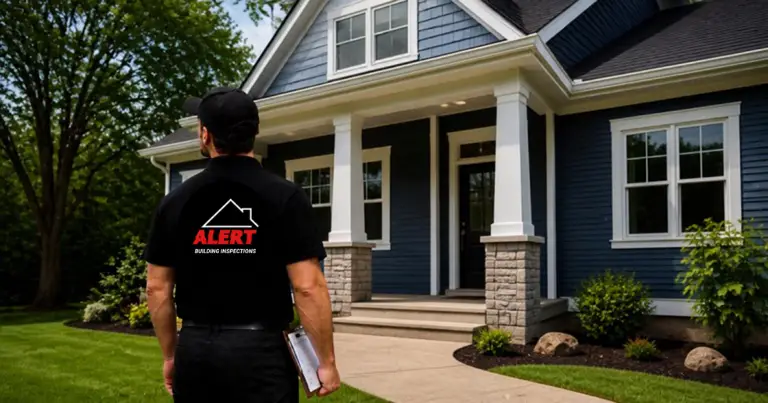
HOUSE INSPECTION WAINUIOMATA
A house inspection and a building inspection are the same thing — a trade-qualified inspector on site, working in a set order: exterior and roof, roof space, interior, then the subfloor.
In Wainuiomata, the subfloor is the one to watch. The valley floor was swamp and lake bed, and up to 32 metres of soft silt, clay and peat still lies under the central basin, with groundwater often close to the surface. Houses here are founded on piles driven into that ground, so pile condition, subfloor ventilation and drainage are where the real answers are.
Most of the suburb was built between 1945 and 1975, so roofs, joinery, and wiring tend to reach the end of their life together. The river has flooded badly, and the 2004 event took out the Moores Valley bridge.
See what a buyer should cover in our property inspection checklist.
BUILDING INSPECTOR WAINUIOMATA
24-48 Hour Report Delivery Guaranteed
Looking for a building inspector in Wainuiomata? Our trade-qualified inspectors deliver thorough building reports, and every one complies with NZS 4306:2005.
Each carries professional indemnity insurance and knows this valley’s housing — 1940s to 1970s state and ex-state homes through Arakura, Glendale and Homedale, and weathertightness failures in monolithic-clad homes built between 1988 and 2004.
Because so much of Wainuiomata sits on drained swamp and soft lake sediment, we look hard at how the building meets the ground — pile condition, subfloor moisture and ventilation, and where stormwater is carried away from the house. You can meet the inspectors on our team page.
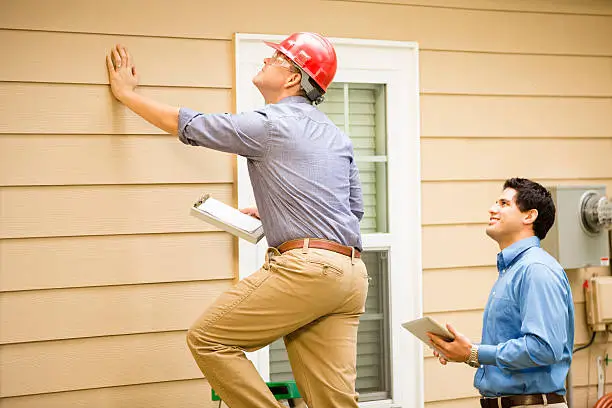
Pre Sale Building Inspection Wainuiomata
Purchasing a home is a major investment. Our in depth inspection helps you understand the property's condition before making a decision. We provide a thorough assessment, examining everything for potential issues such as moisture or pests, to give you confidence in your purchase.
Pre-Purchase Building Inspection Wainuiomata
Our inspection are designed to protect your investment. Conducted by experienced and qualified inspectors, we identify hidden defects, safety concerns, and maintenance issues. You’ll receive a detailed, easy-to-read report that empowers you to make informed choices.
Your Inspection Completed Within 24-48 hours
Need results fast? Our fast turnaround provides a thorough property review with detailed findings delivered on the same day. Perfect for time-sensitive situations, this service ensures you can move forward with confidence without delays or unnecessary waiting periods.
Our Working Process
Book
Confirm
Inspect
Report
Wellington - Areas of Service
Alicetown, Arakura, Aro Valley, Avalon, Belmont, Boulcott, Brooklyn, Days Bay, Eastbourne, Epuni, Fernlea, Glendale, Gracefield, Heretaunga, Homedale, Hutt Central, Island Bay, Johnsonville, Karori, Kelburn, Kelson, Khandallah, Kilbirnie, Korokoro, Lowry Bay, Lyall Bay, Mahina Bay, Manor Park, Maungaraki, Miramar, Moera, Moores Valley, Mount Victoria, Naenae, Newtown, Ngaio, Normandale, Ōtaki, Paekākāriki, Paremata, Parkway, Petone, Plimmerton, Point Howard, Pomare, Porirua, Pukerua Bay, Raumati, Seaview, Seatoun, Silverstream, Sorrento Bay, Stokes Valley, Sunshine Bay, Taita, Tawa, Thorndon, Titahi Bay, Trentham, Upper Hutt, Wadestown, Wainuiomata, Waikanae, Waterloo, Whitby, Woburn, York Bay.

Builders Report
Purchasing a property is one of life's biggest investments – getting a professional builder's report is essential for making the right decision. Alert Building Inspections is New Zealand's trusted building inspection network, with decades of experience in pre-purchase inspections.

Building Report
Our trade-qualified building inspectors conduct thorough inspections covering structural integrity, weathertightness, and potential maintenance issues. We deliver reports within 24-48 hours, including photographs, detailed findings, and specific recommendations.

House Inspection
When investing in real estate, likely your biggest ever commitment, a house inspection is essential. We deliver comprehensive reports from inspectors with extensive local knowledge throughout New Zealand. Select your location to get started!

Building Inspector
Need a Building Inspector? Our trade-qualified team delivers comprehensive reports within 24-48 hours. We specialise in rapid building inspections without compromising quality across all our New Zealand locations.
Wainuiomata Building Types by Era
Wainuiomata has an unusually concentrated building history. For eighty years it was a swampy valley with a sawmill and a few farms; then a development company arrived, a tunnel was started and abandoned, and the state built a town. Almost everything you can buy here went up in one thirty-year burst, which makes the era the most useful thing to know.
1840s to 1900s — Timber, Swamps and The Village
The name says what the place was: Wainui-o-mata — wai (water), nui (big), mata — and one accepted reading refers to the pools of water lying over the swampy northern end of the valley. Before 1840, there is little evidence of Māori occupation, probably because the basin was dense forest and swamp, and the 1855 earthquake lifted those swamps enough to make settlement practical.
Settlement followed the timber. The earliest European buildings grew up along the river, where mills cut timber for a Wellington market desperate for it through the 1850s and 1860s — the area still called The Village, or Homedale. Access was the hard part: narrow hill tracks were the only way in, and by the end of the century there were still only two roads, Main Road and Fitzherbert Road, known to everyone as Swamp Road. Wainuiomata Primary School opened in 1857, and the Coast Road Church in 1866 on land donated by settler Richard Prouse — the oldest Methodist church in the region and a Category 2 historic place. What survives is farmhouses, the church and a few early cottages, sitting on ground that had been swamp within living memory.
1900s to 1930s — The Development Company and the Tunnel That Never Was
Wainuiomata stayed small through the first three decades of the twentieth century — the isolated valley was too hard to reach. That changed in 1928, when Wainui-o-Mata Development Limited was formed with £12,000 of capital to take options over roughly 1,600 hectares (4,000 acres) of land, subdivide it and sell it as residential sections. The finance came from bonds; when the forestry bond boom burst, the legislation that followed protected trees but not real estate, and many bondholders waited decades to see anything back.
The company’s big idea was access. In 1932 it began driving the Wainuiomata Tunnel to link the Hutt and Wainuiomata valleys, and the Depression stopped it — it was never finished, and its abandoned portal is still in the hills. Even so, sections were sold, and the first twentieth-century houses appeared: modest single-storey timber cottages on low piles or on the ground.
Then, in December 1939, the valley took 254 mm of rain in twenty-four hours. The Centennial Flood damaged farms across Wainuiomata and pushed the Morton Dam spillway to within 12 mm of the top of the wall. It set the pattern for what this valley does in a southerly.
1930s to 1960s — State Housing and “Nappy Valley”
This is the era that made Wainuiomata, and the era most of the town’s housing still comes from. The Development Company began building houses itself in 1940 through a subsidiary and had put up over 400 by 1954, when private builders took over. Alongside that, the government bought 1,000 sections in the valley at 200 a year for group housing — reported at the time as putting the valley on the road to a town of 30,000. After the war, the affordable housing drew young couples in, and the valley filled fast enough to earn the nickname “Nappy Valley” in the 1950s. Arakura was carved out of farmland for state and private housing through the 1950s and 1960s.
Building on this ground had its own logic. Sections were large and the houses standard: single-storey timber-framed homes, weatherboard or fibrolite cladding, concrete or timber piles. Two materials of the period matter at inspection. Fibrolite cladding and sheeting, which may contain asbestos, were widely used here.
From the late 1970s to the mid-1980s, Dux Quest plastic plumbing went into tens of thousands of New Zealand homes — and it fails at the fittings without warning, inside a wall or ceiling. And the ground the piles stand in is the question specific to this valley. Because the whole town went up together on soft sediment, it is also ageing together: roofs, joinery, wiring and insulation all reaching the end of their life in the same decade.
1970s to Today — Closure, Stagnation and the 2020s Boom
Wainuiomata Mall opened in 1970, and the town centre settled into the shape it held for fifty years. Then the factories that had employed the valley closed through the late 1980s and 1990s after changes to imported-goods regulation, and Wainuiomata spent a long period in stagnation and population decline. Houses from that time still show it: maintenance deferred, original kitchens and bathrooms left in place, Dux Quest plumbing still in the walls.
The last few years have reversed all of it, and quickly. Since about 2020, the valley has had a building boom: the mall was demolished in 2020 and replaced with a supermarket, Queen Street and the community centre were revamped over 2022 and 2023, and older bungalows are being demolished for medium-density townhouses. The population reached 18,912 at the 2023 census — up 13.2% on 2013 — and a median age of 34.4 makes this a young valley.
For a buyer, that means the newest housing needs as careful a look as the oldest, for different reasons. Modern townhouses here are commonly built in clusters on engineered foundations over the same soft sediment, with shared drainage and inter-tenancy walls, so the questions move to settlement, stormwater and acoustic and fire separation — not to whether the roof has another decade in it. Wainuiomata’s age tells you which questions to ask. It does not tell you the answer.
Frequently Asked Questions
How much does a building inspection cost in Wainuiomata?
Our comprehensive building inspection and report start from $299 and can go higher depending on the size and nature of the property. Your address is the key factor, so you’ll know the cost upfront before you commit. Cost drivers here: a hillside section with retaining, an extensive or hard-to-access subfloor, a new townhouse where shared walls and drainage need checking, or monolithic cladding — those take longer to inspect properly. Ring us with the address, and we will give you a firm price rather than a range. For more detail, see building inspection costs explained.
What does a building inspection cover in Wainuiomata?
Our inspector carries out a complete building inspection in accordance with NZS 4306:2005, the New Zealand Standard for residential property inspections. It covers:
- Inside the property — wall linings, windows and doors, floors, bathroom fixtures, tiled areas, kitchen, cabinetry and waterproofing
- Sub-floor, where accessible — foundations, piling, ventilation, plumbing pipework, borer and timber decay
- Ceilings, walls, roof and roof space — including roof framing and wiring
- Outside — cladding, door and window frames, flashings, fixings, garages, fences, paving, drives, decking and retaining walls
We test for moisture throughout, concentrating on windows, doors, bathrooms and cladding junctions. In Wainuiomata, the subfloor and the ground around the building matter more than usual, because soft sediment and a high water table are where problems show up first. You get a written building report in plain English within 24 to 48 hours, with photographs, findings grouped by severity, and practical recommendations. If any terms look unfamiliar, this guide to reading a builders report explains them.
Is Wainuiomata on good ground?
It depends where in the valley, and the honest answer is that the middle of it is not. Wainuiomata is a basin, and the basin floor is a deep sequence of soft ground. A drillhole on the valley floor went through 61.6 metres of Quaternary sediment before reaching greywacke, and the central valley holds up to 32 metres of soft silt, clay and lake sediment, with denser fan gravels towards the sides.
The floor was swampland before the 1855 earthquake lifted it, and it was a lake during the last glaciation, so the sequence also contains peat and organic material. Ground towards the fans and valley sides is firmer. What we can do from a foundation inspection is spot the symptoms — cracking, out-of-level floors, piles that have moved, doors that have been planed. What we cannot do is determine bearing capacity or give a soil classification, because that is geotechnical engineering, and where it is warranted we will say so.
Is Wainuiomata at risk of liquefaction?
Parts of it are, and it is mapped. Greater Wellington’s liquefaction assessment maps alluvial silts through the middle of the valley with alluvial fans towards the valley sides, and expects the water table near the ground surface. Saturated loose silt and fine sand are exactly what liquefies, so the soft central valley is the area of concern, while the fan gravels towards the edges are mapped as firmer ground.
A nearby benchmark is real: the 1855 Wairarapa earthquake liquefied ground across the wider region. We can spot the symptoms. What we cannot do is a liquefaction assessment — that is geotechnical work with its own testing, and where the site warrants it, we will tell you to get one. Our foundation inspections page covers what we look at under a house.
Does Wainuiomata flood?
It does, and the valley has a long record of it. Wainuiomata is a basin drained by the Wainuiomata River and its two main tributaries — the Wainuiomata Stream out of Moores Valley, and Black Creek from the north — and in a heavy southerly, that water has to get out through a narrow valley. The 1939 Centennial Flood dropped 254 mm on the valley in twenty-four hours, damaged farms across Wainuiomata and pushed the Morton Dam spillway to within 12 mm of the top of the wall.
February 2004 was worse in the town: up to 344 mm over two days flooded streets, forced the evacuation of about 500 residents, flooded at least 26 homes and 15 businesses, and washed away the Moores Valley bridge. Significant events also occurred in 1944 and 1985. Moores Valley and the Coast Road carry the worst of it. We look at site drainage, ground levels relative to the floor, and where water goes in a heavy fall.
Which faults affect Wainuiomata?
There is no Wainuiomata Fault, and the valley’s main seismic risk is not a fault under the town. The Wellington Fault is the region’s big one, and it lies six to eleven kilometres away — which is why Wainuiomata is expected to shake less than the Lower Hutt valley, which sits within about four kilometres of it. Two nearer structures matter. The Whitemans Valley Fault has been mapped for about 20 kilometres between the Upper Hutt area and Wainuiomata; it is a second-order fault with a recurrence interval of roughly 15,000 to 20,000 years, thought capable of producing magnitudes of around 7.0 to 7.3.
The Baring Head Fault, at the coast immediately south of the valley, has also been shown to be active. The practical issue for a buyer is not surface rupture but shaking, and how much of it a building feels depends on the ground it sits on — which, in the middle of this valley, is soft. That is a question for the council’s hazard maps, the LIM, and a geotechnical engineer. Our guide to LIM reports explains where that sits alongside a building report.
Do you check for dampness, moisture and leaky building issues?
Yes. Moisture is the most common serious problem we find, and Wainuiomata has unusual causes. The valley traps air and cuts wind, so it runs colder on winter nights than the rest of Wellington, while the ground under many houses is damp or has the water table close beneath it — a recipe for a subfloor that never dries out. We check subfloor ventilation and ground moisture; moisture levels in walls, ceilings, floors, and joinery; where water gets in around windows, doors, and cladding penetrations; bathroom and shower waterproofing; and the roof space.
For leaky building era properties (roughly 1988 to 2004), we test more extensively and assess risk from the cladding, design, exposure, and maintenance history. Where we find real concern, we recommend a full invasive moisture investigation by a specialist weathertightness consultant. See monolithic cladding and weathertightness for how we assess it. Our weathertight homes guide covers the warning signs.
What do you check on a 1950s or 1960s state house in Wainuiomata?
That era is most of what is on the market here, so it is the inspection we do most often in the valley. They were built to a consistent standard on generous sections, and what matters now comes with age and with building on soft ground. Under the floor: the piles, their condition, whether the house has moved on them, subfloor ventilation, damp, plumbing pipework, and borer.
Above it: the age of the roof and joinery, original wiring and switchboards, insulation below today’s standards, and whether the hot water and heating have been renewed. Then the fibre-cement cladding of the period, which may contain asbestos, and how much of the house has genuinely been renewed rather than painted over. Renovations are the wildcard — some are excellent, some hide work, and unconsented sleepouts and converted garages are common. Our common building defects page covers what we find most often.
What about Dux Quest plumbing in a 1970s or 1980s Wainuiomata home?
Worth asking, because the valley has plenty of homes from that exact window. Dux Quest was a plastic plumbing system used in New Zealand from the late 1970s to about the mid-1980s, and it went into somewhere between 20,000 and 40,000 homes before it was withdrawn.
It fails at the fittings, which can crack and let go without warning, often inside a wall or ceiling where damage is worst. You can identify it by the name printed along the pipe — black or grey. Full replacement is generally safer than repairing one leak at a time, and some insurers limit cover once they know about a Dux Quest leak. We note it wherever it is visible and flag it for a plumber to confirm. Our plumbing inspection page explains what else we check.
Should I worry about asbestos in an older Wainuiomata home?
Asbestos-containing materials were widely used in New Zealand building products until the 1980s, and Wainuiomata’s post-war build-up sits in the middle of that period. Fibrolite cladding and sheeting is the classic example, and there is a lot of it here, on houses built from the 1940s through the 1970s. Other common locations include roof sheeting, soffits, vinyl floor tiles and their backing, textured ceilings, and older ducting and pipe lagging.
If it is intact and undisturbed, it is usually not a problem; it becomes one the moment a renovation cuts, sands, drills or demolishes it — and with older bungalows now being demolished for townhouses, that is a live risk in the valley. We identify suspect materials and tell you where they are, but confirming asbestos needs laboratory testing, and removing it needs a licensed removalist. Our guide to asbestos in New Zealand homes covers where to look and what to do.
Do I need a building inspection for a new townhouse in Wainuiomata?
Yes, and it is a different inspection from a 1950s house, even though the standard is the same. New builds can have incomplete work, missed flashings, drainage connected but not properly bedded or graded, extraction ducted into the roof space instead of outside, and finishing defects. In Wainuiomata, there is an extra layer, because the recent townhouse clusters are going in over the same soft sediment the rest of the valley was built on, usually on engineered foundations with settlement tolerances that assume the ground behaves as designed.
So the questions are whether the foundations match the design, whether ground improvement was done where specified, whether stormwater is managed as the design assumed, and how the inter-tenancy acoustic and fire separation has turned out. An independent inspection verifies the property was built to the standard it should have been, and it is far easier to fix issues before settlement. See new construction inspections.
How long does a building inspection take in Wainuiomata?
Most building inspections take 1-2 hours, depending on the property size and condition. Allow longer for a multi-level home, an extensive or tight subfloor, a hillside section with retaining, a multi-unit townhouse, or monolithic cladding, as those need more detailed assessment. You are welcome to come along, and if you do, allow the full time. If you are working to a deadline, see urgent building inspections. The report follows within 24 to 48 hours.
Can I attend the building inspection?
Absolutely! We encourage clients to attend their building inspection to gain firsthand insights and ask questions directly to our inspector in Wainuiomata. It is particularly valuable here, where piles standing in soft sediment, a subfloor that does not dry out, or the way stormwater moves off a section is much easier to understand standing under the house with the inspector than reading it in a report. There is no additional charge for attending.
Are your building inspectors qualified in Wainuiomata?
Yes. Our inspectors are trade-qualified with experience in New Zealand residential construction, and every inspection follows the New Zealand Standard for residential property inspections, NZS 4306:2005. We hold professional indemnity insurance. They also know this valley — which parts of the floor are soft and which are firmer, and which are gravel, how high the water table sits, which streets flooded in 2004, and which decades the housing comes from. You can meet the inspectors on our team page, and take a look at the services we provide.
Building inspections near me?
Looking for building inspection services in Wainuiomata? Alert Building Inspections provides detailed building reports within 24-48 hours, conducted by trade-qualified inspectors who know the valley’s property market and the demands of building on drained swamp and soft lake sediment.
We serve Wainuiomata and the surrounding Hutt Valley and Wellington region, including Homedale, The Village, Arakura, Glendale, Parkway, Wainuiomata Central, Fernlea, Moores Valley, the Coast Road, Lower Hutt, Petone, Naenae, Stokes Valley and the wider district. Book by ringing 0800 4 ALERT (425 378) or through our contact page, and we will confirm your inspection time. If you want to read more before you book, our building inspection questions and answers page covers the things people ask us most.
