
Building Inspection Porirua
BUILDING REPORT PORIRUA
Residential & Commercial Building Reports
Alert Building Inspections provides professional building inspections across Porirua and the wider Wellington region for home buyers, sellers, and property investors. From Titahi Bay and Mana through to Plimmerton, Paremata, Papakowhai, Whitby, Camborne, Cannons Creek and Waitangirua, we give you an independent, evidence-based picture of the property before you commit — and we tell you plainly what the condition is worth to you. Every written report includes photographs and clear recommendations, and is delivered within 24-48 hours.
CUSTOMER REVIEWS
Porirua’s Unique Building Challenges
Porirua is built around a harbour, and the city's shape follows the water. Te Awarua-o-Porirua is a drowned river valley with two arms — Onepoto on the city side, Pauatahanui away to the north-east — and the city wraps right around it. There is no single Porirua. Titahi Bay and Mana sit out on the exposed west coast; Plimmerton, Paremata, Papakowhai and Camborne line the eastern shore and the old road north; Whitby and Pauatahanui fill the hills and the basin behind the inlet; and Cannons Creek, Waitangirua and Porirua East sit inland, east of the motorway. The city centre itself sits on flat ground at the head of the harbour, much of it built up from the sea. Hills surround the basin, so very little of Porirua is flat, and very little is far from water.
That geography drives the risks, and they are not the ones a buyer from the Hutt Valley might expect. Liquefaction-prone ground follows the harbour, the Porirua Stream and the Pauatahanui Inlet: the land around the city centre is estuarine sediment, much of it reclaimed with fill, and Plimmerton and Titahi Bay sit on fine sediments with groundwater as shallow as a third of a metre. Three active faults cross the district — the Ohariu, Pukerua and Moonshine — and the Ohariu Fault, the most active of the three, runs through central Porirua with its traces buried under the city built on top of them. And flooding is the most frequent hazard in the city, not the rarest: the Porirua and Kenepuru streams have flooded the CBD and Takapuwahia repeatedly, Plimmerton West has taken three significant floods in four years, and the council now plans for a metre of sea level rise.
TESTING
Report
BUILDERS REPORT PORIRUA
Fast Turnaround 24-48 hours
A builders report tells you what a viewing can’t. Our trade-qualified inspectors are practising builders, and they assess structural integrity, weathertightness and maintenance requirements across every accessible area of the property, under NZS 4306:2005.
Every report is written in plain English, with findings categorised by severity, photographs of each issue, and specific recommendations — not a checklist of ticks and crosses. All major banks and lending institutions accept our reports.
We inspect across Porirua and its suburbs — Titahi Bay, Mana, Plimmerton, Paremata, Papakowhai, Whitby, Camborne, Pauatahanui, Aotea, Cannons Creek, Waitangirua, Elsdon, Takapuwahia, Ranui Heights, Linden and Ascot Park — as well as the wider Wellington region covered on our Wellington page. Ring 0800 4 ALERT or book online for a firm quote for your property address, or see our full range of services.
+
+
HOUSE INSPECTION PORIRUA
A house inspection and a building inspection are the same thing — a trade-qualified inspector on site, working in a set order: exterior and roof, roof space, interior, then the subfloor.
In Porirua that order matters, because the ground is the story here. Much of the land around the harbour and the city centre is estuarine sediment, some of it reclaimed with fill, and the harbour, the Porirua Stream and the Pauatahanui Inlet all have liquefaction-prone ground. Plimmerton and Titahi Bay sit on fine sediments with shallow groundwater. Flooding is the city’s most frequent hazard.
Then there are the faults. Three active faults cross the district — Ohariu, Pukerua and Moonshine — and the Ohariu Fault runs through central Porirua, its traces buried under the city.
See what a buyer should cover in our property inspection checklist.
BUILDING INSPECTOR PORIRUA
24-48 Hour Report Delivery Guaranteed
Looking for a building inspector in Porirua? Our trade-qualified inspectors deliver thorough building reports, and every one complies with NZS 4306:2005.
Each carries professional indemnity insurance and knows this city’s housing — damp subfloors and ageing piles, 1950s to 1970s fibrolite cladding, joinery, insulation and wiring below today’s standards, Dux Quest plumbing from the late 1970s and 1980s, and weathertightness failures in monolithic-clad homes from 1988 to 2004. With 78% of the city state-built by 1977, those first faults are everywhere.
With reclaimed harbour land under parts of the city, we look hard at how the building meets the ground — foundation condition, subfloor moisture and ventilation, and how stormwater is managed away from the house. You can meet the inspectors on our team page.
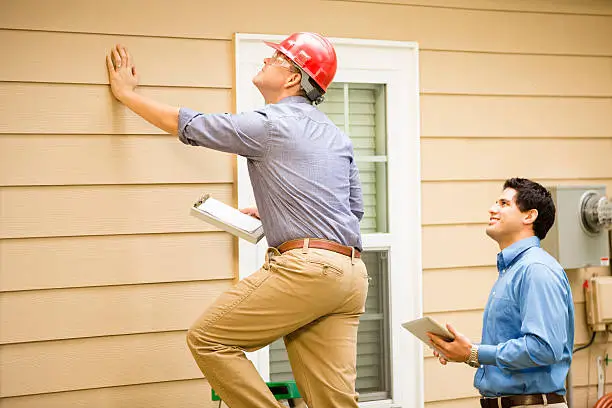
Pre Sale Building Inspection Porirua
Purchasing a home is a major investment. Our in depth inspection helps you understand the property's condition before making a decision. We provide a thorough assessment, examining everything for potential issues such as moisture or pests, to give you confidence in your purchase.
Pre-Purchase Building Inspection Porirua
Our inspection are designed to protect your investment. Conducted by experienced and qualified inspectors, we identify hidden defects, safety concerns, and maintenance issues. You’ll receive a detailed, easy-to-read report that empowers you to make informed choices.
Your Inspection Completed Within 24-48 hours
Need results fast? Our fast turnaround provides a thorough property review with detailed findings delivered on the same day. Perfect for time-sensitive situations, this service ensures you can move forward with confidence without delays or unnecessary waiting periods.
Our Working Process
Book
Confirm
Inspect
Report
Wellington - Areas of Service
Alicetown, Aotea, Aro Valley, Ascot Park, Avalon, Belmont, Birchville, Boulcott, Brooklyn, Brown Owl, Camborne, Cannons Creek, Clouston Park, Days Bay, Eastbourne, Ebdentown, Elderslea, Elsdon, Epuni, Gracefield, Heretaunga, Hongoeka, Island Bay, Johnsonville, Judgeford, Karori, Karehana Bay, Kelburn, Kelson, Khandallah, Kilbirnie, Kingsley Heights, Korokoro, Linden, Lowry Bay, Lyall Bay, Mahina Bay, Mana, Mangaroa, Manor Park, Maoribank, Maungaraki, Maymorn, Miramar, Moera, Mount Victoria, Naenae, Newtown, Ngaio, Normandale, Ōtaki, Paekākāriki, Papakowhai, Paremata, Pauatahanui, Petone, Pinehaven, Plimmerton, Point Howard, Pomare, Porirua, Pukerua Bay, Raumati, Seaview, Seatoun, Silverstream, Sorrento Bay, Stokes Valley, Sunshine Bay, Taita, Takapuwahia, Tawa, Te Marua, Thorndon, Timberlea, Titahi Bay, Totara Park, Trentham, Upper Hutt, Wadestown, Waitangirua, Waikanae, Wainuiomata, Wallaceville, Waterloo, Whitby, Whitemans Valley, Whitireia, Woburn, York Bay.

Builders Report
Purchasing a property is one of life's biggest investments – getting a professional builder's report is essential for making the right decision. Alert Building Inspections is New Zealand's trusted building inspection network, with decades of experience in pre-purchase inspections.

Building Report
Our trade-qualified building inspectors conduct thorough inspections covering structural integrity, weathertightness, and potential maintenance issues. We deliver reports within 24-48 hours, including photographs, detailed findings, and specific recommendations.

House Inspection
When investing in real estate, likely your biggest ever commitment, a house inspection is essential. We deliver comprehensive reports from inspectors with extensive local knowledge throughout New Zealand. Select your location to get started!

Building Inspector
Need a Building Inspector? Our trade-qualified team delivers comprehensive reports within 24-48 hours. We specialise in rapid building inspections without compromising quality across all our New Zealand locations.
Porirua Building Types by Era
Porirua is the youngest city in the Wellington region, and the most deliberately built. It was not a village that grew — it was chosen, planned and constructed as a satellite town for Wellington in a single generation, and that decision is still visible in the housing stock today. The districts around it filled in gradually; Porirua was assembled, and it shows.
1840s to 1900s — Pauatahanui, the Harbour and the Railway
European settlement here began on the water. The Fraser brothers introduced sheep to New Zealand on their Mana Island and Porirua properties in 1839, and Pauatahanui, at the head of the inlet, is one of the region's oldest settlements. It was not a peaceful beginning: in 1846 the Hutt Valley land war spread into the Porirua basin, and settlers built five stockades, which the 58th Regiment garrisoned.
The 1855 earthquake permanently changed the district’s prospects. It raised the floor of Porirua Harbour and ended any hope that Porirua would rival Wellington as a port. From then on it was a farming centre. A small village did grow after 1891, when the Psychiatric Hospital was established — but by 1897 the whole district held only 669 people. The railway reached Porirua in the 1880s, which mattered far more later than it did then. Buildings from this era are farmhouses, cottages, the early church at Pauatahanui and a handful of early commercial buildings: native timber, weatherboards, and a long history of alteration.
1900s to 1930s — Titahi Bay and the Seaside Resort
Once the railway was through, Titahi Bay became a popular seaside resort for Wellington, and the first real pattern of holiday building appeared on the coast — baches, small holiday cottages and modest villas, many of them later converted and extended into permanent homes. Growth was slow, and stayed slow right through to the end of the Second World War.
Inland, Cannons Creek was still farmland, with the first scattered housing appearing from the 1930s. The suburb’s streets, laid out later, were named after ships, English counties and Greek mythology — a small clue to how recently and how systematically the whole area was put together. Buildings from this period are mostly timber-framed and weatherboard, often with a bach or convalescent origin that a builder can still read in the layout.
1945 to 1970s — The State Housing City
Then Porirua was rebuilt on purpose, and quickly. In 1945, with the Hutt Valley no longer able to absorb Wellington’s growth, the Government directed state housing to the Porirua basin, and the first state house went up in 1949. It was planned as a satellite town and described at the time as a planning guinea pig — an idea borrowed from the British New Towns movement, and one of the largest planned developments New Zealand has attempted.
The scale of the earthworks alone is hard to overstate. From 1960 the original village disappeared, the Kenepuru Stream was straightened, and more than 770,000 cubic metres of rock and soil were dumped at the head of the harbour to form new land. The new city centre was finished in 1966 at a cost of £1 million, and on 2 October 1965 Porirua became a city. The population rose from about 5,000 in 1950 to 21,000 by 1966.
Housing followed: more than 2,700 state houses were built east of the motorway, in Cannons Creek and Porirua East, with Waitangirua and Titahi Bay as the other main state-planned estates. By 1977, 78% of Porirua was state housing — the largest single concentration of public dwellings in the country.
The houses were built fast and cheaply, using standardised plans and cheaper materials such as fibrolite cladding; material shortages in the 1950s meant 500 pre-cut houses were imported for southern Titahi Bay, and 194 tradesmen came from Austria on 18-month contracts to finish them. The consequence today is what matters most to a buyer: entire suburbs share one construction date, so their roofs, joinery, plumbing, and wiring all reach the end of their life at roughly the same time.
1970s to Today — Whitby, Aotea and Private Subdivision
From the 1970s, the state stopped driving the growth and private subdivision took over. Whitby is the clearest example: in 1967 the Whitby Developments Consortium bought 3,000 acres to build the first neighbourhood of a proposed city at Pauatahanui, and the first sections were sold in 1970 on Spinnaker Drive. Development ran west of James Cook Drive from the early 1980s, then east, reaching almost to Pauatahanui by the early 2000s. The hills east of James Cook Drive were planted in pines early on, felled in the late 1990s and early 2000s, and are now hillside and hilltop sections.
Aotea is the newest of the big developments, begun in 2003 across 246 hectares with the earthworks figures balanced to within a cubic metre of 1.5 million. It has produced more than 600 sections, and the current growth edge is the Northern Growth Area between Camborne and Pukerua Bay.
Almost all of this housing is conventional detached three- and four-bedroom homes, with very little medium density and no high density at all. Hillside sections are cut-and-fill platforms held by retaining walls and often carried on pole foundations, which makes drainage, retaining and foundation performance the main inspection questions. And because so much of the city was constructed within three decades, the age of the house and the age of the subdivision are usually the same thing — which is useful when you are trying to work out what has and has not been renewed.
Frequently Asked Questions
How much does a building inspection cost in Porirua?
Our comprehensive building inspection and report start from $299 and can go higher depending on the size and nature of the property. Your address is the key factor, so you’ll know the cost upfront before you commit. Cost drivers include multi-unit or townhouse properties, homes on reclaimed harbour land or with shallow groundwater, hillside sections in Whitby with retaining and a steep right of way, or monolithic cladding— all of which take longer to inspect properly because we still have to get in and look. Ring us with the address, and we will give you a firm price rather than a range. For more detail, see building inspection costs explained.
What does a building inspection cover in Porirua?
Our inspector carries out a complete building inspection in accordance with NZS 4306:2005, the New Zealand Standard for residential property inspections. It covers:
- Inside the property — wall linings, windows and doors, floors, bathroom fixtures, tiled areas, kitchen, cabinetry and waterproofing
- Sub-floor, where accessible — foundations, piling, ventilation, plumbing pipework, borer and timber decay
- Ceilings, walls, roof and roof space — including roof framing and wiring
- Outside — exterior cladding, door and window frames, flashings, fixings, garages, fences, paving, drives, decking and retaining walls
We test for moisture throughout, concentrating on windows, doors, bathrooms and cladding junctions. On a Porirua property, the subfloor and the ground around the building matter more than usual, because the city’s soils and water table are where the problems show up first. You get a written building report in plain English within 24 to 48 hours, with photographs, findings grouped by severity, and practical recommendations. If any of the terms look unfamiliar, this guide to reading a builders report explains them.
Is Porirua at risk of liquefaction?
Yes, in specific places — and the mapping is unusually clear about where. Greater Wellington’s regional assessment puts liquefaction-prone ground around Porirua Harbour, the Porirua Stream and the Pauatahanui Inlet. The detailed Porirua study assessed each area separately: Plimmerton sits on loose fine sediments with groundwater only about 0.3 metres down; Titahi Bay is fine sediments with gravels at depth; and the land around the harbour and city centre is estuarine sediment, much of it reclaimed with fill.
Liquefaction has been observed in the region in the 1848, 1855, 1942 and 2013 earthquakes, so it is real, not theoretical. What we can do is spot the symptoms — cracking, out-of-level floors, piles that have moved. We can't determine bearing capacity or provide a soil classification, because that is geotechnical engineering. When warranted, we will say so.
Does Porirua flood?
It does, and flooding is the city's most frequent hazard. The Porirua Stream and its tributary, the Kenepuru Stream, are the main carriers, and the Kenepuru runs through a concrete channel in its middle reach. The recent record is short but sharp. In May 2015, 33.6 mm of rain fell in 30 minutes over central Porirua, and the Porirua Stream peaked at 66 cubic metres a second, with Takapuwahia among the worst hit and waist-deep water entering houses.
May 2016 brought significant flooding again, with evacuation and six schools closed. In November 2020, a one-in-30-year downpour flooded more than 50 homes in Plimmerton West, some of them for the second or third time. The council has since committed $17.9 million to the Karehana catchment and $3 million to Takapuwahia, built a flood storage wetland at Elsdon Park, and is working on a city-wide retreat policy for its most vulnerable homes.
We look at site drainage, ground levels relative to the floor, and where water goes during heavy rainfall.
Which faults affect Porirua?
Three active faults cross the district, and Greater Wellington has re-mapped all of them. The Ohariu Fault is the most active, with a recurrence interval of roughly 2,000 to 3,500 years; the Pukerua Fault is next, and the Moonshine Fault is the least active of the three. The Ohariu Fault is the one that matters most for buyers, because it runs through central Porirua City — and its traces there have been buried by the city built over them, so the mapping relies on 1940s aerial photographs and old survey plans.
Two traces were mapped through the city centre, with the western one considered the more active. An individual rupture is estimated to produce three to five metres of horizontal ground displacement, and the last one was roughly a thousand years ago. Fault Avoidance Zones around the traces range from about 60 metres where the scarp is well defined to more than 800 metres where the trace is poorly constrained, including beneath the harbour.
The practical point is that surface rupture, rather than shaking, is the hazard to plan for — and that is a question for a geotechnical engineer and the council, not an inspector. Our guide to LIM reports explains where that sits alongside a building report.
What is the reclaimed land around Porirua Harbour, and does it matter?
It matters a great deal, and it is one of the more unusual things about buying here. When Porirua was rebuilt as a satellite city from 1960, the original village was removed, and more than 770,000 cubic metres of rock and soil were dumped at the head of the harbour to create new land. The new city centre was finished in 1966 on ground that had been water a few years earlier.
That fill sits over estuarine sediment, and the area has a high water table, typically 1.5 to 3 metres below the surface. Reclaimed ground behaves differently from natural ground: it can settle, it is harder to found a building on, and it is more susceptible to liquefaction and flooding.
For an inspector, the questions are how the foundations were designed and what they are bearing on. For a buyer, the sensible step is a geotechnical report for the specific address — and we will tell you when that is the right call.
Do you check for dampness, moisture and leaky building issues?
Yes. Moisture is the most common serious problem we find, and Porirua has plenty of the housing types most exposed to it. We check subfloor ventilation and ground moisture; moisture levels in walls, ceilings, floors, and joinery; where water gets in around windows, doors, and cladding penetrations; bathroom and shower waterproofing; and the roof space. For leaky building era properties, roughly 1988 to 2004, we test more extensively and assess the risk from the cladding, the design, the site’s exposure and the maintenance history.
Where we find real concern, we recommend a full invasive moisture investigation by a specialist weathertightness consultant. See monolithic cladding and weathertightness for how we assess it, and moisture testing for what the meters actually measure. Our weathertight homes guide covers the warning signs.
What about Dux Quest plumbing in a state house or a 1970s or 1980s Porirua home?
This is a live question here, because so much of the city was built in exactly that window. Dux Quest was a plastic plumbing system used in New Zealand from the late 1970s to about the mid-1980s, and it went into somewhere between 20,000 and 40,000 homes before it was withdrawn. It fails at the fittings, which can crack and let go without warning, often inside a wall or ceiling where the damage is worst.
You can identify it by the name printed along the pipe—black or grey. State and ex-state housing was not immune, so a 1970s or 1980s home here should be checked rather than assumed clear. Full replacement is generally safer than repairing one leak at a time, and some insurers limit cover once they know about a Dux Quest leak. We note it wherever it is visible and flag it for a plumber to confirm. Our plumbing inspection page explains what else we check.
Should I worry about asbestos in an older Porirua home?
Asbestos-containing materials were widely used in New Zealand building products until the 1980s, and Porirua’s state housing era sits squarely in the middle of that period — fibrolite cladding, used widely here as a cheaper material when housing was standardised, is one classic example.
Other common locations include roof sheeting, soffits, vinyl floor tiles and their backing, textured ceilings, and older ducting and pipe lagging. If it is intact and undisturbed it is usually not a problem; it becomes one the moment a renovation cuts, sands, drills or demolishes it. We identify suspect materials and tell you where they are, but confirming asbestos needs laboratory testing, and removing it needs a licensed removalist. Our guide to asbestos in New Zealand homes covers where to look and what to do.
What should I look for in a state house in Cannons Creek, Waitangirua or Titahi Bay?
These are the four main state-planned suburbs — Titahi Bay, Porirua East, Cannons Creek and Waitangirua — and by 1977, 78% of the city was state housing, so a large share of what is on the market here is ex-state. The good news is that they were built to a consistent standard, often on generous sections. The things that matter are the ones that come with age and with a standardised build: piles and subfloor condition, damp and ventilation under the floor, the age of the roof and joinery, original wiring and insulation below today’s standards, and how much has genuinely been renewed versus painted over.
Renovations are the wildcard — some are excellent, some hide work. Two further points: many of these suburbs sit on or near liquefaction-prone ground or flood-prone catchments, so the subfloor and the ground around the house deserve particular attention; and some homes have been through the Kāinga Ora upgrade programme run by Te Āhuru Mōwai, Ngāti Toa’s community housing provider. Our common building defects page covers what we find most often.
Do I need a building inspection for a new build in Aotea or Whitby?
Yes. New builds can have incomplete work, missed flashings, drainage that's connected but not properly bedded or graded, extraction ducted into the roof space instead of outside, and finishing defects — and on hillside sections, retaining and stormwater are as important as the house. In Whitby and Aotea, newer buildings also tend to sit on more engineered ground: cut-and-fill platforms, retaining walls, and sections carved out of hillside. An independent inspection verifies the property was built to the standard it should have been — and it is far easier to get things put right before settlement than after. See our new construction inspections to learn what we check.
How long does a building inspection take in Porirua?
Most building inspections take 1-2 hours, depending on the property size and condition. Allow longer for a multi-level home, an extensive subfloor, a hillside section with retaining, or monolithic cladding, as those need more detailed assessment. You are welcome to come along, and if you do, allow the full time. If you are working to a deadline, see urgent building inspections. The report follows within 24 to 48 hours.
Can I attend the building inspection?
Absolutely! We encourage clients to attend their building inspection to gain firsthand insights and ask questions directly to our inspector in Porirua. It is particularly valuable here, where a subfloor on reclaimed ground, a retaining wall on a Whitby hillside, or how stormwater moves around a house is much easier to understand standing in front of it with the inspector. There is no additional charge for attending.
Are your building inspectors qualified in Porirua?
Yes. Our inspectors are trade-qualified with experience in New Zealand residential construction, and every inspection follows the New Zealand Standard for residential property inspections, NZS 4306:2005. We hold professional indemnity insurance. They also know this city — which ground is fill and which is natural, where the water table sits, which suburbs were built when, and why the fault trace matters. You can meet the inspectors on our team page, and take a look at the services we provide.
Building inspections near me?
Looking for building inspection services in Porirua? Alert Building Inspections provides detailed building reports within 24-48 hours, conducted by trade-qualified inspectors who know Porirua’s property market and the demands of building on and around the harbour.
We serve Porirua and the surrounding Wellington region, including Titahi Bay, Mana, Plimmerton, Paremata, Papakowhai, Whitby, Camborne, Pauatahanui, Aotea, Cannons Creek, Waitangirua, Elsdon, Takapuwahia, Linden, Tawa and Pukerua Bay. Book by ringing 0800 4 ALERT (425 378) or through our contact page, and we will confirm your inspection time. If you want to read more before you book, our building inspection questions and answers page covers the things people ask us most.
