
Building Inspection Riccarton
BUILDING REPORT RICCARTON
Residential & Commercial Building Reports
Alert Building Inspections provides professional building inspections across Riccarton and Christchurch for home buyers, sellers, and property investors. Our trade-qualified building inspectors thoroughly assess the property, explain what they find, and provide practical advice through a comprehensive written or verbal builders report. With fast bookings and reports available within 24-48 hours, getting the information you need is simple.
CUSTOMER REVIEWS
Riccarton's Unique Building Challenges
Riccarton is where Christchurch began. The Deans brothers took up the Pūtaringamotu bush in 1843 and built the first farm on the plains here, and the suburb has been built over continuously ever since — so the housing runs from genuine colonial timber through to townhouses finished this year. What sets Riccarton apart from the other older suburbs is the way that history sits underneath the city's heaviest modern intensification. It is a commercial and retail centre, the main student and rental market, and a residential suburb all at once, and the state of the buildings reflects all three.
The ground underneath is more varied than most of the city's. Riccarton sits between two of the Waimakariri River's shingle lobes, and the land between them was swamp before it was drained — the early accounts describe the route from Christchurch out to Riccarton as almost uncrossable. So the ground is not uniform and should not be assumed: most of the suburb is Technical Category 2 (TC2), but there are pockets of TC3 land where the ground is wetter, including along the Waimairi Stream on the western side. On top of that sit the Riccarton Stream, which rises in the suburb and runs through Paeroa Reserve before continuing south through Hagley Park, and Addington Brook, both of which carry the water table close to the surface and have long-standing drainage and flooding issues of their own.
TESTING
Report
BUILDERS REPORT RICCARTON
Fast Turnaround 24-48 hours
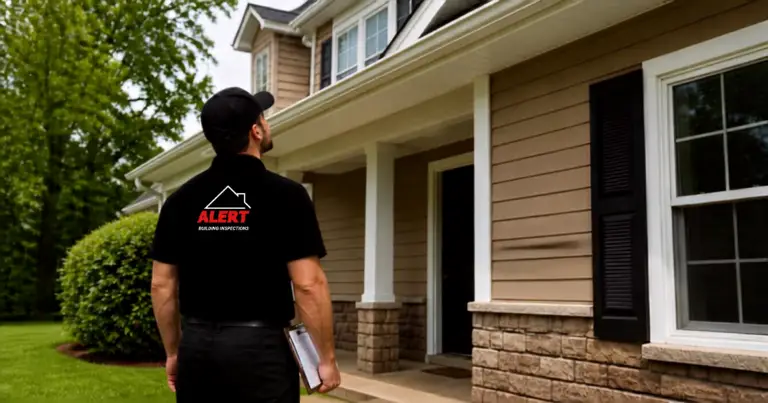
A builders report from Alert tells you what a viewing can't. Our trade-qualified inspectors are practising builders, and they assess structural integrity, weathertightness and maintenance requirements across every accessible area of the property, in accordance with NZS 4306:2005.
Every report is written in plain English, with findings categorised by severity, photographs of each issue, and specific recommendations — not a checklist of ticks and crosses. All major banks and lending institutions accept our reports.
We inspect across Riccarton and the surrounding western Christchurch suburbs — Upper Riccarton, Fendalton, Ilam, Bryndwr, Burnside, Addington, Sockburn and Hornby — as well as the wider Christchurch area from Rangiora and Kaiapoi in the north through to Rolleston and Prebbleton in the south.
Call 0800 4 ALERT or book online for a firm quote based on your property address.
+
+

HOUSE INSPECTION RICCARTON
"House inspection" and "building inspection" mean the same thing. If you are buying a home in Riccarton, this is the report you need — a trade-qualified inspector on site, assessing the property in person. On the day, the inspector works through the property in a set order: the exterior and roof first, then the roof space, then the interior, and finally the subfloor, where accessible. That order is deliberate.
In Riccarton the age of the house decides where the money is. A colonial-era villa or a 1920s bungalow has native timber piles under a suspended floor, original joinery, lead-based paint and no damp course, so the subfloor and the timber are the first thing worth looking at. A 1990s or 2000s townhouse on a cross-lease section has no subfloor to inspect at all, but it does have a plaster or monolithic cladding system whose fixings and drainage cavities matter enormously, plus shared elements with the units around it. The same suburb, two completely different inspections.
That is also why a Riccarton inspection is different from one in the eastern suburbs. Riccarton was not red-zoned after the 2010 and 2011 earthquakes, and the severe liquefaction was concentrated on the flat land east of the city along the Avon. Here the weight falls on the buildings and on drainage — original roofing now past its service life, uninsulated post-war construction, ageing services, and subfloor and site moisture where the ground sits wet alongside the Riccarton Stream and Addington Brook.

BUILDING INSPECTOR RICCARTON
24-48 Hour Report Delivery Guaranteed
Looking for a Building Inspector in Riccarton? Our trade-qualified inspectors provide thorough building reports with meticulous attention to detail.
Our Riccarton building inspection service is perfect for time-sensitive property purchases. Each inspector carries professional indemnity insurance and brings deep knowledge of Riccarton's local market and common building challenges — aged subfloors and native timber piles in the villas and bungalows, concrete tile roofs on the post-war homes with degraded bedding and pointing on the ridge and hip caps, no insulation in older walls or floors, ageing wiring and galvanised plumbing, and the 1990s and 2000s plaster and monolithic cladding townhouses closer to the commercial centre, where the fixings, cavity and junctions need a careful look.
Riccarton's ground is not uniform, so we do not treat it as though it is. Most of the suburb is TC2, but there are pockets of TC3 land where the ground is wetter, including along the Waimairi Stream and downstream from it, and those properties are assessed accordingly — cracking patterns, floor levels, the standard of any earlier repair, and the site's own technical category. All inspections comply with NZS 4306:2005 standards for comprehensive, reliable assessments.

Pre Sale Building Inspection Riccarton
Purchasing a home is a major investment. Our in depth inspection helps you understand the property's condition before making a decision. We provide a thorough assessment, examining everything for potential issues such as moisture or pests, to give you confidence in your purchase.
Pre-Purchase Building Inspection Riccarton
Our inspection are designed to protect your investment. Conducted by experienced and qualified inspectors, we identify hidden defects, safety concerns, and maintenance issues. You’ll receive a detailed, easy-to-read report that empowers you to make informed choices.

Your Inspection Completed Within 24-48 hours
Need results fast? Our fast turnaround provides a thorough property review with detailed findings delivered on the same day. Perfect for time-sensitive situations, this service ensures you can move forward with confidence without delays or unnecessary waiting periods.
Our Working Process
Book
Confirm
Inspect
Report
Christchurch - Areas of Service
Addington, Akaroa, Amberley, Aranui, Avonhead, Avonside, Belfast, Bishopdale, Burnham, Burnside, Burwood, Casebrook, Cashmere, Cheviot, Christchurch CBD, Culverden, Cust, Darfield, Diamond Harbour, Dunsandel, Edgeware, Ellesmere, Fendalton, Fernside, Ferrymead, Halswell, Hanmer Springs, Harewood, Hoon Hay, Hornby, Ilam, Kaiapoi, Kirwee, Leeston, Leithfield, Lincoln, Linwood, Little River, Lyttleton, Mairehau, Malvern, Merivale, New Brighton, Northwood, Oxford, Papanui, Pegasus, Phillipstown, Prebbleton, Rangiora, Redwood, Riccarton, Rolleston, Southbridge, Spreydon, Springs, St Albans, Sumner, Swannanoa, Sydenham, Tai Tapu, Waiau, Waikuku, Waipara, Waltham, West Eyreton, West Melton, Wigram, Woolston.
Riccarton Building Types by Era
Riccarton is the oldest continuously occupied place in Christchurch. The Deans brothers took up the bush at Pūtaringamotu in 1843, and the suburb has never stopped building around it, so one street can carry genuine colonial timber at one end, and a townhouse finished this year at the other. In between sit the villas that followed the railway and the trams, the brick-and-tile homes of the post-war boom, and the retail and student accommodation that have grown up around the city's busiest commercial centre. The era your property belongs to determines much of what an inspector looks at.
1840s to 1870s — The Deans Farm and the Swamp
Riccarton begins with the Deans brothers. William and John Deans, Scottish lawyers turned farmers from the parish of Riccarton in Ayrshire, took up the bush at Pūtaringamotu in 1843 — the first permanent European settlement on the Canterbury Plains. They built Deans Cottage from timber cut on the site, and on Christmas Day 1848 they signed an agreement with the Canterbury Association's surveyor that gave the farm the name Riccarton after their home parish, and gave the river the name Avon after a stream on their grandfather's estate in Scotland. William drowned in 1851, and John died of tuberculosis in 1854, leaving John's widow Jane to run the estate.
Riccarton House went up in three stages — 1856, 1874 and 1900 — framed in mataī with kahikatea weatherboards and shingles cut from the bush itself. Most of that forest is gone now, but the surviving 6.4 hectares are the largest remnant of the ancient kahikatea podocarp forest that once covered the plains, and were protected by the Riccarton Bush Act in 1914. Almost nothing of the 1840s building survives as private housing, but the period set the shape of the suburb: a settlement on the only firm, dry ground, surrounded by swamp.
1870s to 1900s — Railway, Racecourse and the First Villas
The railway was the turning point. The northern line cut through Riccarton, just west of Hagley Park, in 1871, and the racecourse at Upper Riccarton — established in 1856 — got its own siding in 1877 to carry patrons out of town. A regular coach service from the Bush Inn at Coach Corner started in 1878. The district's first real streets followed, and the villas built along them were timber, on shallow piles, with high ceilings and generous verandahs.
The commercial centre of Upper Riccarton also dates from this period. The Bush Inn Hotel opened in 1865, and St Peter's, at the Church Corner intersection, was built in stone in stages from 1876 through to 1929 — Benjamin Mountfort's early work and then Cecil Wood's, and badly damaged in the 2011 earthquake. Some of the villa stock from this era has since been altered, extended or replaced, and where it survives it is now well past 120 years old.
1900s to 1930s — Trams, the Borough and the Bungalows
Electric trams reached Riccarton in 1905 and 1906, and that changed the suburb more than the railway had. A section here was suddenly within reach of a job in town, cheap sections sold and were built on in a rush, and small shopping centres sprang up at the tram terminus on Holmwood Road. Riccarton was made a borough in 1913, and the road was finally sealed in 1919 after decades of dust.
The housing that went up in this period is what most people picture when they think of Riccarton — the 1920s and 1930s bungalows, in brick and timber, on the crescents and grid streets that still define the suburb. Well built for their time, but now roughly 90 to 100 years old, with the original piles, wiring, plumbing and joinery largely past their design life.
1930s to 1950s — Brick, Tile and the Post-War Boom
Through the 1930s and 1940s, the suburb added brick-veneer homes, and after the Second World War the remaining sections filled quickly with the concrete-tile, single-glazed, uninsulated family home that is still the backbone of Riccarton's housing. Slab-on-ground construction became the norm, removing the subfloor but shifting the moisture question to the perimeter and the slab.
This stock now generates the most work. The roofs are 60 to 80 years old; most have no wall or underfloor insulation, and the original wiring and galvanised plumbing are old enough that failures become recurring rather than one-off. Riccarton High School opened in 1958, and the area's schools and shops were largely established by the end of this period.
1950s to 1970s — The Mall and the Motor Car
Riccarton Mall opened on 3 November 1965 — Christchurch's first shopping mall, with twenty retailers on a single level — and it reset the suburb's centre of gravity. Over the following decades it grew into Westfield Riccarton, now around 54,000 square metres and one of the largest malls in the country. Motels, car parks and commercial buildings spread along Riccarton Road, and the suburb's own shopping street was progressively bypassed.
On the residential side, this was the era of infill. The large original sections were subdivided, and the first units went up behind the street-front houses. That process has never stopped, and in Riccarton it has run faster than in almost any other part of the city.
1970s to Today — Intensification, Townhouses and Student Housing
Riccarton's position — minutes from the CBD, on the main western arterials, and close to the University of Canterbury — has made it the city's densest intensification target. Townhouses and unit-title complexes went in through the 1970s and 1980s, accelerating sharply in the 1990s and 2000s as cross-lease and unit developments replaced single houses on subdivided rear sections. A good share of that 1990s and 2000s stock is plaster or monolithic cladding, which needs a careful assessment of how it is fixed and drained. The suburb is also Christchurch's main student rental belt.
The 2010 and 2011 earthquakes did not red-zone Riccarton — the catastrophic liquefaction was concentrated on the flat land east of the city — but they left their mark. The former Antonio Hall site on Riccarton Road has stood derelict since, and is now being redeveloped as a 450-bed-plus student village, with the first stage due for the 2028 academic year. The National Policy Statement on Urban Development enables buildings up to 20 metres, about six storeys, around the Riccarton commercial centre, with medium-density zoning beside Riccarton Bush. For a buyer, that means much of what sells in Riccarton is not a standalone house at all.
What Riccarton's Ground and Age Mean for Your Home
Riccarton is a good place to own a house. It sits minutes from the city on the main western arterials, the schools and shops are long established, and property here has held its value across every downturn the city has worked through. What makes it harder to buy in than most suburbs is that it hands you two variables at once — ground that changes from block to block, and housing that spans more than a century — and neither behaves the way a buyer from another part of town might assume.
Start with the ground, because it is the one people get wrong. Riccarton sits between two of the Waimakariri River's shingle fans, and the gap between them was swamp until it was drained. That is not ancient history; it is why the suburb's Technical Categories are not uniform. Most of Riccarton is TC2, which allows standard timber-piled or enhanced concrete foundations and means only minor to moderate liquefaction-related land damage is expected in a future large earthquake.
But there are TC3 pockets where the ground is wetter — most visibly along the Waimairi Stream on the western edge and downstream of it — and on those sections a rebuild or a new foundation needs site-specific geotechnical investigation and engineering design rather than a standard detail. Riccarton is also the suburb the dense gravel layer beneath the city is named after, which tells you how much the geology here has mattered. The practical point is that the category belongs to the address, not to the suburb, and the two can differ on the same street.
Then there is what the railway and the trams left behind. The line came through in 1871, and the electric trams in 1905, and both did the same thing — they turned Riccarton from a farm into a suburb of small sections built on quickly. Some of those villas and bungalows are still standing, now somewhere between 90 and 130 years old. On those, the subfloor is where the real money sits: native timber piles and bearers, a century old and often sitting on ground that never properly dries, with vents blocked or filled in over the years, and later additions carried on foundations that were never sized for them. If the original piles have been replaced at some point, the interesting question is not whether but how well, and whether the floor was relevelled as part of it.
The post-war homes are a different inspection altogether. Sections filled in through the 1950s and 1960s with single-storey brick-and-tile houses on concrete slabs, which means no subfloor to crawl and the entire moisture question moved out to the site and the perimeter. Three things come up repeatedly on this stock. The roof: concrete tiles that are still sound, but with bedding and pointing under the ridge and hip caps that have a working life of roughly 25 to 35 years and are usually well past it, which is how caps end up lifting in a nor'wester. The insulation: most of these houses went up before any was required, so there may be nothing in the walls or under the floor. And the services: wiring and galvanised pipework of that age is at the point where repairs start to recur rather than happen once.
Since the 1970s, and much faster since the earthquakes, Riccarton has become a suburb of townhouses. Rear sections have been subdivided again and again, and the result is a large stock of cross-lease and unit-title homes, many from the 1990s and 2000s with plaster or monolithic cladding. Two questions dominate about those. How the cladding is fixed, whether it has a drained cavity, and how the junctions and flashings were detailed. And what is shared — the driveway, the retaining wall, a roof spanning two titles, and drainage that has had no attention since the day it went in. On a cross-lease or unit title, your liability doesn't stop at your own walls, so you need to inspect and report anything shared, not assume it's fine.
Water matters here in a way it does not in the drier suburbs. Riccarton Stream begins in the suburb and runs through Paeroa Reserve before heading south through Hagley Park, and Addington Brook crosses the same ground — a waterway the Council has itself described as among the most polluted in the city, with erosive flood flows and a long history of bank erosion. Riccarton Main Drain runs through the same corridor. Groundwater sits close to the surface alongside all of them, and that shows up in two quite different ways. Under a suspended timber floor, subfloor damp, still air, and slow decay give no warning until the timber has already lost section. On a slab it is about levels and drainage — a garden bed, a path or a deck built up over the damp course, or a downpipe discharging right against the foundation, does more cumulative damage than most people expect.
Two more things are worth knowing on the older houses. Materials that may contain asbestos were standard in New Zealand buildings until the 1980s, and the 1950s to 1970s stock that dominates Riccarton sits right inside that period — most often in textured ceilings, vinyl tiles, soffit and eave linings, and lagging around pipes, ducting and hot water cylinders. Lead-based paint is
Frequently Asked Questions
How much does a building inspection cost in Riccarton?
Our comprehensive building inspection and report start from $299 and can go higher depending on the size and nature of the property. Your address is the key factor in determining the price of your building inspection, so you'll know the cost upfront.
What do you check on an older Riccarton home?
We check the accessible structure from the foundation to the roof — the subfloor and its piles and bearers on the villas and bungalows, the roof covering and the condition of its bedding, pointing and fixings, the cladding and its junctions, the joinery, insulation levels, visible plumbing and electrical components, and moisture levels throughout the house. Riccarton's housing spans more than a century, so what we focus on depends on the house. On a villa or bungalow, it is the subfloor and the condition of the original timber. On a 1950s or 1960s home it is the roof, the lack of insulation and the age of the services. On a 1990s or 2000s townhouse it is the cladding system and the shared elements. On all of them, it is any addition or alteration done since — and whether it was done to a reasonable standard.
Is Riccarton on good ground?
Broadly, yes — with a caveat worth understanding, because Riccarton's ground is less uniform than most of Christchurch's. The suburb sits between two of the Waimakariri River's shingle lobes, and the land between them was swamp before it was drained. Most of Riccarton is classified TC2, meaning minor to moderate liquefaction damage is possible in a future large earthquake, and standard timber-piled or enhanced concrete foundations are generally suitable.
Riccarton was not red-zoned after the 2010 and 2011 earthquakes, and the severe liquefaction was concentrated on the flat eastern side of the city. However, pockets of TC3 land exist where the ground is wetter, including along the Waimairi Stream on the western side of the suburb and downstream from it, where moderate to significant damage is possible and specific engineering design is required. That is not a verdict on any individual house — many of those properties came through the earthquakes with no foundation damage. We assess cracking patterns, floor levels, and the standard of any earlier repair on every inspection, so it is worth checking the technical category of your specific address rather than the suburb.
How long does a building inspection take in Riccarton?
Most building inspections take 1-2 hours, depending on the property size and condition.
Do you check for moisture or leaky homes in Riccarton?
Yes. Our inspections include moisture testing throughout the house, and we test around windows, doors, bathrooms and the exterior cladding junctions — the areas most likely to let water in. Riccarton Stream rises in the suburb and runs through Paeroa Reserve before continuing through Hagley Park, and Addington Brook crosses the same ground, so groundwater sits close to the surface along those corridors; we pay particular attention to stormwater, surface water drainage, and the condition of the subfloor. For townhouses and units built through the 1990s and 2000s, we also look closely at the cladding system—how it is fixed, whether it has a drained cavity, and whether the junctions and flashings were done properly.
Should I worry about asbestos in an older Riccarton home?
Asbestos-containing materials were widely used in New Zealand building products until the 1980s, and Riccarton's 1950s, 1960s and 1970s housing sits squarely in that window. Common locations include textured ceilings, vinyl floor tiles, soffits and eaves linings, and lagging on pipes, ducting, and hot water cylinders. If it is intact and undisturbed, it is generally considered low risk, but it will need to be managed during any renovation. Our inspection will report any materials that may contain asbestos; confirmation requires specialist testing, which we can recommend.
Are original concrete tile roofs still okay on a Riccarton home?
Often, yes — the tiles themselves are durable, and many have decades of life left. The part that usually fails first is the bedding and pointing holding the ridge and hip caps, which typically lasts 25 to 35 years. Where that has degraded, the caps can lift in high wind, and the affected sections need re-bedding or repointing. Where the tiles themselves have eroded or cracked, a full replacement is usually the sensible option, commonly in the $15,000 to $30,000 range. Riccarton has a lot of concrete tile roofing across its post-war housing, so it is a frequent finding on our reports here.
Do I need a building inspection for a new build in Riccarton?
Yes. New builds can have incomplete work, missed flashings, poorly connected drainage, and finishing defects — and Riccarton has a great deal of new multi-unit development on subdivided rear sections. Where a new townhouse or unit is going up behind an older house, it is also worth checking that the new drainage and overland flow paths were designed for the added density and that the excavation has not affected the neighbouring foundations. An independent inspection verifies that the property was built to the standard it should have been.
Can I attend the building inspection?
Absolutely! We encourage clients to attend their building inspection to gain firsthand insights and ask questions directly to our inspector in Riccarton.
Do you inspect townhouses and multi-unit developments in Riccarton?
Yes — and in Riccarton this is one of the most common property types we inspect. The suburb has had townhouse and unit development since the 1970s and the pace has increased sharply since the earthquakes. On a multi-unit property, the inspection covers the individual unit plus the building elements it shares with its neighbours — inter-tenancy acoustic and fire separation, the common drainage system, the roof and external walls where they are shared, and the quality of the common-area construction. On a cross-lease or unit title, those shared elements are where the liability sits, so they are a core part of the report rather than an optional extra.
Are your building inspectors qualified in Riccarton?
Yes, our building inspectors are fully qualified and experienced in Riccarton's building standards, ensuring accurate and reliable reports. Every inspector carries professional indemnity insurance, and our inspections comply with NZS 4306:2005.
What common issues are found during building inspections in Riccarton?
Typical issues while conducting a building inspection in Riccarton include: damp or decayed pile heads and bearers under the older villas and bungalows; original concrete tile roofs with degraded bedding and pointing on the ridge and hip caps; cracked brickwork and slabs, and floors out of level; cladding and junction defects on the 1990s and 2000s plaster and monolithic townhouses; asbestos-containing materials in ceilings, vinyl and pipe lagging; minimal or absent insulation in walls and under floors; original wiring and older switchboards; aged galvanised plumbing; subfloor moisture and poor drainage on the ground near Riccarton Stream and Addington Brook; unconsented additions and garage conversions; and on multi-unit properties, defects in the shared drainage, roof and inter-tenancy separations.
Building inspections near me?
Looking for building inspection services in Riccarton? Alert Building Inspections provides detailed building reports within 24-48 hours, conducted by trade-qualified inspectors who understand Riccarton's property market and common building issues. We follow the New Zealand Standard for Property Inspections (NZS 4306:2005) and serve Riccarton and the surrounding Christchurch suburbs, including Upper Riccarton, Fendalton, Ilam, Bryndwr, Burnside, Addington, Sockburn and Hornby.
