
Building Inspection St Albans
BUILDING REPORT ST ALBANS
Residential & Commercial Building Reports
Alert Building Inspections provides professional building inspections across St Albans and Christchurch for home buyers, sellers, and property investors. Our trade-qualified building inspectors thoroughly assess the property, explain what they find, and provide practical advice through a comprehensive written or verbal builders report. With fast bookings and reports available within 24-48 hours, getting the information you need is simple.
CUSTOMER REVIEWS
St Albans' Unique Building Challenges
St Albans has the widest spread of housing of any suburb in Christchurch, and that is what makes it different to inspect. Within a few streets of each other sit colonial cottages and Edwardian villas from the borough years, the uniform 1920s bungalows of the Anglican church subdivision, a large block of post-war state housing, purpose-built flats from the 1960s and 1970s, and apartment buildings finished this decade. It is also one of the city's densest concentrations of social housing, so a great deal of the stock has been managed and maintained collectively rather than by individual owners. The practical effect is that no single inspection template fits the suburb: what matters on a Colombo Street villa and on a Carrington Street bungalow have almost nothing in common beyond the address.
The ground is where St Albans departs most sharply from the rest of Christchurch, and it is the fact that should shape any decision here. Around three quarters of the suburb's dwellings are classified Technical Category 3, and the Council's own profile acknowledges the uncertainty that has caused residents. That classification reflects real liquefaction in both the September 2010 and February 2011 earthquakes, and land in parts of the suburb that dropped — in places by more than half a metre. St Albans Creek runs through the middle of it, an open waterway in some reaches and a piped one in others, draining the suburb through Dudley Creek to the Avon. Where the creek rises during a flood it blocks the outfall from the stormwater network, which is why the Edgeware Road area floods from surcharged drains rather than from any lack of capacity in the pipes. Add a high water table and the Flockton catchment at the northern edge, and the priorities here are ground, drainage and floor levels before they are anything else.
TESTING
Report
BUILDERS REPORT ST ALBANS
Fast Turnaround 24-48 hours
A builders report from Alert tells you what a viewing can't. Our trade-qualified inspectors are practising builders, and they assess structural integrity, weathertightness and maintenance requirements across every accessible area of the property, in accordance with NZS 4306:2005.
Every report is written in plain English, with findings categorised by severity, photographs of each issue, and specific recommendations — not a checklist of ticks and crosses. All major banks and lending institutions accept our reports.
We inspect across St Albans and the surrounding north Christchurch suburbs — Edgeware, Mairehau, Papanui, Merivale, Strowan, Richmond, Phillipstown, Linwood and Shirley — as well as the wider Christchurch area from Rangiora and Kaiapoi in the north through to Rolleston, Prebbleton and Lincoln in the south.
Call 0800 4 ALERT or book online for a firm quote based on your property address.
+
+
HOUSE INSPECTION ST ALBANS
"House inspection" and "building inspection" mean the same thing. If you are buying a home in St Albans, this is the report you need — a trade-qualified inspector on site, assessing the property in person. On the day, the inspector works through the property in a set order: the exterior and roof first, then the roof space, then the interior, and finally the subfloor, where accessible. That order is deliberate.
St Albans makes that order matter more than it does in most suburbs, because housing types change every few streets. A pre-1900 cottage or an Edwardian villa will have a suspended timber floor on piles and native framing, and the subfloor holds the useful information. A 1920s bungalow from the church subdivision has dwarf piles under a shallow floor, which is a different problem in the same place. A post-war state house may sit on a concrete perimeter foundation with no subfloor to inspect, and a 1960s block of flats brings shared walls, a shared roof, and common drainage into the report. Working out which of those you are buying is half the job; the other half is reading what the earthquake repairs did to it.

BUILDING INSPECTOR ST ALBANS
24-48 Hour Report Delivery Guaranteed
Looking for a Building Inspector in St Albans? Our trade-qualified inspectors provide thorough building reports with meticulous attention to detail.
Our St Albans building inspection service is perfect for time-sensitive property purchases. Each inspector carries professional indemnity insurance and brings deep knowledge of St Albans' local market and common building challenges — decayed pile heads and bearers in the subfloors of the pre-1900 cottages, villas and interwar bungalows, original concrete tile roofs with tired bedding on the ridge and hip caps, cracked brickwork and out-of-level floors from the earthquakes and the subsidence, no wall or underfloor insulation, original wiring and galvanised plumbing, lead-based paint on anything built before the 1970s, and asbestos to watch for in ceilings, vinyl and eaves linings on pre-1980s work.
St Albans is the one suburb in the city where the ground is the headline. Around three quarters of the dwellings here are Technical Category 3, land in parts of the suburb settled by more than half a metre in the earthquakes, and St Albans Creek runs through it, blocking the stormwater outfall when it rises. On those properties the assessment covers the technical category of the address, floor levels relative to the road, cracking patterns, the standard of any earlier foundation repair or re-levelling, and whether drainage and backflow protection have been dealt with. Every inspection complies with NZS 4306:2005.
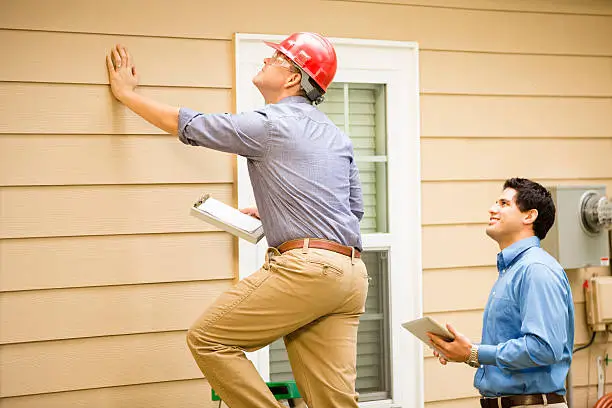
Pre Sale Building Inspection St Albans
Purchasing a home is a major investment. Our in depth inspection helps you understand the property's condition before making a decision. We provide a thorough assessment, examining everything for potential issues such as moisture or pests, to give you confidence in your purchase.
Pre-Purchase Building Inspection St Albans
Our inspection are designed to protect your investment. Conducted by experienced and qualified inspectors, we identify hidden defects, safety concerns, and maintenance issues. You’ll receive a detailed, easy-to-read report that empowers you to make informed choices.

Your Inspection Completed Within 24-48 hours
Need results fast? Our fast turnaround provides a thorough property review with detailed findings delivered on the same day. Perfect for time-sensitive situations, this service ensures you can move forward with confidence without delays or unnecessary waiting periods.
Our Working Process
Book
Confirm
Inspect
Report
Christchurch - Areas of Service
Addington, Akaroa, Amberley, Aranui, Avonhead, Avonside, Belfast, Bishopdale, Burnham, Burnside, Burwood, Casebrook, Cashmere, Cheviot, Christchurch CBD, Culverden, Cust, Darfield, Diamond Harbour, Dunsandel, Edgeware, Ellesmere, Fendalton, Fernside, Ferrymead, Halswell, Hanmer Springs, Harewood, Hoon Hay, Hornby, Ilam, Kaiapoi, Kirwee, Leeston, Leithfield, Lincoln, Linwood, Little River, Lyttleton, Mairehau, Malvern, Merivale, New Brighton, Northwood, Oxford, Papanui, Pegasus, Phillipstown, Prebbleton, Rangiora, Redwood, Riccarton, Rolleston, Southbridge, Spreydon, Springs, St Albans, Sumner, Swannanoa, Sydenham, Tai Tapu, Waiau, Waikuku, Waipara, Waltham, West Eyreton, West Melton, Wigram, Woolston.
St Albans Building Types by Era
St Albans was named in the 1850s, but almost nothing built in the suburb's first half-century survives. What stands here now is overwhelmingly twentieth-century — the borough-era cottages and villas that came through the earthquakes, the uniform 1920s bungalows of the Anglican church subdivision, the state houses and flats of the post-war decades, and the intensification that has filled the remaining sections since. Set against that is the ground itself, which has changed level in places since 2010. The era a property belongs to decides what an inspector looks at; the ground decides how much the answer matters.
1850s to 1870s — Dickinson's Farm and Knightstown
St Albans is named after a farm, not a saint, and the connection is faintly absurd. George Dickinson, a Wesleyan sheep farmer, took up fifty acres of Rural Section 252 in the middle of what became the suburb and called the holding St Albans after his cousin Harriet Mellon, an actress who had married into the dukedom of St Albans. The farm sat south of a small waterway that now carries the same name, and which still runs through the suburb today as St Albans Creek. The name appears in print as "St Alban's, near Christchurch" as early as 1854, back when this was Avon Road Board country, and there was very little here but swamp and grass.
The rival name was Knightstown, and for a while it looked like it might win. It was coined around 1860 for Anthony Knight, a timber merchant and shipping agent who kept a wharf on the Heathcote at Woolston and bought up much of the land at the northern end of Colombo Street beyond Edgeware Road, running from Springfield Road through to what is now Madras Street North.
The Lyttelton Times was printing "Knightstown, St Albans" by 1865, but the residents voted the name out in 1873, and the district became simply St Albans. Nothing of Knightstown's own buildings survives under that name, though the ground Anthony Knight owned is now the heart of Edgeware. The other thing this period left behind is less visible: the land sits in a basin between the Styx River to the north and the Avon to the south, and it was an important route through the swampy ground of early Christchurch long before anyone thought to build on it.
1870s to 1900s — Borough, Cottages and Villas
St Albans became a borough on 18 November 1881, the second of the small councils set up around Christchurch's edge after Sydenham, and it ran its own affairs until 1 April 1903, when it was swallowed by the city along with Sydenham and Linwood. Those twenty-two years as a borough are why the suburb has a centre at all. In the words of the histories, it was a working-class settlement, and that shows in what was built: compact colonial cottages for tradesmen and labourers, alongside the more substantial villas of the people who employed them.
The best surviving record of that mix is the Chester Street East and Dawson Street area, where the housing runs from colonial vernacular cottages through Victorian and Edwardian villas and early townhouses from the 1890s, and where the residents ranged from labourers and warehousemen to architects and lawyers. Dawson Street is narrow because it began life as a private road off a Town Reserve laid out in 1858.
Elsewhere, the 1880s brought market gardens — Chinese gardeners worked part of the land that later became the church subdivision, and some of the earliest street names in the area are thought to refer to them — and the Exeter Nurseries, which for a decade from 1884 ran part of the biggest nursery in the province on leased ground that is now residential. The suburb also kept it to itself in a small way: by 1875 Christchurch had five suburban libraries and two of them were at St Albans.
1900s to 1920s — Trams and the First Bungalows
Joining the city in 1903 was the start of the suburb's real growth, and the trams did the rest. A line reached St Albans Park in 1906, opening the suburb to anyone who worked in town, and the Cranford Street line followed in 1910. From then on, land that had been farmed and gardened was worth subdividing, and the pace picked up through the 1910s and 1920s. The tram is also why the suburb's shape is so legible: development clustered along the two lines and the streets that fed them, which is why St Albans is densest near the city end and along Cranford Street.
The house of this period is the transition from villa to bungalow — still timber-framed with a suspended floor over piles, but lower and wider, with a shallower roof pitch and the beginnings of the porch and bay window that would define the next twenty years.
Brick began to appear alongside weatherboard as a respectable front wall. The suburb was also building civic furniture it still uses: the public library had been running in one form or another since 1867, and in 1921 it moved into a purpose-built brick building on Colombo Street North, opened that May by the Mayor, Dr Thacker. That building later became the Edgeware Library and ran until 1997, by which point it had served the district for 130 years.
1920s to 1940s — The Church Subdivision and the Bungalow Suburb
The single largest piece of St Albans was never sold by a farmer. Rural Section 324 had been set aside as endowment land for the Anglican Church in the original 1850 survey, and for seventy years it was leased out for farming, market gardening and, from about 1880, a cricket ground on what is now Malvern Park.
In 1923 the Anglican Church Property Trustees subdivided it to raise money for church activities, auctioned the first lots on 30 May, and had the first tranche of houses occupied by 1926. Well over a hundred houses went up over the following decade, and they are the reason this part of St Albans looks so consistent: the district plan's heritage record for the subdivision lists 113 houses, a church and a park, overwhelmingly in the California Bungalow style.
Those bungalows are single-storey, timber-framed and weatherboard-clad under corrugated metal, set back uniformly from the street and detailed individually, and the early buyers were civil servants, tradesmen and professional men. Two details in the layout say a great deal about the decade. The lots were wide enough for a driveway and a garage, because the trustees were selling to people who might own a car — which is why St Albans garaged earlier than most of Christchurch.
The subdivision was advertised on the strength of the tram, so buyers could picture the trip to town. The street pattern preserves something older still: Westminster Street curves where it does because it follows the path of St Albans Creek, and the creek still forms the southern boundary of the heritage area. Malvern Park next door became home to Rugby Park, which the Canterbury Rugby Union has had a share in since the late 1920s.
1940s to 1970s — State Housing, Flats and the Motor Car
After the war, St Albans filled in and thickened up, with a social mix that remains one of its defining features. This area has a high concentration of social housing, built up over the post-war decades and managed since by both the City Council, which owns well over a hundred units across several sites in the suburb, and the state.
Alongside those went ordinary private post-war homes on the last of the vacant sections, and, increasingly from the 1950s, purpose-built flats. St Albans is unusual among Christchurch's older suburbs in having accepted mid-density living early, which is why a walk down almost any of its streets finds a 1920s bungalow, a set of 1960s flats and a small block of units within a few doors of each other.
The consequences for anyone inspecting here are practical rather than historical. A house of this period may sit on a concrete slab or a concrete perimeter foundation rather than the high suspended floors of the earlier villas, which changes what can be examined and what tends to fail.
The flats and units bring shared walls, shared roofs and shared drainage, and with them the cross-lease and unit title arrangements that make a buyer responsible for things they cannot see. And because so much of this housing was built to a budget and a standard plan, defects tend to repeat across a street rather than be peculiar to one house.
1970s to Today — Intensification and the Rebuild
From the 1970s, pressure turned inward. Sections that had held one bungalow were subdivided, rear sites and townhouses appeared behind the street frontage, and the suburb became one of the most varied in the city — the description of it now runs from run-down council flats to new high-end apartments, with workers' cottages and large old estates in between. That intensification has continued hard since the earthquakes and is now the dominant form of new work in St Albans, raising inspection questions about shared driveways, common drainage, and how the new building relates to the old one behind it.
The earthquakes themselves divided cleanly into two events, and the difference between them is what you need to understand about St Albans. In September 2010 the suburb got off comparatively lightly — chimneys came down, and a handful of houses were lost, but not much more. February 2011 was the opposite: St Albans was hit hard, with many houses, supermarkets, and shops significantly damaged and many demolished, and by July 2011 the demolition of the former library that housed the community centre had been ordered.
What followed was slower and in some ways worse. Ground levels had dropped, and drainage had been wrecked, and by 2014 the consequences were plain in the streets around Flockton, which flooded repeatedly. Roughly three quarters of the suburb's dwellings sit on TC3 ground, and about three quarters of the state housing in the area was damaged. The repair and rebuild of the homes and suburban shops is now substantially finished, and the shopping corners at Barbadoes and Edgeware Road, Westminster and Cranford, and Colombo and Bealey Avenue have all been rebuilt — but the ground underneath has not returned to where it was.
What St Albans' Ground and Age Mean for Your Home
The single most important fact about building in St Albans is not the age of the houses; it is the ground. Roughly three-quarters of the residential dwellings here are classified as Technical Category 3, which puts St Albans in a different risk category than most of the city. On TC3 land, the possibility of moderate to significant land damage in a future large earthquake is moderate to significant, and the official position is that no one-size-fits-all foundation can be assumed to work — site-specific geotechnical investigation and specific engineering design are required, and foundations may need to be deep piles. If you are buying in St Albans, the technical category of your address matters more than anything else on this page, and it is worth checking it before you do anything else.
The suburb earned that classification twice over. It recorded substantial liquefaction in both the September 2010 and February 2011 earthquakes, and the damage was not evenly spread: some parts of the area subsided badly, and the Council's own profile records that in some places the land dropped by more than half a metre. That is a loss of level, not just a crack in a slab, and it has consequences that outlast the earthquake itself — drainage that was designed to fall a certain way no longer does, floors sit lower relative to the road, and a house that was built clear of the water table may no longer be.
St Albans Creek is the reason the water has somewhere to go wrong. It is not a drain; it is an open waterway that runs through the suburb, Edgeware and Shirley, through Abberley Park and through a great many private gardens, before joining Dudley Creek and draining to the Ōtākaro/Avon. Parts of it are piped, and parts are not, and the roads built over it still bend to its course. The flooding at Edgeware Road has been investigated in detail, and the finding is worth knowing, because it is not the obvious one: the water backs up not because the drains are too small, but because the creek itself rises during a flood and there is nowhere for the stormwater network to discharge to.
With no clear outfall, the gravity system surcharges, and surface water has nowhere to go. Upgrading the pipes alone would not fix it. The proposals on the table for Edgeware Village — a new pump station and network extension, costed in 2018 at around $21 million — would protect roughly eight houses and eight businesses, which shows how difficult and localised the problem is.
The Flockton area on the suburb's northern edge has had the worst of it, and its history predates the earthquakes — flooding there is documented back to the early 1900s. What changed was the frequency and the depth. It flooded in August 2012, June 2013 and March 2014, and the cause was the combination of subsidence, siltation and lateral spreading that narrowed the channels and reduced their capacity.
The Council's response has been substantial: more than 5,000 tonnes of silt removed from Dudley Creek and six of its bridges taken out to let water through, a new pump station near the confluence of the Tay Street and Mairehau drains built in 2014-15, a pump at Kensington Avenue now moving water away from the Flockton streets into Horseshoe Lake, and a $7 million programme of embankments, storage and control works across the Dudley Creek and Flockton network, with more storage added in the Cranford Basin upstream.
Work on St Albans Creek itself began in mid-2017 with the replacement of the Hills Road culvert, followed by capacity improvements between Hills Road and Dudley Creek and new culverts in Slater and Stapletons Streets. All of that has made a real difference. None of it changes the fact that this is a low-lying suburb with a high water table and a creek running through its gardens, and a pilot programme of tanking the most vulnerable houses — wrapping the exterior in a waterproof membrane — was run here in 2014 for exactly that reason.
Put the ground and the buildings together, and the shortlist for a St Albans inspection writes itself. On the ground: the technical category of the address, the floor levels and how they sit relative to the road and the section, cracking in slabs, brickwork and linings, the quality of any foundation repair or re-levelling done since the earthquakes, whether drainage has been altered or backflow protection added, and evidence of lateral spread such as slumping or ground movement.
On the pre-1900 cottages and villas: piles and native timber in a suspended subfloor, original joinery, lead-based paint, and uninsulated walls and floors. On the interwar bungalows, which supply a large share of the housing here: dwarf piles in shallow subfloors, concrete tile roofs whose tiles will outlast the bedding, and original wiring and plumbing.
On the flat and unit stock: shared walls, shared roofs and common drainage, plus the cross-lease or unit title that decides who pays. And for everything built or altered before the 1980s, expect asbestos in ceilings, vinyl, and eaves linings. The houses here are, on the whole, sound — the ground is the part that needs reading carefully, and in St Albans it is not uniform from one street to the next.
Frequently Asked Questions
How much does a building inspection cost in St Albans?
Our comprehensive building inspection and report start from $299 and can go higher depending on the size and nature of the property. Your address is the key factor in determining the price of your building inspection, so you'll know the cost upfront.
What do you check on an older St Albans home?
We check the accessible structure from the foundation to the roof — the subfloor and its piles and bearers, the roof covering and the condition of its bedding, pointing and fixings, the cladding and its junctions, the joinery, insulation levels, visible plumbing and electrical components, and moisture levels throughout the house. St Albans' housing spans more than a century, so what we focus on depends on the house.
On a pre-1900 cottage or villa, it is the subfloor, the native framing and the original timber. On a 1920s bungalow from the church subdivision, it is the dwarf piles and the shallow floor. In a post-war or 1960s home, it is the roof, the services, and the foundation. On a flat or a townhouse it is the shared walls, the common roof and the shared drainage. On all of them it is any addition or alteration done since — and whether it was done to a reasonable standard.
Is St Albans on good ground?
No — and this is the most important thing to understand before you buy here. Around three-quarters of the residential dwellings in St Albans are classified as Technical Category 3, the highest of the three green-zone categories. TC3 means moderate to significant land damage from liquefaction is possible in a future significant earthquake, and it requires a site-specific geotechnical investigation and engineered foundation design rather than a standard solution.
St Albans recorded substantial liquefaction in both the September 2010 and February 2011 earthquakes, and in parts of the suburb the ground settled — the Council's own profile records land dropping by more than half a metre in places. The suburb is green zone throughout, so it is not red-zoned and is fully buildable, but the technical category of your particular address matters far more here than in most of the city, and it can change from one street to the next.
How long does a building inspection take in St Albans?
Most building inspections take 1-2 hours, depending on the property size and condition.
Do you check for moisture or leaky homes in St Albans?
Yes. Our inspections include moisture testing throughout the house, and we test around windows, doors, bathrooms, and exterior cladding junctions—the areas most likely to let water in. St Albans has a high water table, and St Albans Creek runs through the suburb, joining Dudley Creek on its way to the Avon, so we pay particular attention to subfloor moisture and ventilation, stormwater and surface water drainage, and any backflow protection on the drains.
Where a house has been re-levelled, or its floor levels changed since the earthquakes, we look at how that has affected drainage falls around the property. For newer townhouses and units, we also look closely at the cladding system—how it is fixed, whether it has a drained cavity, and whether the junctions and flashings were done properly.
Should I worry about asbestos in an older St Albans home?
Asbestos-containing materials were widely used in New Zealand building products until the 1980s, and St Albans' post-war, 1960s and 1970s housing sits squarely in that window. Common locations include textured ceilings, vinyl floor tiles, soffits and eaves linings, and lagging on pipes, ducting, and hot water cylinders. If it is intact and undisturbed, it is generally considered low risk, but you will need to manage it during any renovation. Our inspection will report any materials that may contain asbestos; confirmation requires specialist testing, which we can recommend.
Are original concrete tile roofs still okay on a St Albans home?
Often, yes — the tiles themselves are durable, and many have decades of life left. The part that usually fails first is the bedding and pointing holding the ridge and hip caps, which typically lasts 25 to 35 years. Where that has degraded, the caps can lift in high wind, and the affected sections need re-bedding or repointing. Where the tiles themselves have eroded or cracked, a full replacement is usually the sensible option, commonly in the $15,000 to $30,000 range. St Albans has a large share of interwar bungalows under concrete tile, so it is a frequent finding on our reports here.
Do I need a building inspection for a new build in St Albans?
Yes. New builds can have incomplete work, missed flashings, poorly connected drainage, and finishing defects — and St Albans has a great deal of new multi-unit development on subdivided rear sections. Because so much of the suburb is TC3, the foundations on new work here are engineered rather than standard, so it is worth confirming that what was built matches what was designed.
Where a new townhouse or unit is going up behind an older house, it is also worth checking that the drainage and overland flow paths were designed for the added density and that the excavation has not affected the neighbouring foundations.
Can I attend the building inspection?
Absolutely! We encourage clients to attend their building inspection to gain firsthand insights and ask questions directly to our inspector in St Albans.
Do you inspect townhouses and multi-unit developments in St Albans?
Yes — and in St Albans this is one of the most common property types we inspect. The suburb has had flats and units since the 1960s, and the pace of new development has increased sharply since the earthquakes.
On a multi-unit property, the inspection covers the individual unit plus the building elements it shares with its neighbours — inter-tenancy acoustic and fire separation, the common drainage system, the roof and external walls where they are shared, and the quality of the common-area construction.
On a cross-lease or unit title, those shared elements are where the liability sits, so they are a core part of the report rather than an optional extra.
Are your building inspectors qualified in St Albans?
Yes, our building inspectors are fully qualified and experienced in St Albans' building standards, ensuring accurate and reliable reports. Every inspector carries professional indemnity insurance, and our inspections comply with NZS 4306:2005.
What common issues are found during building inspections in St Albans?
Typical issues while conducting a building inspection in St Albans include: damp or decayed pile heads and bearers under the pre-1900 cottages, villas and interwar bungalows; original concrete tile roofs with degraded bedding and pointing on the ridge and hip caps; cracked brickwork and slabs, and floors out of level; subsidence and settlement from the earthquakes, and floor levels sitting low relative to the road; subfloor moisture and poor drainage on ground served by St Albans Creek; original wiring and older switchboards; aged galvanised plumbing; minimal or absent insulation in walls and under floors; lead-based paint on pre-1970s work; asbestos-containing materials in ceilings, vinyl and pipe lagging; unconsented additions and garage conversions; and on multi-unit properties, defects in the shared drainage, roof and inter-tenancy separations.
Building inspections near me?
Looking for building inspection services in St Albans? Alert Building Inspections provides detailed building reports within 24-48 hours, conducted by trade-qualified inspectors who understand St Albans' property market and common building issues. We follow the New Zealand Standard for Property Inspections (NZS 4306:2005) and serve St Albans and the surrounding Christchurch suburbs, including Edgeware, Mairehau, Papanui, Merivale, Strowan, Richmond, Phillipstown, Linwood, Shirley and the central city.
