
Building Inspection Fendalton
BUILDING REPORT FENDALTON
Residential & Commercial Building Reports
Alert Building Inspections provides professional building inspections across Fendalton and Christchurch for home buyers, sellers, and property investors. Our trade-qualified building inspectors thoroughly assess the property, explain what they find, and provide practical advice through a comprehensive written or verbal builders report. With fast bookings and reports available within 24-48 hours, getting the information you need is simple.
CUSTOMER REVIEWS
Fendalton’s Unique Building Challenges
Fendalton is the oldest residential district in Christchurch. Its first section was taken up in 1851, and it grew into the city's most fashionable suburb — so a large share of its housing predates the First World War, including villas, Edwardian homesteads and some of the country's earliest California bungalows. Behind those sit inter-war and post-war homes, and more recent infill on subdivided grounds. Because so much of the housing is a century old and has been altered across several generations, every Fendalton property has its own inspection priorities.
Spring-fed streams and high groundwater, mature trees and heavy shade, and long histories of renovation and extension all affect how a Fendalton building performs over time. Knowing which apply to your property is the difference between a building report that lists observations and one that tells you what you're taking on.
TESTING
Report
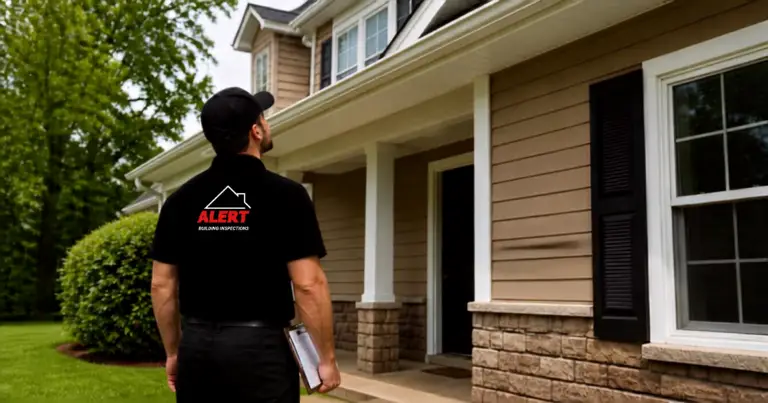
BUILDERS REPORT FENDALTON
Fast Turnaround 24-48 hours
A builders report from Alert tells you what a viewing can't. Our trade-qualified inspectors are practising builders, and they assess structural integrity, weathertightness and maintenance requirements across every accessible area of the property, in accordance with NZS 4306:2005.
Every report is written in plain English, with findings categorised by severity, photographs of each issue, and specific recommendations — not a checklist of ticks and crosses. All major banks and lending institutions accept our reports.
We inspect across Fendalton and the surrounding north-west Christchurch suburbs — Merivale, Strowan, Bryndwr, Ilam, Burnside, Riccarton, Papanui and St Albans — as well as the wider Christchurch area from Rangiora and Kaiapoi in the north through to Rolleston and Prebbleton in the south.
Call 0800 4 ALERT or book online for a firm quote based on your property address.
+
+

HOUSE INSPECTION FENDALTON
"House inspection" and "building inspection" mean the same thing. If you are buying a home in Fendalton, this is the report you need — a trade-qualified inspector on site, assessing the property in person. On the day, the inspector works through the property in a set order: the exterior and roof first, then the roof space, then the interior, and finally the subfloor, where accessible. That order is deliberate.
In Fendalton, where so much of the housing is a century old, the most expensive problems tend to be cumulative rather than sudden — original piles that have been damp for decades, borer in old subfloor framing, roofing and flashings well past their service life, and the accumulated result of several generations of alterations. On a large villa or homestead, the subfloor and the roof space are usually where the history of the house is written.
That is also why a Fendalton inspection is different from one on a modern subdivision. A house built in 1905 has had time for additions, re-cladding, re-roofing and re-wiring, and the standard of that work varies enormously. The inspection is as much about reading the sequence of changes as it is about the original construction.

BUILDING INSPECTOR FENDALTON
24-48 Hour Report Delivery Guaranteed
Looking for a Building Inspector in Fendalton? Our trade-qualified inspectors provide thorough building reports with meticulous attention to detail.
Our Fendalton building inspection service is perfect for time-sensitive property purchases. Each inspector carries professional indemnity insurance and brings deep knowledge of Fendalton's local market and common building challenges — century-old villas and homesteads with original piles and subfloor framing, borer and long-term damp in the subfloor, roofing and joinery well past their expected life, low levels of insulation behind old linings, and the unconsented or undocumented alterations that accumulate in a suburb where homes have been extended repeatedly.
Because much of the housing here is older, the questions are different from those on a modern build — what has been changed, when, and whether it was done properly. We assess that alongside the usual structural and weathertightness checks, and we note where specialist assessment is warranted. All inspections comply with NZS 4306:2005 standards for comprehensive, reliable assessments.

Pre Sale Building Inspection Fendalton
Purchasing a home is a major investment. Our in depth inspection helps you understand the property's condition before making a decision. We provide a thorough assessment, examining everything for potential issues such as moisture or pests, to give you confidence in your purchase.
Pre-Purchase Building Inspection Fendalton
Our inspection are designed to protect your investment. Conducted by experienced and qualified inspectors, we identify hidden defects, safety concerns, and maintenance issues. You’ll receive a detailed, easy-to-read report that empowers you to make informed choices.

Your Inspection Completed Within 24-48hrs
Need results fast? Our fast turnaround provides a thorough property review with detailed findings delivered on the same day. Perfect for time-sensitive situations, this service ensures you can move forward with confidence without delays or unnecessary waiting periods.
Our Working Process
Book
Confirm
Inspect
Report
Christchurch - Areas of Service
Addington, Akaroa, Amberley, Aranui, Avonhead, Avonside, Belfast, Bishopdale, Burnham, Burnside, Burwood, Casebrook, Cashmere, Cheviot, Christchurch CBD, Culverden, Cust, Darfield, Diamond Harbour, Dunsandel, Edgeware, Ellesmere, Fendalton, Fernside, Ferrymead, Halswell, Hanmer Springs, Harewood, Hoon Hay, Hornby, Ilam, Kaiapoi, Kirwee, Leeston, Leithfield, Lincoln, Linwood, Little River, Lyttleton, Mairehau, Malvern, Merivale, New Brighton, Northwood, Oxford, Papanui, Pegasus, Phillipstown, Prebbleton, Rangiora, Redwood, Riccarton, Rolleston, Southbridge, Spreydon, Springs, St Albans, Sumner, Swannanoa, Sydenham, Tai Tapu, Waiau, Waikuku, Waipara, Waltham, West Eyreton, West Melton, Wigram, Woolston.
Fendalton Building Types by Era
Fendalton's housing stock is the most historically layered in the city. It was the first district settled on the plains, it was fashionable early, and it has been redeveloped ever since — so a single street can carry an 1890s villa, a 1920s bungalow and a 2010s townhouse side by side. Understanding which era your property belongs to tells you a great deal about what an inspector will be looking at.
1850s to 1880s — The First Houses
Fendalton began in 1851, when Walpole Cheshyre Fendall — a twenty-year-old Canterbury Pilgrim from Yorkshire — took up fifty acres of land between the Wairarapa and Waimairi Streams. The district was called Fendall Town, and the name stuck, gradually becoming Fendalton by the 1880s. Daniel Inwood built an early flour mill on what is now Fendalton Road, using machinery he brought out from England.
Very little of this period survives, and what does has usually been heavily altered. The practical point is that anything still standing from this era is a genuine rarity, and its inspection is really a study of a century and a half of repairs and additions.
1890s to 1910s — Grand Homesteads and Villas
This is the era that gave Fendalton its reputation — the grand homestead era, when Christchurch's wealthiest families built on generous grounds. Mona Vale was designed by Joseph Clarkson Maddison in 1899, Daresbury by Samuel Hurst Seager in the years around the turn of the century, and St Barnabas Church followed the same fashionable architectural current.
Homes from this period are usually substantial timber villas and Arts and Crafts homesteads with deep verandahs, bay windows, leadlight and elaborate joinery. They were well built, and many remain outstanding houses. The recurring issues are age-related: original piles and subfloor framing, borer, original or partly replaced wiring, and roofs and flashings that have been through several replacements. Heritage-listed buildings also bring their own constraints, so it is worth understanding what you can and cannot change before you buy.
1920s to 1930s — Bungalows and the Garden Suburb
As the original estates were subdivided, Fendalton filled in with the housing of the day. This period produced the California bungalow — Fendalton has one of the earliest examples built in New Zealand — and the suburb's characteristic mix of substantial inter-war homes behind mature trees and hedges.
Bungalows are generally well regarded: lower and wider than a villa, with better light and more practical layouts. Ninety years on, the usual questions apply — roof and flashings, original joinery, and whether later additions were properly consented. Because these homes are large and well built, they are also frequent candidates for major renovation, which makes the paperwork as important as the building.
1950s to 1970s — Post-War Filling-In
After the war the remaining larger grounds were subdivided and the gaps filled with brick and tile and weatherboard family homes. Aluminium joinery arrived late in this period and quickly became standard.
These homes are now 50 to 70 years old. Concrete tile roofs from the era are reaching the end of their working life — it is usually the bedding and pointing on the ridge and hip caps that fails first, not the tiles — and original wiring, insufficient insulation and aging pipework all tend to surface together. Additions were common, and again the consent history is worth checking.
1980s to Today — Infill, Rebuilds and New Builds
The last four decades have transformed the suburb's density. Large grounds have been subdivided, original homes have been replaced, and townhouse and multi-unit developments now sit behind the street frontage throughout Fendalton. Monolithic plaster cladding was also common from the late 1980s, which puts homes built between roughly 1988 and 2004 into the highest-risk bracket for weathertightness failure.
The earthquakes changed things again. This side of the city came through far better than the eastern Avon corridor, but Fendalton was not untouched — homes were repaired, re-levelled and strengthened, and the suburb now contains a mix of original, repaired and rebuilt housing. On a repaired or rebuilt house, the quality and the documentation both matter: what was done, by whom, under what consent, and whether the work has performed.
What Fendalton’s Older Homes Mean for Yours
A well-maintained Fendalton home is a genuinely good property. The original construction was sound, the sections are generous, and the suburb has held its value through everything the last fifteen years threw at it. But a house that is a century old carries a different maintenance profile to one built last decade, and a longer list of components that have already been replaced once, twice or never. Here is what we look at most closely.
Original piles and subfloor framing. This is where the age of a Fendalton house shows first. Many homes here still sit on original timber piles, and a century of ground movement, moisture and time takes a toll — piles that have settled or rotted, bearers and joists with borer or decay, and a subfloor that has been damp for long enough to matter. Because so much of the expense sits under the floor, this is one of the areas where an inspection most often changes a buyer's decision or their negotiating position.
Borer and timber decay. Fendalton has an unusually high concentration of old native timber framing, and borer is common in subfloor and roof-space timbers. Active borer, old flight holes, and the soft, crumbly timber that follows are all reportable. Decay is the more serious of the two, particularly where it is wet-driven — which is what moisture testing is for.
A century of alterations. Very few Fendalton homes are as originally built. Additions, re-cladding, re-roofing, converted basements and garages, lean-tos and enclosed porches are all part of the suburb's fabric — and the work spans a period when consent requirements were far looser than they are now, or were not enforced in practice. The practical consequence is that we look carefully at how the changes meet the original building, and we report anything we cannot see evidence of consent for. Our article on unauthorised building work explains why that matters at settlement.
Roofing, flashings and joinery. A tiled or slate roof on a 1920s villa may have been re-covered two or three times, and the flashings are often the oldest part of the assembly. Where complex roofs, valleys and parapets meet, that is where water gets in. Original timber joinery is beautiful and, if well maintained, entirely serviceable — but it is also a long-term maintenance commitment, and failed seals and perished putty are common findings.
Asbestos and lead-based paint. Both are a consideration in a suburb dominated by pre-1980s housing. Asbestos was widely used in New Zealand building products until the 1980s — soffits, eaves linings, vinyl floor tiles, textured ceilings and pipe lagging — and lead-based paint was common until the 1970s. Intact and undisturbed, both are generally low risk; the issue arises on renovation, when they have to be managed properly. Our inspection will identify materials that may contain asbestos, and our article on asbestos in New Zealand homes covers what that means in practice.
Plumbing and wiring. A Fendalton home may have been rewired in stages, leaving a mix of eras behind the walls — an old switchboard, limited or no RCD protection, and circuits extended over decades. Plumbing follows the same pattern: original galvanised pipework reaching the end of its life, later additions in different materials, and the joint where they meet being the usual place for problems. We report what is visible and note where electrical or plumbing specialists should look further.
Spring-fed streams and high groundwater. Fendalton is where the Avon begins. The Wairarapa and Waimairi streams meet at Mona Vale to form the Ōtākaro, and the whole north-west sits over the spring-fed gravels that feed it — the reasons the streets here are so green. Groundwater is close to the surface in places, and the earthquakes lowered parts of the ground and further reduced the streams' capacity to carry water away. In practice that means subfloor damp, blocked or surcharged stormwater, and drainage that no longer discharges clear of the house are all realistic findings here.
Large trees and mature grounds. Fendalton's trees are a large part of what makes it desirable, and they also work against the house. Root systems find old and cracked drainage, heavy shade keeps a subfloor and north-facing rooms genuinely damp, and gutters fill quickly enough that overflowing into the eaves and wall framing is common. On a section with mature planting, drainage and roof maintenance matter more, not less.
Frequently Asked Questions
How much does a building inspection cost in Fendalton?
Our comprehensive building inspection and the report start from $299, and can go higher depending on the size and nature of the property. The key factor in determining price of your building inspection is your address, so you'll know upfront the cost you're looking at.
What do you check on an older Fendalton villa?
We check the accessible structure from the foundation to the roof — the exterior cladding, the roof and flashings, the roof space, the interior, and the subfloor. On a century-old villa we pay particular attention to the areas that age fastest: original piles and subfloor framing, borer and timber decay, the condition of the roof and the flashings at valleys and parapets, and how earlier additions and alterations have been tied into the original building.
Is Fendalton on good ground?
Fendalton is on the north-west side of the city, which came through the Canterbury earthquakes considerably better than the eastern Avon corridor, where the highest-risk land is concentrated. But it was not untouched — localised liquefaction occurred in this part of the city, the ground subsided in places, and the area's spring-fed streams lost some capacity to carry water away. Technical categories are assigned at property level, not by suburb, so two sections on the same street can carry different ratings. The only way to know your property's category is its LIM report or the Council's technical categories map, and it is worth checking before you commit.
How long does a building inspection take in Fendalton?
Most building inspections take 1-2 hours, depending on the property size and condition. A large villa or homestead with multiple levels and additions can take longer.
Do you check for moisture or leaky homes in Fendalton?
Yes, and it matters more here than in most suburbs. Fendalton has two separate moisture risks: the older housing stock, where long-term damp in subfloors and around old joinery is common, and the plaster-clad homes built between the late 1980s and 2004, which fall into the highest-risk bracket for water getting in at cladding junctions. We carry out moisture testing throughout.
Should I worry about asbestos in an older Fendalton home?
Asbestos-containing materials were widely used in New Zealand building products until the 1980s, and Fendalton has a large share of pre-1980s housing. The more common locations are soffits, eaves linings, vinyl floor tiles, textured ceilings, and older ducting and pipe lagging. If it is intact and undisturbed it is generally considered low risk, but it has to be managed during any renovation. Our inspection will report any materials that may contain asbestos; confirmation requires specialist testing. There is more detail in our article on asbestos in New Zealand homes.
How do I know if past renovation work in Fendalton was consented?
Often you cannot tell from looking at the work — which is exactly why it is worth checking. We report anything that appears to have been added, altered or enclosed without evidence of consent, and we recommend a Council property file search and the LIM. In a suburb where houses have been extended repeatedly over a century, undocumented work is one of the most common issues to resolve before settlement. Our article on unauthorised building work explains how it is typically dealt with.
Do I need a building inspection for a new build in Fendalton?
Yes. New builds and townhouses can have incomplete work, missed flashings, poorly connected drainage, and finishing defects. An independent inspection before settlement gives you verification that the property was built to the standard it should have been, and it is far easier to have anything put right before you take possession than afterwards.
Can I attend the building inspection?
Absolutely! We encourage clients to attend their building inspection to gain firsthand insights and ask questions directly to our inspector in Fendalton.
Do you offer pre-purchase building inspections in Fendalton?
Yes. Our pre-purchase building inspections in Fendalton help buyers make informed decisions and avoid costly surprises after purchasing a property.
Do you inspect townhouses and multi-unit developments in Fendalton?
Yes. Fendalton now has a good deal of infill and townhouse development, and we inspect individual units as well as the wider property. On a unit title, it is worth knowing what falls inside your ownership and what is shared — the boundary between the two often decides whether a defect is your repair or the body corporate's. We will report on what is within your unit and note where the dividing line matters.
Are your building inspectors qualified in Fendalton?
Yes, our building inspectors are fully qualified and experienced in Fendalton's building standards, ensuring accurate and reliable reports. Every inspector carries professional indemnity insurance, and our inspections comply with NZS 4306:2005.
What common issues are found during building inspections in Fendalton?
Typical issues while conducting a building inspection in Fendalton include: original piles and subfloor framing past their service life; borer and wet-driven timber decay; roofing and flashings at the end of their life on older villas and bungalows; undocumented or unconsented alterations and additions; asbestos-containing materials in pre-1980s homes; mixed-era wiring and aging pipework; subfloor damp from high groundwater, heavy shade and blocked drainage; and weathertightness failures at cladding junctions on late-1980s to 2000s plaster-clad homes.
Building inspections near me?
Looking for building inspection services in Fendalton? Alert Building Inspections provides detailed building reports within 24-48 hours, conducted by trade-qualified inspectors who understand Fendalton's property market and the particular demands of inspecting century-old housing. We follow the New Zealand Standard for Property Inspections (NZS 4306:2005) and serve Fendalton and the surrounding suburbs, including Merivale, Strowan, Bryndwr, Ilam, Burnside, Riccarton, Papanui and St Albans.
