
Building Inspection Hoon Hay
BUILDING REPORT HOON HAY
Residential & Commercial Building Reports
Alert Building Inspections provides professional building inspections across Hoon Hay and Christchurch for home buyers, sellers, and property investors. Our trade-qualified building inspectors thoroughly assess the property, explain what they find, and provide practical advice through a comprehensive written or verbal builders report. With fast bookings and reports available within 24-48 hours, getting the information you need is simple.
CUSTOMER REVIEWS
Hoon Hay’s Unique Building Challenges
Hoon Hay’s housing was built almost entirely after the Second World War, and the largest share of it dates from the 1970s — the era of the brick and tile family home on a generous section, with a double garage and aluminium joinery. Behind that sit the first state houses and modest post-war homes of the 1950s and 1960s, a smaller number of earlier weatherboard houses on the suburb’s original frontages, and more recent infill and townhouse development on subdivided rear sections. Because most of the suburb went up inside about three decades, much of its housing is now the same age at the same time.
What sets Hoon Hay apart is the ground. The suburb is flat, it drains into the Ōpāwaho / Heathcote River, and it sits over loose alluvial deposits with a high water table in places — which is why three significant pockets of Technical Category 3 land sit within it, two alongside the Heathcote and one around the Simeon Street blocks. The Cashmere Stream runs down the Hoon Hay valley and through the suburb on its way to the river, and the floods of 2013 and 2014 reached properties here. The earthquakes then lowered parts of the ground and narrowed the river channel, reducing how much water it can carry away. Knowing which of those apply to your property is the difference between a building report that lists observations and one that tells you what you’re taking on.
TESTING
Report
BUILDERS REPORT HOON HAY
Fast Turnaround 24-48 hours
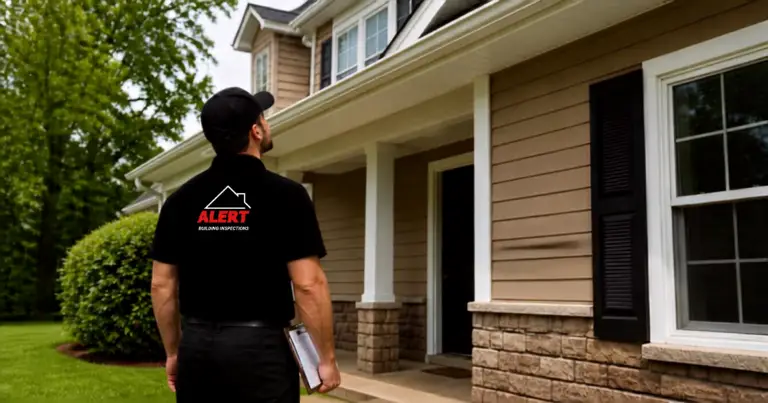
A builders report from Alert tells you what a viewing can’t. Our trade-qualified inspectors are practising builders, and they assess structural integrity, weathertightness and maintenance requirements across every accessible area of the property, in accordance with NZS 4306:2005.
Every report is written in plain English, with findings categorised by severity, photographs of each issue, and specific recommendations — not a checklist of ticks and crosses. All major banks and lending institutions accept our reports.
We inspect across Hoon Hay and the surrounding south-west Christchurch suburbs — Hillmorton, Spreydon, Somerfield, Cashmere, Halswell, Addington, Riccarton and Hornby — as well as the wider Christchurch area from Rangiora and Kaiapoi in the north through to Rolleston and Prebbleton in the south.
Call 0800 4 ALERT or book online for a firm quote based on your property address.
+
+

HOUSE INSPECTION HOON HAY
"House inspection" and "building inspection" mean the same thing. If you are buying a home in Hoon Hay, this is the report you need — a trade-qualified inspector on site, assessing the property in person. On the day, the inspector works through the property in a set order: the exterior and roof first, then the roof space, then the interior, and finally the subfloor, where accessible.
In Hoon Hay that final stage matters more than it does in most Christchurch suburbs. Much of the housing here is 1970s brick and tile on concrete slab or timber piles, and the suburb’s flat ground and high water table mean the subfloor and the drainage around the house are where water problems show up first. Original concrete tile roofs are now around fifty years old, aluminium joinery from the 1970s and early 1980s predates thermal breaks and is failing at the seals, and the insulation — where there is any — is typically ceiling only.
Hoon Hay also has something its northern neighbours don’t: three patches of TC3 ground, two of them alongside the Heathcote River and one around the Simeon Street blocks. On a slab-on-ground house, foundation movement there shows up as cracking and as doors and windows that no longer sit square, and it is easy to miss under carpet or a cosmetic repair. Away from those pockets the ground is more stable, so the inspection weight shifts depending on exactly where in the suburb the property sits. The address, not the suburb, decides what we look at most closely.

BUILDING INSPECTOR HOON HAY
24-48 Hour Report Delivery Guaranteed
Looking for a Building Inspector in Hoon Hay? Our trade-qualified inspectors provide thorough building reports with meticulous attention to detail.
Our Hoon Hay building inspection service is perfect for time-sensitive property purchases. Each inspector carries professional indemnity insurance and brings deep knowledge of Hoon Hay’s local market and common building challenges — 1970s brick and tile construction with ageing concrete tile roofs and failing aluminium joinery, minimal insulation behind original linings, subfloor damp and drainage problems on flat ground with a high water table, and foundation movement in the suburb’s TC3 pockets.
Because Hoon Hay’s ground varies from street to street — with three significant pockets of TC3 land within the suburb — foundation issues are more common here than in the northern suburbs, and we still assess cracking patterns and the quality of any earlier earthquake repairs. All inspections comply with NZS 4306:2005 standards for comprehensive, reliable assessments.

Pre Sale Building Inspection Hoon Hay
Purchasing a home is a major investment. Our in depth inspection helps you understand the property's condition before making a decision. We provide a thorough assessment, examining everything for potential issues such as moisture or pests, to give you confidence in your purchase.

Pre-Purchase Building Inspection Hoon Hay
Our inspection are designed to protect your investment. Conducted by experienced and qualified inspectors, we identify hidden defects, safety concerns, and maintenance issues. You’ll receive a detailed, easy-to-read report that empowers you to make informed choices.

Your Inspection Completed Within 24-48hrs
Need results fast? Our fast turnaround provides a thorough property review with detailed findings delivered on the same day. Perfect for time-sensitive situations, this service ensures you can move forward with confidence without delays or unnecessary waiting periods.
Our Working Process
Book
Confirm
Inspect
Report
Christchurch - Areas of Service
Addington, Akaroa, Amberley, Aranui, Avonhead, Avonside, Belfast, Bishopdale, Burnham, Burnside, Burwood, Casebrook, Cashmere, Cheviot, Christchurch CBD, Culverden, Cust, Darfield, Diamond Harbour, Dunsandel, Edgeware, Ellesmere, Fendalton, Fernside, Ferrymead, Halswell, Hanmer Springs, Harewood, Hoon Hay, Hornby, Ilam, Kaiapoi, Kirwee, Leeston, Leithfield, Lincoln, Linwood, Little River, Lyttleton, Mairehau, Malvern, Merivale, New Brighton, Northwood, Oxford, Papanui, Pegasus, Phillipstown, Prebbleton, Rangiora, Redwood, Riccarton, Rolleston, Southbridge, Spreydon, Springs, St Albans, Sumner, Swannanoa, Sydenham, Tai Tapu, Waiau, Waikuku, Waipara, Waltham, West Eyreton, West Melton, Wigram, Woolston.
Hoon Hay Building Types by Era
Almost all of Hoon Hay was built in the thirty-five years after the Second World War, and the single largest share of it arrived in the 1970s — so a great deal of the suburb shares the same construction methods, the same materials and the same maintenance history, and its problems are arriving at roughly the same time. Before that it was farmland for the better part of a century, which is why there is no older housing layer here and why the suburb's few older homes cluster on a handful of original frontages.
1850s to 1940s — Farmland and the Hoon Hay Estate
Hoon Hay takes its name from Captain Wickham Talbot Harvey, a captain of the British Royal 10th Hussars who took up land here in 1852 and named the property after the farm at Hoon in Derbyshire where he grew up — "hoon" meaning hill and "hay" meaning hedge. He stayed only about four years: a fire destroyed his house in 1856 and he returned to England, and further fires cleared the heavy woodland that grew on the property, including several large tōtara, turning it into farmland. Stumps from that forest are still being unearthed — they have been found during flood mitigation work on the Ōpāwaho / Heathcote River.
The land then passed through a succession of sheep runs. Henry John Cridland, an early Christchurch surveyor, bought the property and within ten years had expanded it past 600 hectares. For the next ninety years Hoon Hay was paddocks and hedgerows, farmed and largely empty, while Christchurch grew out towards Spreydon and Halswell around it. That long pause is what gives the suburb its shape. There is no Victorian or Edwardian layer here, no terraced streets, and almost nothing standing that predates the war.
Late 1940s and 1950s — The First State Houses
The first houses went up after the war. Returning servicemen, rising real wages and the baby boom drove one of the fastest periods of suburban growth New Zealand has seen, and Hoon Hay — flat, affordable land close to the city — was an obvious place to build. Much of this first wave was state housing, and the first state house built in the suburb was photographed and recorded at the time as the beginning of Hoon Hay as a suburb.
Hoon Hay School opened in 1959 to serve these streets. Homes from this first wave are modest: two or three bedrooms on a generous section, often following a plan repeated street after street. Where they survive unaltered they are now around seventy years old.
1960s — The 570-Section Subdivision
The biggest single step came in 1964, when a subdivision of 570 sections was announced — one of the larger residential releases in Christchurch that year, and the point at which Hoon Hay's street pattern and services took the shape they still have.
Homes from this period are typically brick veneer or weatherboard on concrete slab-on-ground foundations with concrete tile roofs. Te Kōmanawa Rowley School opened in 1973 to serve the next wave of families moving in behind them.
1970s — The Bulk of Hoon Hay
The 1970s produced most of Hoon Hay as it stands today. This is the era of the classic brick and tile family home: larger footprints than the 1960s houses, double garages, a greater variety of design, and aluminium joinery, which arrived in the previous decade and became standard through this one. Concrete tile remained the default roof.
Because so much of the suburb was built in this single decade, an unusually large share of Hoon Hay's homes are the same age at the same time. That matters practically: when a component has a fifty-year life and it was installed across a whole suburb in the 1970s, it reaches the end of that life across the whole suburb together.
1980s to Today — Infill, Intensification and Townhouses
From the 1980s the pattern shifted from building new suburbs to filling them in. Larger original sections were subdivided, rear sections built on, and more recently a significant number of townhouse and multi-unit developments have gone in — where the inspection also covers inter-tenancy acoustic and fire separation, shared drainage and the quality of common-area construction.
That pressure is not going away. Council-led intensification is planned for the neighbouring Barrington North, Spreydon and Hillmorton neighbourhoods, and new development continues on the adjacent Port Hills. A point worth making to buyers: the age of the house and the age of the subdivision are no longer the same thing. A 1970s house on a rear section may sit behind a 2000s driveway, with drainage and services that were never designed for two dwellings.
What Hoon Hay's Ground Means for Your Home
A well-maintained 1970s Hoon Hay home is a genuinely good property. The construction methods were sound, the sections are generous, and the suburb has held its value. But in Hoon Hay the maintenance list is shaped by the ground as much as by the age of the house. This is flat land sitting over loose alluvial deposits with a high water table in places, draining into the Ōpāwaho / Heathcote River, and it has three significant pockets of TC3 ground within it. Here is what we look at most closely.
The ground itself. Hoon Hay is entirely green-zoned, and most of the suburb came through the earthquakes with non-terminal damage — but there are three sizeable patches of Technical Category 3 land inside it, two alongside the Ōpāwaho / Heathcote River and one in the residential blocks bounding Simeon Street, where liquefaction and infrastructure damage were more prevalent. TC3 means moderate to significant land damage is possible in a future large earthquake, and it requires site-specific geotechnical investigation and engineered foundation design rather than a standard solution. On a slab-on-ground house that shows up as cracking, and as doors and windows that no longer sit square — and it is easy to miss under carpet or a cosmetic repair. In the worst-affected parts of Hoon Hay, 86 properties were given new wastewater pressure systems and a new underground pump station, along with significant road and kerb repairs. That tells you where the ground was least cooperative.
Water, and where it goes. The Cashmere Stream runs down the Hoon Hay valley and through the suburb on its way to the Ōpāwaho / Heathcote River, and flat terrain means water has nowhere to go in a hurry. The river came up in November 2013 and again in November 2014, and the earthquakes then lowered parts of the ground and narrowed the channel, reducing how much water it can carry away. Blocked or inadequate stormwater, a downpipe discharging too close to the slab, and surface water running toward the house rather than away from it are all common findings here — and they show up as damp first, not as obvious leaks. If a property sits in one of the lower-lying pockets, it is worth asking whether it has flooded, not just whether it currently looks dry.
The subfloor. A subfloor that has been wet for years is one of the more expensive things to put right, and on Hoon Hay's flat ground with a high water table it is one of the more likely. This is exactly what moisture testing is looking for, and on a home of this era it is worth taking seriously rather than treating as a formality.
Roofing and joinery. Original concrete tile roofs from the 1970s are now around fifty years old. The tiles themselves are durable, but the bedding and pointing that hold the ridge and hip caps in place lasts 25 to 35 years, and degraded bedding lets the caps lift in a nor'wester. Aluminium joinery from the 1970s and early 1980s predates thermal breaks, so it condenses heavily in winter and the seals and friction stays on many units are now failing. Where a home still carries original timber joinery, it is serviceable but a long-term commitment.
Insulation, plumbing and wiring. Homes from this era were built before insulation was required, so many still have little or no ceiling insulation and typically none in the walls or underfloor — now a cost under the Healthy Homes requirements rather than a comfort preference. Original pipework is reaching the age where pin-hole failures and joint weeping become a recurring cost, and older switchboards with limited RCD protection and five decades of undocumented electrical work are common.
Asbestos. Asbestos-containing materials were widely used in New Zealand building products until the 1980s, so it is a consideration on any Hoon Hay home from the 1950s through to the early 1980s — most commonly in soffits, eaves linings, vinyl floor tiles, textured ceilings, and older ducting and pipe lagging. Intact and undisturbed it is generally considered low risk; the issue arises on renovation, when it has to be managed properly. Our article on asbestos in New Zealand homes covers what that means in practice.
The valley and the semi-rural edge. Hoon Hay is bordered by Hillmorton and Spreydon to the north, Somerfield and Cashmere to the east and Halswell to the southwest — but it also runs up against farmland and the Hoon Hay valley, which is what keeps parts of the suburb feeling semi-rural. On the properties along that edge the surroundings change the maintenance picture: shelter and shade from mature planting, run-off arriving from land above the section, and a longer distance to services. On a section like that, drainage and roof maintenance matter more, not less.
Frequently Asked Questions
How much does a building inspection cost in Hoon Hay?
Our comprehensive building inspection and the report start from $299, and can go higher depending on the size and nature of the property. The key factor in determining price of your building inspection is your address, so you’ll know upfront the cost you’re looking at.
What do you check on a 1970s Hoon Hay brick and tile home?
We check the accessible structure from the foundation to the roof — the original concrete tile roof and the state of its bedding and pointing, the aluminium joinery, the cladding and its junctions, the ceiling and subfloor insulation levels, visible plumbing and electrical components, and moisture levels throughout the house. On a slab-on-ground home we pay particular attention to cracking patterns in the slab, which can indicate ground movement and are easy to miss under carpet or a cosmetic repair.
Is Hoon Hay on good ground?
Mostly, but it varies street by street. Hoon Hay is flat and sits over loose alluvial deposits with a high water table in places, and there are three significant pockets of TC3 land within the suburb — two alongside the Ōpāwaho / Heathcote River and one in the residential blocks around Simeon Street. TC3 means site-specific geotechnical investigation and engineered foundation design are required. Away from those pockets the ground is more stable. Because conditions change over quite a short distance here, the address matters more in Hoon Hay than the suburb name alone.
How long does a building inspection take in Hoon Hay?
Most building inspections take 1-2 hours, depending on the property size and condition.
Do you check for moisture or leaky homes in Hoon Hay?
Yes. Our inspections include moisture testing throughout the house, and we test around windows, doors, bathrooms and the exterior cladding junctions — the areas most likely to let water in. Hoon Hay’s flat ground and high water table mean the subfloor and the drainage around the house are where water problems show up first, so we pay particular attention to both.
Should I worry about asbestos in an older Hoon Hay home?
Asbestos-containing materials were widely used in New Zealand building products until the 1980s. In a 1950s to 1970s Hoon Hay home, the more common locations are soffits, eaves linings, vinyl floor tiles, textured ceilings, and older ducting and pipe lagging. If it is intact and undisturbed it is generally considered low risk, but it will need to be managed during any renovation. Our inspection will report any materials that may contain asbestos; confirmation requires specialist testing, which we can recommend.
Are original concrete tile roofs still okay on a Hoon Hay home?
Often, yes — the tiles themselves are durable and many have decades of life left. The part that usually fails first is the bedding and pointing holding the ridge and hip caps, which typically lasts 25 to 35 years. Where that has degraded, the caps can lift in high wind, and the affected sections need re-bedding or repointing. Where the tiles themselves have eroded or cracked, a full replacement is usually the sensible option, commonly in the $15,000 to $30,000 range.
Do I need a building inspection for a new build in Hoon Hay?
Yes. New builds can have incomplete work, missed flashings, poorly connected drainage, and finishing defects. On a multi-unit or townhouse development we also assess inter-tenancy acoustic and fire separation and the quality of shared construction. An independent inspection gives you verification that the property was built to the standard it should have been.
Can I attend the building inspection?
Absolutely! We encourage clients to attend their building inspection to gain firsthand insights and ask questions directly to our inspector in Hoon Hay.
Do you inspect townhouses and multi-unit developments in Hoon Hay?
Yes. Infill and townhouse development has been a significant part of Hoon Hay’s more recent growth, and council-led intensification is planned for the neighbouring Barrington North, Spreydon and Hillmorton areas. On a multi-unit property the inspection covers the individual unit plus the building elements it shares with its neighbours — inter-tenancy acoustic and fire separation, the common drainage system, and the quality of the common-area construction.
Are your building inspectors qualified in Hoon Hay?
Yes, our building inspectors are fully qualified and experienced in Hoon Hay’s building standards, ensuring accurate and reliable reports. Every inspector carries professional indemnity insurance, and our inspections comply with NZS 4306:2005.
What common issues are found during building inspections in Hoon Hay?
Typical issues while conducting a building inspection in Hoon Hay include: degraded bedding and pointing on concrete tile roofs; corroding or failing seals on 1970s and 1980s aluminium joinery; minimal or absent insulation; original plumbing and wiring reaching the end of its life; subfloor damp and stormwater or surface-water drainage problems on flat ground with a high water table; and cracking in concrete slabs from past ground movement.
Building inspections near me?
Looking for building inspection services in Hoon Hay? Alert Building Inspections provides detailed building reports within 24-48 hours, conducted by trade-qualified inspectors who understand Hoon Hay’s property market and common building issues. We follow the New Zealand Standard for Property Inspections (NZS 4306:2005) and serve Hoon Hay and the surrounding south-west Christchurch suburbs, including Hillmorton, Spreydon, Somerfield, Cashmere, Halswell, Riccarton and Hornby.
